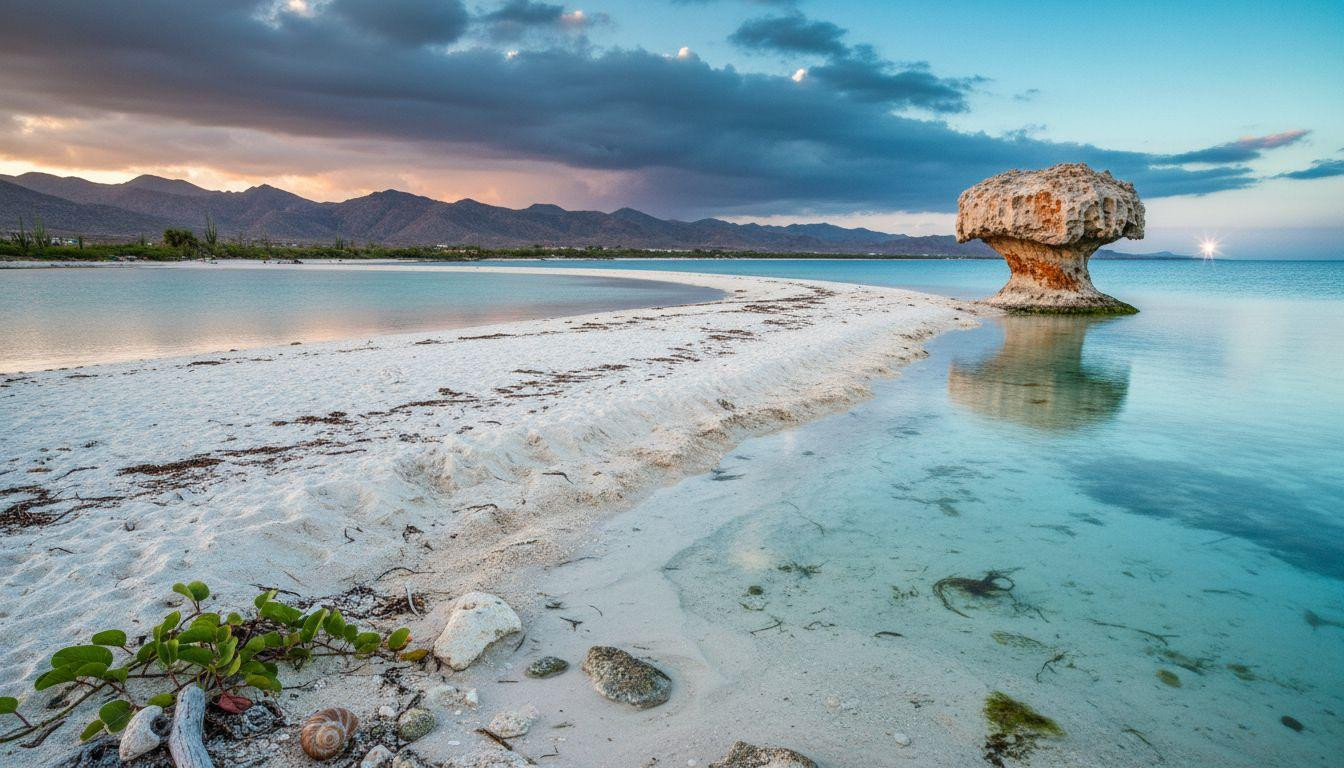
At 7 AM, when most tourists sleep in La Paz hotels, a white sandbar emerges from turquoise water like a desert mirage made real. Bahía Balandra reveals its secret slowly, as the Sea of Cortez retreats to expose ankle-deep flats stretching 200 yards into liquid glass. This protected bay in Baja California Sur offers something no Caribbean beach can: the chance to walk on water while a mushroom-shaped rock stands guard over Mexico’s most quietly stunning natural phenomenon.
The sandbar that appears at dawn
Low tide transforms Balandra into an otherworldly landscape where physics seems suspended. The sandbar emerges at precise intervals, following tidal schedules that locals know by heart. Water depth rarely exceeds 4 inches across the flats during peak low tide.
December 2025 brings optimal conditions for sandbar walking. Morning low tides occur around 7:30 AM, creating a 3-hour window before water reclaims the white expanse. This vanishing beach phenomenon mirrors similar tidal wonders worldwide, but Balandra’s desert setting makes it unique.
Water temperature holds steady at 72°F in December, warming your feet as you wade through liquid turquoise. The sandbar extends roughly 650 feet from shore, far enough that the opposite mountains appear to float on water.
El Hongo stands silent guard
The geological accident that became famous
Wind and waves carved Balandra’s iconic Mushroom Rock over millennia, creating Mexico’s most photographed natural sculpture. Local fishing families call it “El Hongo” (The Mushroom), though tourism boards prefer the English translation. The formation rises 12 feet above the bay, its narrow base defying gravity.
Climbing El Hongo is strictly prohibited under environmental protection rules. Rangers patrol daily during peak season, issuing fines to violators who damage the fragile rock structure.
Photography without crowds
Balandra’s online reservation system limits daily visitors to 300 people across two shifts. Early morning slots (8:00 AM-12:00 PM) offer the best light for photography. Golden hour arrives around 6:30 AM, painting El Hongo in warm amber tones.
The best shooting angle positions the mushroom rock against the sandbar’s white expanse. Professional photographers recommend arriving 30 minutes before your reserved time slot to secure prime positions.
Swimming in desert oasis water
Seven hidden beaches connected by tide
Balandra comprises seven distinct beaches accessible only during low tide. Like protected Caribbean bays, these secluded coves maintain pristine conditions through careful visitor management. Wading between beaches requires following marked routes to avoid damaging mangrove nurseries.
Three mangrove species (red, white, and black) thrive in Balandra’s brackish zones. These trees create vital fish nurseries in an otherwise desert environment, supporting over 50 marine species within the bay system.
What lives in the shallow paradise
Small Pacific stingrays glide across the sandy bottom, requiring the “shuffle step” technique to avoid accidental contact. Visibility reaches 15 feet in the clear water, revealing schools of yellow tangs and parrotfish navigating the shallows. Sea turtles occasionally visit during feeding times, though sightings remain rare.
Frigate birds and brown pelicans patrol overhead, diving for small fish trapped in tidal pools. The bay’s protection status prohibits fishing, creating an underwater sanctuary where marine life thrives undisturbed.
The morning ritual that matters
Local families arrive before 6 AM, claiming shaded spots beneath desert ironwood trees. They bring homemade lunch and spend entire days watching children splash in warm shallows. Mexican family traditions remain strong here, with multi-generational groups sharing picnics on hand-woven mats.
The silence of early morning breaks only with gentle waves lapping white sand. Desert mountains reflect perfectly in glassy water before wind disturbs the surface. December through April offers ideal conditions: 78°F air temperatures and minimal rainfall.
This emotional connection between families and their protected bay explains why local authorities implemented strict visitor limits. Tourism revenue helps fund conservation, but preservation comes first.
Your questions about Bahía Balandra answered
How do I reserve access to the bay?
The online reservation system requires advance booking, especially December through March. Access bracelets cost $7 per person and must be purchased 2-7 days ahead. Remote beaches worldwide increasingly adopt similar systems to manage visitor impact.
Two daily shifts prevent overcrowding: morning (8:00 AM-12:00 PM) and afternoon (1:00 PM-5:00 PM). Arriving without reservations results in guaranteed disappointment.
What’s the best time to experience the sandbar?
Low tide timing varies daily, but morning schedules typically offer optimal sandbar exposure. December 2025 features excellent morning low tides around 7:30-8:30 AM. Check local tide charts before booking your time slot.
November through April provides perfect weather conditions. Summer months bring 95°F temperatures and potential tropical storms, making winter visits strongly recommended for comfort and safety.
How does Balandra compare to famous Caribbean beaches?
Unlike deep-water Caribbean destinations, Balandra specializes in shallow-water experiences. The bay averages 3 feet deep even at high tide, creating a giant natural swimming pool. Desert mountain backdrops replace jungle settings, offering unique photographic opportunities.
Protection levels exceed most Caribbean beaches, with strict environmental rules and daily visitor caps. This management approach preserves water clarity and marine life that commercial beaches often lose to development pressure.
Morning mist rises from warm water as the sun climbs over desert peaks, creating ephemeral beauty that cameras struggle to capture. The sandbar dissolves back into deeper water, taking its magic with the rising tide until tomorrow’s revelation begins again.