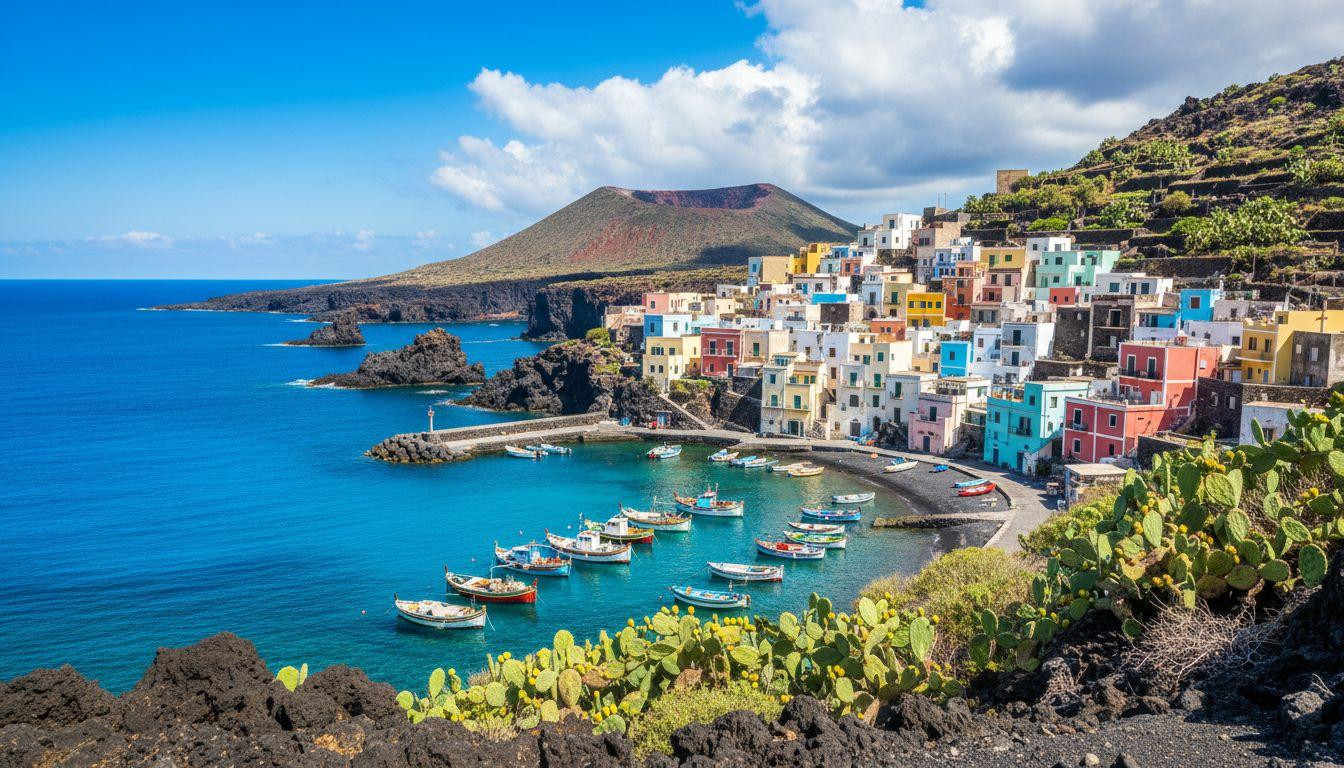
Dawn light strikes bright yellow and turquoise houses perched on black volcanic rock, creating a color collision that seems impossible in the Mediterranean. This is Linosa, a 2-square-mile volcanic island floating between Sicily and Tunisia, where 500 residents paint their homes in defiant brightness against dark basalt cliffs. Ferry-only access keeps this corner of the Pelagie Islands under the radar, even as loggerhead turtles choose its beaches for nesting.
The visual paradox hits you immediately at the harbor. Fishing boats bob in crystal-clear water while multi-colored houses climb volcanic slopes behind them.
Where volcanic darkness meets painted tradition
Linosa rose from the Mediterranean 2,500 years ago through volcanic eruptions that created three extinct craters. Monte Vulcano towers at 639 feet, Monte Rosso glows rust-red from iron-rich lava, and Monte di Ponente completes the trio. Black basalt forms dramatic coastlines around the island’s 3-mile perimeter.
Bourbon settlers arrived in the 19th century under King Ferdinand II’s colonization program. These Sicilian families painted their stone houses in Mediterranean blues, sunshine yellows, and coral pinks. The tradition continues today, creating Linosa’s signature look against volcanic black rock.
Walking through Linosa village feels like stepping onto a film set. Lampedusa’s Rabbit Beach draws crowds while its sister island stays quiet, maintaining an authenticity that commercial tourism hasn’t touched.
The island turtles choose for nesting
Pozzolana di Ponente beach becomes a nursery
Loggerhead turtles return to Linosa’s black sand beaches from May through October. Pozzolana di Ponente, a 650-foot stretch of volcanic sand, hosts the most nesting activity. The Centro Recupero Tartarughe Marine coordinates conservation efforts with local volunteers.
Visitors can witness night watches during peak nesting season in July and August. Strict lighting restrictions protect nesting females, creating an almost mystical experience under star-filled skies.
Fishing heritage anchors island life
Local fishermen still mend nets by hand and sell daily catches directly from their boats. Traditional wooden vessels called gozzi navigate waters that remain unpolluted by mass tourism. Other volcanic Mediterranean islands maintain fishing heritage, but few with Linosa’s intensity.
The island operates on cash only, with no ATMs forcing a barter economy for some transactions. Cell phone reception remains spotty, encouraging genuine disconnection from digital life.
Swimming in volcanic pools and underwater caves
Piscina Naturale offers protected swimming
Volcanic activity created natural pools where calm turquoise water contrasts with black lava rock formations. Piscina Naturale ranks 4.6 out of 5 on travel review sites for its crystal-clear conditions and dramatic setting. The pools stay calm even when Mediterranean winds create choppy conditions elsewhere.
Faraglioni Bay features towering rock stacks rising from deep blue water. Boat tours through Linosa Errera Escursioni cost $33-55 and explore underwater caves reaching 82 feet deep. Local guides claim Roman artifacts hide in these depths.
Local cuisine celebrates the sea
Trattoria da Anna serves fresh seafood pasta for around $22, while Ristorante Errera offers lobster dishes showcasing daily catches. Panificio Errera bakes traditional Sicilian pastries including cannoli and almond biscuits. Sicily’s volcanic islands share this raw beauty and commitment to traditional cooking methods.
Unhurried rhythms and winter serenity
Winter temperatures hover between 54-61°F, perfect for exploring without summer’s modest crowds. Even peak August brings only a few hundred visitors maximum, creating what tourism officials describe as “summer-camp camaraderie” among guests and residents.
Dawn hikes to Monte Rosso summit reveal panoramic views across the Pelagie Archipelago. The rust-colored peak offers 360-degree perspectives of endless Mediterranean blue. Prickly pear cacti dot hiking trails, their bright yellow fruit adding more color to an already vivid landscape.
Evening walks through the village reveal residents gathering in small piazzas, children playing soccer on volcanic gravel, and fishing boats returning with the day’s catch. Remote islands where colorful architecture meets isolation exist worldwide, but few maintain such authentic community life.
Your questions about Linosa answered
How do you reach Linosa from the United States?
Fly to Sicily’s Catania or Palermo airports, then drive or take buses to Porto Empedocle. Siremar ferries operate year-round service taking 4-6 hours for $37-66 one way. Liberty Lines offers faster service during summer months. Book through Ferryhopper or local agencies like Agenzia Pietro Barbaro. No airport serves Linosa directly.
What does a Linosa vacation cost?
Budget accommodation runs $55-88 per night in family-run guesthouses, though options remain extremely limited requiring advance booking. Meals average $16-28 at local restaurants. Boat tours cost $33-55. Overall expenses run 20-30% below Sicily mainland averages due to limited infrastructure and tourist services.
Why isn’t Linosa more famous than Lampedusa?
Ferry-only access naturally limits visitor numbers compared to Lampedusa’s airport and white sand beaches. Nature reserve protections covering much of Linosa restrict development. The island’s black volcanic aesthetic appeals to fewer beachgoers than Lampedusa’s Caribbean-style coastline, keeping tourism low and authentic.
Sunset paints the colorful houses in golden light while fishing boats return to harbor. The volcanic landscape holds its dramatic beauty in perfect silence, broken only by gentle waves against black stone.