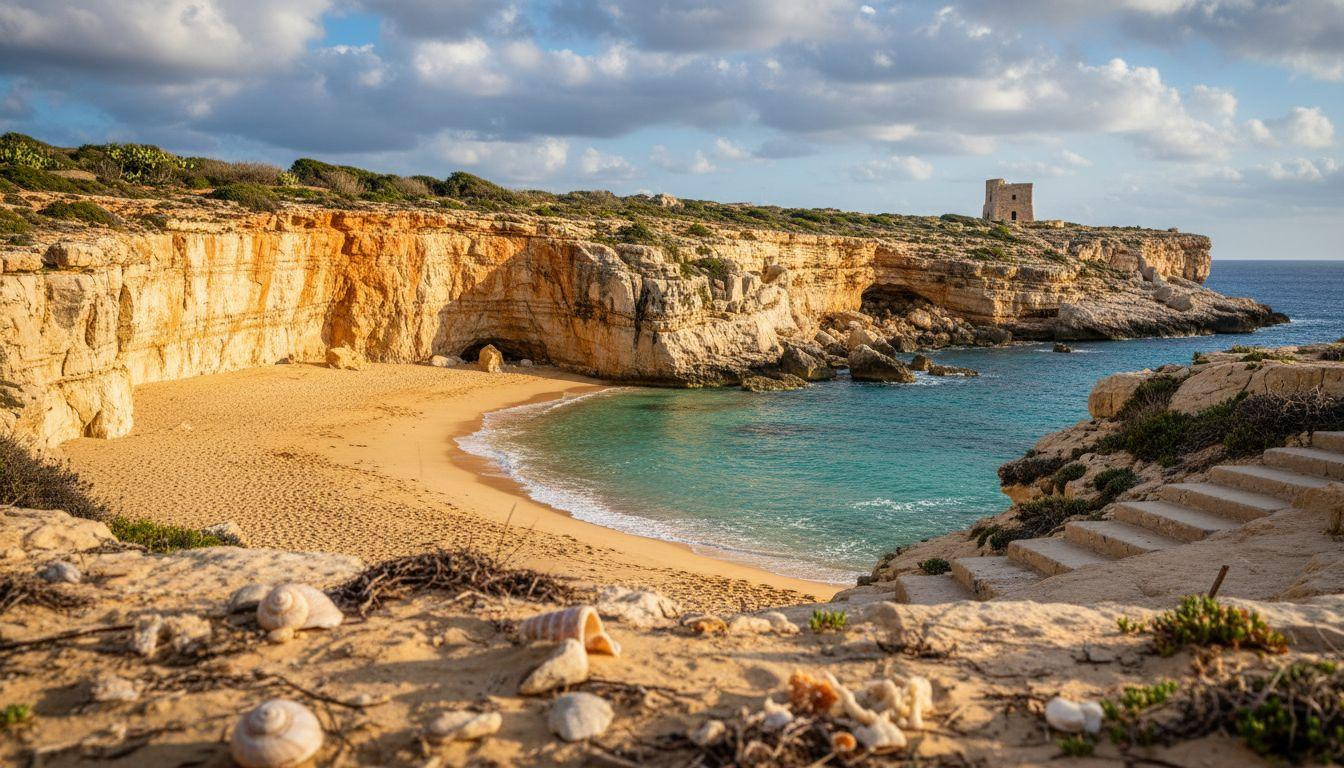
The moment arrives at 4:50 PM sharp. Malta’s northwest coast transforms into nature’s theater as limestone cliffs catch December light. Golden Bay becomes an amphitheater where geology performs daily magic for those who arrive early enough.
The copper-rose glow starts small. Then spreads across honey-colored stone walls that frame this crescent of sand. Twenty minutes later, the entire bay glows like solidified sunset.
Where Malta opens to amber light
Golden Bay sits in the Mellieħa area, 25 miles from Malta International Airport. The horseshoe-shaped bay faces southwest at precisely 235 degrees. This orientation creates perfect conditions for December’s low-angle light to illuminate every surface.
The parking area sits above limestone cliffs that drop 75-105 feet to golden sand below. Concrete steps descend through Mediterranean scrubland where wild thyme releases its scent with each footstep. The Għajn Tuffieħa tower stands sentinel on the northern headland, visible from every angle.
Bus routes 223 and 225 serve the bay every 30 minutes from Valletta. Taxi fare from the airport costs $36 flat rate. Parking fills by 11:45 AM on December weekdays, earlier on weekends when locals arrive for morning swims.
The amphitheater effect
Why these cliffs burn amber
Malta’s Globigerina limestone contains 4.2% iron oxide on average. This ancient sedimentary rock acts as a natural color filter, absorbing blue wavelengths while scattering warm reds and oranges. The limestone’s 25-30% porosity creates diffused reflection that intensifies during golden hour.
The bay’s horseshoe geometry traps light in three stages. Direct sunlight hits the water first at 4:45 PM. Light bounces from water to sand at 4:50 PM. Finally, light reflects from sand back to limestone cliffs at 4:55 PM, creating a cumulative glow that peaks 15-20 minutes after official sunset.
The 20-minute color cascade
Local photography guides confirm the optimal viewing window. Cliff tops catch amber light at 4:50 PM sharp. Vertical rock faces turn rose-copper by 4:55 PM. The sand mirrors cliff warmth at 5:00 PM while turquoise water holds the last light until 5:10 PM.
Professional photographers gather on the north headland path 450 meters from main parking. The 8-10 minute walk offers unobstructed views of the entire amphitheater. Sicily’s volcanic coastlines share Malta’s limestone warmth across the channel, but lack this specific iron-rich composition that creates the amber filter effect.
Beyond the golden hour
Morning’s different beauty
Arrive before 9:00 AM for glass-calm water and empty sand. Day visitors don’t appear until 10:30 AM, leaving early hours to hardy swimmers and photographers. December sea temperature reaches 59-61°F, cool but swimmable for those willing to embrace Malta’s winter waters.
The bay maintains Blue Flag certification year-round with 98.7% compliance to EU water quality standards. Snorkeling reveals grouper, dentex, and December specialties like cuttlefish in the rocky northern sections. Water shoes help navigate stone entry points before reaching deeper sand.
Year-round swimming reality
December air temperatures range from 54-63°F with maestral winds dominating 65% of days. Wave heights stay calm at 1-2 feet. May-October offers warmer swimming from 65-78°F, but December’s solitude appeals to visitors seeking authentic local experience.
Two ftira vendors operate year-round stalls with December hours from 9:00 AM to 4:00 PM. Seasonal lampuki pie ftira costs $10 and showcases Malta’s traditional dolphinfish preparation. Croatia’s Molat Island preserves golden Adriatic sand without the crowds, but Malta’s geological theater remains unique.
Practical Malta beach reality
Sunbed packages cost $20-26 depending on season and operator. Standard packages include two sunbeds plus umbrella. Beach bars serve coffee for $3 and local wine for $7 per glass. The Radisson Blu Golden Sands sits 164 feet from the sand, offering sunset photography packages with local professionals.
Peak December crowd density reaches only 0.8 people per square meter compared to 6.2 people per square meter in July-August. Lifeguard service operates May 15-September 30 only. Emergency contact remains 112 year-round. Parking costs $3 per day via EasyPark app.
Gozo’s red-sand Ramla Bay offers rustic quiet 25 minutes by ferry north, but Golden Bay provides easier access with maintained facilities while preserving natural character.
Your questions about Golden Bay answered
Is Golden Bay better than Mellieħa Bay?
Different purposes entirely. Mellieħa Bay stretches 2,790 feet with shallow family-friendly water. Golden Bay measures 920 feet with dramatic cliffs and superior sunset drama. Mellieħa gets 480-550 December visitors daily compared to Golden Bay’s 350-420. Choose Mellieħa for children, Golden Bay for photography and romantic atmosphere.
Can you swim in December comfortably?
Hardy visitors swim year-round in 59-61°F water. Wetsuit recommended for extended swimming. Air temperatures of 54-63°F make beach time pleasant during sunny afternoons. Local swimmers prefer early morning when water feels warmer than air temperature. December offers solitude impossible during peak season.
How does it compare to other Mediterranean beaches?
Golden Bay ranks as Malta’s second most popular beach but receives 8 times fewer visitors than summer peak. Sunbed costs $20 versus $17 at Mellieħa Bay and $22 at nearby Ghajn Tuffieħa. France’s Porquerolles ignites Mediterranean light 15 minutes from shore with similar limestone geology but lacks Malta’s iron oxide concentration that creates the amphitheater’s amber glow.
December light fades at 4:56 PM as limestone cliffs hold the day’s last warmth. The amphitheater empties slowly, visitors reluctant to leave this daily miracle. Tomorrow brings another performance at exactly the same time.