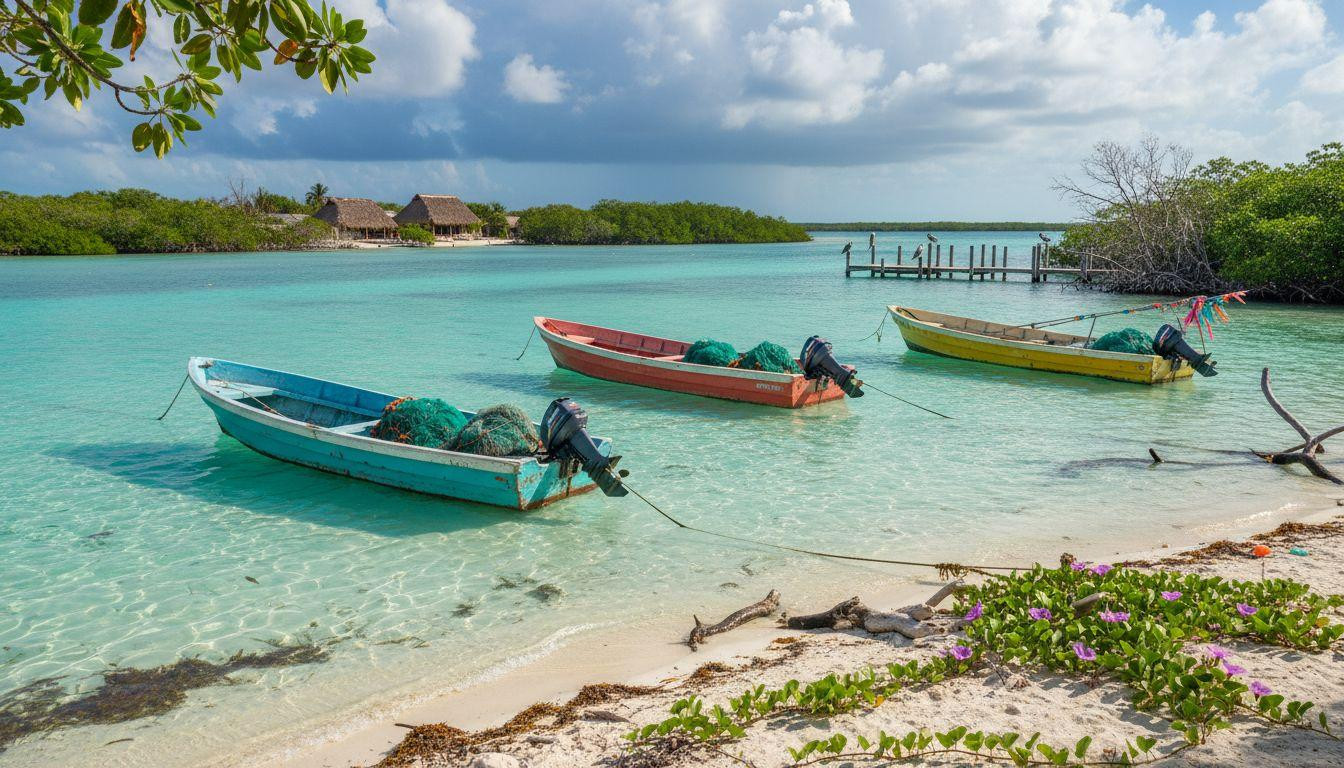
The dirt road stretches 26 miles through Mexico’s Sian Ka’an Biosphere Reserve, each pothole the size of a small crater. Your rental car bounces violently for 3.5 hours from Cancun Airport. Then you see it: Punta Allen’s turquoise lagoons spreading endlessly, fishing boats anchored in crystalline shallows, and not a single resort in sight.
This lobster village keeps turquoise lagoons empty while Tulum’s beaches overflow with crowds just 90 minutes away. The brutal access road acts as nature’s bouncer, filtering out casual tourists and preserving Mexico’s last authentic fishing community.
Where Sian Ka’an’s reserve meets complete isolation
Punta Allen sits at the northeastern tip of the Boca Paila Peninsula, officially named Javier Rojo Gómez. The village of 469 residents exists within the 1.3 million-acre UNESCO World Heritage Sian Ka’an Biosphere Reserve, designated in 1987.
The unpaved road begins at Tulum’s reserve entrance after paying the MXN 105 ($5) entry fee. Giant potholes created by decades of rain and neglect make the 26-mile journey an adventure requiring 4×4 vehicles. December through March offers the best conditions when dry weather makes the road merely challenging rather than impassable.
No gas stations exist inside the reserve. Fill your tank in Tulum before entering. Cell service disappears miles before reaching the village, adding to the sense of complete disconnection from the modern world.
Turquoise water that tourism forgot
Morning light on Ascension Bay
Ascension Bay’s shallow turquoise flats stretch to the horizon, filtered by mangroves and protected by 70 miles of the Palancar Reef. The water clarity reaches 30 feet on calm days. White sandbars emerge at low tide, creating natural swimming pools where frigatebirds outnumber humans even during peak season.
Crystal clarity results from the complete absence of development runoff and constant filtration through the mangrove ecosystem. The color shifts from deep blue in channels to brilliant turquoise over sandy shallows.
Empty beaches as daily reality
While Tulum’s beaches pack with tourists paying $100+ per night for accommodations, Punta Allen’s shores remain virtually empty. Walking the pristine white sand coastline, you might encounter a few pelicans and scattered fishing nets, but rarely another person.
The village features sandy streets where barefoot children play between simple fishing shacks. No beach clubs, no vendors, no music. Just the sound of waves and distant bird calls echoing across the lagoon.
Living the lobster village rhythm
Dawn departures and fresh catches
Fishing boats depart at 5am as the village stirs to life. The lobster cooperative has sustained families here for generations, with fishermen checking traps by hand in the shallow waters. Fresh lobster meals cost $7-15 at the village’s main restaurant, which closes around 4pm when the catch is sold.
Compare this to Tulum’s beachfront restaurants charging $25-40 for imported seafood. Here, you eat what was swimming yesterday morning, prepared by the fisherman’s wife in a palapa overlooking the bay.
Activities in complete quiet
Local boat tours ($75-125) explore mangrove channels where dolphins play in turquoise shallows and sea turtles surface near white sandbars. Kayak rentals ($25/day) let you paddle silently through narrow waterways where coral reefs meet pristine waters without any resort development.
Swimming in the lagoon reveals water so clear you can see your feet on the sandy bottom 15 feet down. The absence of motorboat traffic keeps waters calm and wildlife undisturbed.
Why the journey matters
The 3.5-hour commitment from Cancun filters out day-trippers and cruise passengers. Most visitors stay overnight in basic guesthouses ($40-75) because the road demands respect. This self-selection creates the emptiness that makes Punta Allen special.
December through March brings perfect conditions: dry roads, calm seas for boating, and comfortable 75-86°F temperatures. Traditional fishing boats drift through empty waters just like they have for centuries.
No WiFi, limited electricity, and zero ATMs force digital detox. Cash only. Bring supplies from Tulum. The inconvenience is the point.
Your questions about Punta Allen answered
How rough is the road really?
Giant potholes require careful navigation even in 4×4 vehicles. Recent visitors describe “craters the size of the moon” that extend drive times to 4 hours after heavy rain. Sedan cars cannot make the journey. Government repairs continue but the road remains unpaved by design to limit access.
Where do you stay overnight?
Basic guesthouses and eco-lodges accommodate overnight visitors, though specific names and reservations prove challenging without reliable internet. Camping is possible on deserted beaches but comes with risks including rip currents and no lifeguards. Most visitors arrange accommodation through tour operators in Tulum.
How does Punta Allen compare to other Mexican beaches?
Costs run 30-50% below Riviera Maya averages due to remoteness and lack of resort amenities. Empty coastlines stretch for miles compared to Tulum’s packed hotel zones. Authenticity levels far exceed tourist destinations while maintaining similar water quality and natural beauty.
Dawn breaks over Ascension Bay’s turquoise mirror, fishing boats returning with the night’s catch while mist rises from mangroves. The sound of laughter carries across empty water as children splash in crystalline shallows where tourists dare not venture.