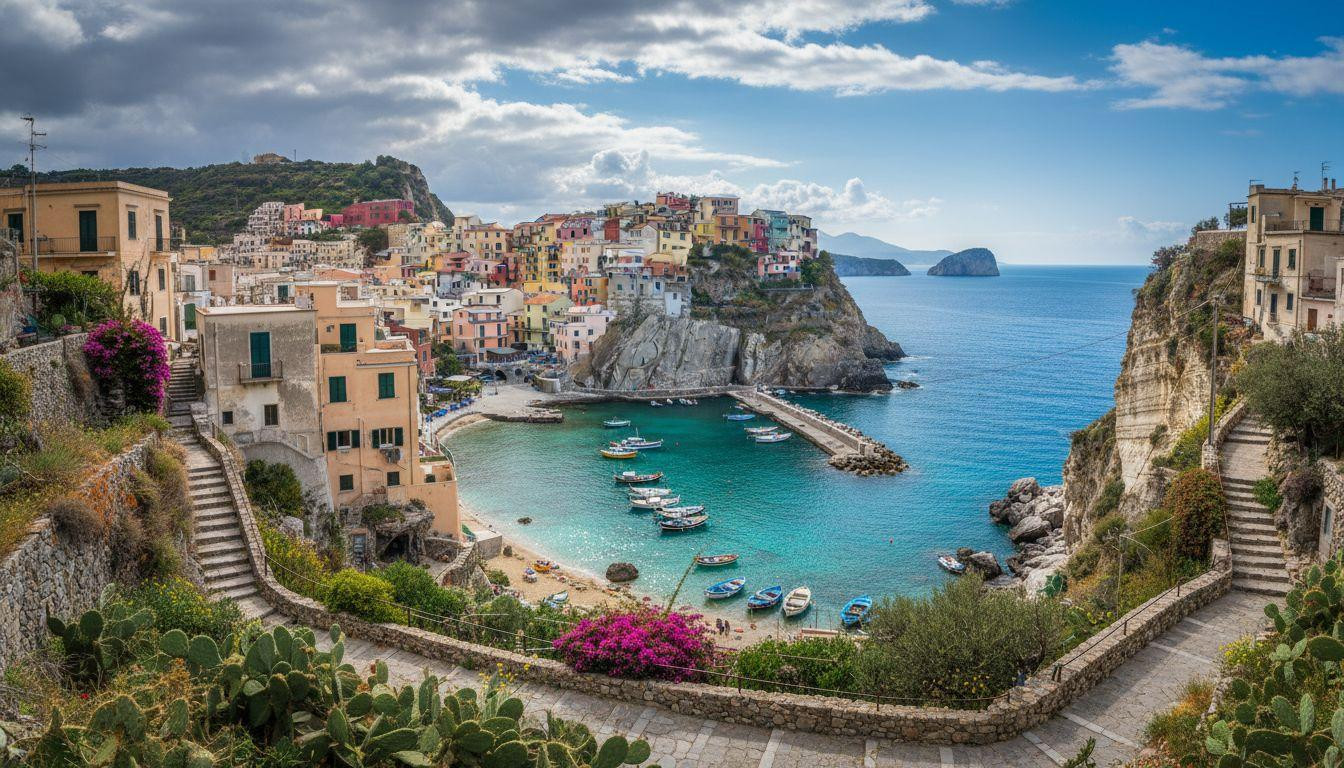
The morning ferry cuts through Tyrrhenian waters toward pastel houses clinging to white cliffs. Ponza emerges just 25 miles from Rome but feels like the Mediterranean’s last secret. No cruise ships dock here. No direct flights land. Just 3,500 locals guard coves so turquoise they defy belief.
December 2025 brings empty beaches and calm seas to Italy’s most overlooked island. While tourists flood Capri and Amalfi, this volcanic gem stays invisible to most Americans.
Italy’s forgotten island treasure
The Pontine archipelago sits 40 miles southwest of Rome in waters that stayed clear when tourism muddied everywhere else. Volcanic origins carved white limestone cliffs and golden sulfur beaches that shimmer against impossible blue water. Getting here requires commitment: a 90-minute ferry from Anzio or Formia costs $22-45, running year-round but reduced to twice weekly in winter.
Pastel houses in amber, cream, and blue cascade down cliffsides like a miniature Naples without the chaos. Fishing heritage built these colorful facades, not resort developers. December temperatures hover around 54-59°F with mild sunshine and empty harbors where locals reclaim their island from summer crowds.
The pastel harbor that time forgot
Sun-bleached stairways wind between buildings painted in volcanic mineral hues. Fishing boats bob in the tiny harbor while nets dry on weathered lines. No luxury yachts crowd these docks in winter.
Why December feels different
Off-season calm returns the island to its authentic rhythm. Near-empty ferries carry more locals than tourists. The pace slows to Mediterranean time when dinner starts at 8 PM and conversations last until midnight.
The hidden beach revelation
Eighty percent of Ponza’s coastline stays unreachable by land year-round. Small boat rentals ($55-110 half-day) unlock coves that stay invisible to casual visitors. Cala Felce’s golden-yellow sulfur sand creates stunning contrast against turquoise water so clear you count fish at 20-foot depths.
Multicolored rocky seabeds at Cala dell’Acqua showcase red iron oxide, purple manganese, and yellow sulfur in underwater rainbows. Heart-shaped Cala del Core earned its “Cove of the Heart” nickname from natural rock incisions carved by centuries of waves. Piscine Naturali offers saltwater pools perfect for floating among volcanic formations.
The turquoise that defies belief
Water color comes from white limestone reflecting through crystal clarity. Protected coves stay calm when open ocean churns. Winter visibility reaches 50+ feet compared to summer’s plankton-hazed 30 feet. This Croatian island offers similar boat-accessed beauty but Ponza stays more affordable.
The boat culture nobody expects
Locals rent small dinghies daily for beach picnics and fishing. This tradition keeps tourism manageable since only serious visitors invest in boat exploration. Freedom to discover empty coves creates intimate island experiences impossible on developed coasts.
The authentic island experience
Morning harbor markets start at 6:30 AM with fresh swordfish, sea urchins, and octopus. Family-run trattorias like Da Enzo al Frontone serve spaghetti ai ricci (sea urchin pasta) for $20 versus $35 on Capri. Local Lazio wines from volcanic soil pair perfectly with tuna tartare and anchovy bruschetta.
Chiaia di Luna beach closes for swimming due to cliff instability but clifftop paths offer dramatic lunar landscape views. Roman ruins include ancient cisterns and Augustus’ rival exile sites marked by simple stone plaques. Evening aperitivo at Bar del Porto costs $3 for local white wine while fishermen share stories in rapid Roman dialect.
Local flavors without tourist menus
December brings the sweetest sea urchins that locals call “oro nero” (black gold). Winter dining feels authentic when restaurants serve locals, not cruise passengers. Grenada coastal towns offer similar authentic flavors in protected island settings.
The Roman ruins nobody visits
Palazzo Giuliano stays open year-round with Roman cistern tours at 9 AM daily. No crowds mean perfect photography opportunities among ancient stone arches. Political exile history adds depth beyond typical beach destinations.
Why Americans miss this Mediterranean gem
No direct flights reach Ponza, requiring two-step journeys through Rome airports. Language barriers persist with 95% Italian-only signage and services. Marketing focuses domestically, keeping international crowds away by design rather than accident. This “protective barrier” preserves authentic character that disappeared from famous Italian islands decades ago.
Daily costs average $160 versus $590 on Capri for comparable experiences. Winter brings 60% accommodation discounts with guesthouses from $70/night. The reward justifies extra travel time: empty turquoise coves, unhurried local interactions, and Mediterranean island life before tourism industrialized it. Antiparos keeps similar authentic charm in the Cyclades for comparable prices.
Your questions about this tiny island answered
How do I actually get there in winter?
Rome airports connect to Formia by train (1 hour 45 minutes, $9) then ferry to Ponza (1 hour 20 minutes, $25). Winter service runs twice weekly on Saturdays. Book ferry tickets advance online through Laziomar or SNAV operators. Total journey time: 4 hours 15 minutes door-to-door.
Is December weather suitable for beach visits?
Air temperatures reach 54-59°F with frequent sunshine and calm seas. Water stays around 57°F for hardy swimmers. Best advantage: empty beaches and dramatic winter light for photography. Car-free Indonesian islands offer warmer winter alternatives for tropical beach lovers.
What makes these beaches different from famous Italian coasts?
Boat-only access creates natural crowd control impossible on road-accessible beaches. No lounger rentals or beach clubs preserve wild coastlines. Annual visitors total 127,000 versus Capri’s 3.2 million, creating intimate experiences with pristine nature and authentic local culture.
The return ferry feels like leaving a secret world. Ponza delivers what famous Italian islands promised before crowds arrived: pastel villages above impossible blue water, evening meals with fishing families, and Mediterranean rhythms that belong to another century. Forty miles from Rome, but decades from mass tourism.