“`html
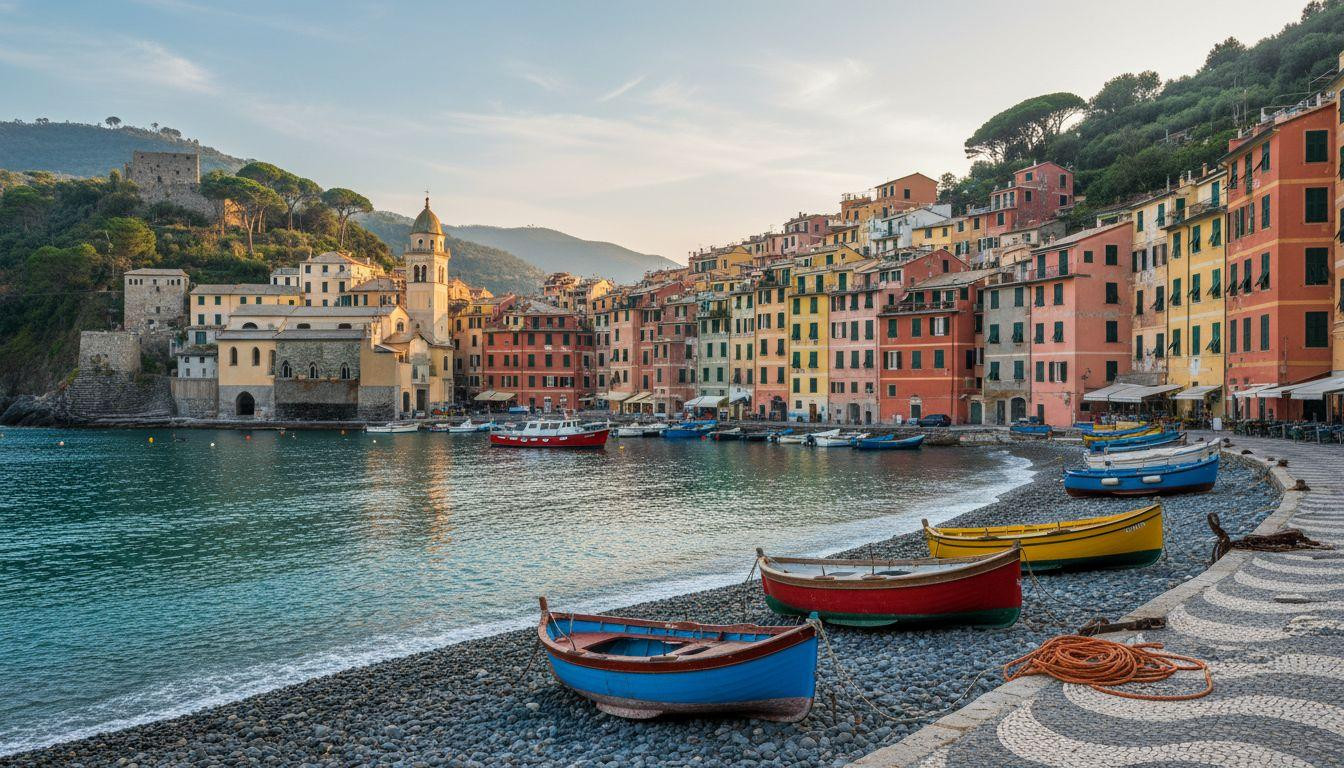
The harbor at Camogli glows ochre and pink under February sunrise. Look closer at those elaborate balconies lining the waterfront. They’re not real. Local masons painted them centuries ago because stone cost too much. The technique turns the entire village into an optical illusion, a film-set effect visible only in morning light before tourists arrive. At 7am, the promenade sits empty except for fishermen coiling rope near emerald water. This isn’t Portofino’s yacht-packed glamour 10 miles south. It’s something quieter.
The illusion village
Camogli’s 5,400 residents live among trompe l’oeil facades that date back to the 12th century. The painted balconies, shutters, and cornices create three-dimensional depth on flat walls. Fishermen who couldn’t afford real architectural details hired artists instead. The result: 100-plus pastel shades covering tall, narrow buildings clustered around the harbor. Walk Via Giuseppe Garibaldi at dawn and the low sun angle creates shadow depth on fake balconies. By noon, direct light flattens the illusion.
The Basilica di Santa Maria Assunta overlooks this painted theater from its perch on harbor rocks. Built in the 1100s, it still holds Sunday mass for locals. Behind it, Castello della Dragonara stands as a medieval fortress that once protected the village from pirate attacks. The castle’s stone walls contrast with the pastel illusions below, marking where real architecture ends and painted dreams begin.
When morning light matters
The golden hour physics
Sunrise hits Camogli between 7am and 8am from April through September. The low angle creates shadows that make painted cornices appear to project from walls. Winter offers serene mist but flatter light that reveals the trick. Spring through summer delivers the full effect. By 10am, the sun climbs too high and the three-dimensional illusion collapses into obvious paint. Photographers know this. Locals live by it.
The fishing rhythm
Fishing boats return before dawn, their engines echoing off painted facades. The harbor empties by 8am as catches head to market. Via Garibaldi fills with locals walking to Revello’s bakery, open since 1964, where focaccia al formaggio costs $7 per slice. The cheese focaccia bakes at 6am, its aroma mixing with sea salt air. Tourists arrive after 9am. By then, the authentic rhythm has already played out.
Walking through painted facades
Sensory texture
Mosaic walkways line the harbor promenade, smooth underfoot after centuries of wear. The pebble beach shifts with each step, requiring doubled towels for comfort. Emerald water laps against black stones, a sound that never stops. Seagulls call from the Basilica’s bell tower. The air tastes of salt and pine from Portofino Regional Park trails that start just beyond the village edge. Similar European villages preserve medieval architecture, but few maintain this lived-in fishing culture.
What Portofino traded
Ten miles south, Portofino’s harbor packs luxury yachts where fishing boats once moored. Hotels there start at $275 per night. Camogli keeps rates at $60-$150 for beachfront rooms in 2026. The difference isn’t just cost. It’s authenticity. Portofino chose glamour. Camogli chose to stay unspoiled. No celebrity yachts dock here. Local families still fish. The painted balconies remain because residents protect what matters.
The view from above
San Rocco church sits on a hill 15 minutes above the harbor. The climb reveals Golfo Paradiso spreading west toward Genoa. At sunset, the same light that illuminated fake balconies at dawn now turns the entire bay copper. The painted facades below look real from this distance. Only up close does the illusion reveal itself. That’s the point. Beauty doesn’t require wealth. It requires craft and care.
Italian alternatives to famous destinations often deliver more authentic experiences at lower costs. Camogli proves the pattern.
Your questions about Camogli answered
Best time to see the trompe l’oeil effect?
Visit between 7am and 8am from April through September when low sun creates shadow depth on painted balconies. Winter offers fewer crowds and serene mist but flatter light that reduces the three-dimensional illusion. May and June balance optimal lighting with manageable tourist numbers. Avoid July and August when crowds peak.
How does Camogli compare to Cinque Terre?
Camogli delivers similar pastel-village aesthetics with 90% fewer tourists. Train access from Genoa takes 25 minutes and costs $4 one-way versus Cinque Terre’s packed trails. Hotels run $60-$200 per night compared to Cinque Terre’s $250-plus rates. Mediterranean coastal towns with preserved character often hide in plain sight.
What’s the Sagra del Pesce?
Mid-May brings the Fish Festival, honoring San Fortunato since 1952. The world’s largest frying pan cooks fresh catch for thousands. Fireworks light the harbor at night. Book accommodations six months ahead. The festival marks when Camogli’s fishing heritage becomes spectacle, but the authentic rhythm returns by June. Harbor towns with maritime traditions balance tourism and authenticity in similar ways.
The ferry back to Genoa leaves at 4:30pm. Most visitors make it with time to spare. The painted balconies look different in afternoon light. Less magical. More honest. That’s when you understand why locals painted them in the first place.
“`