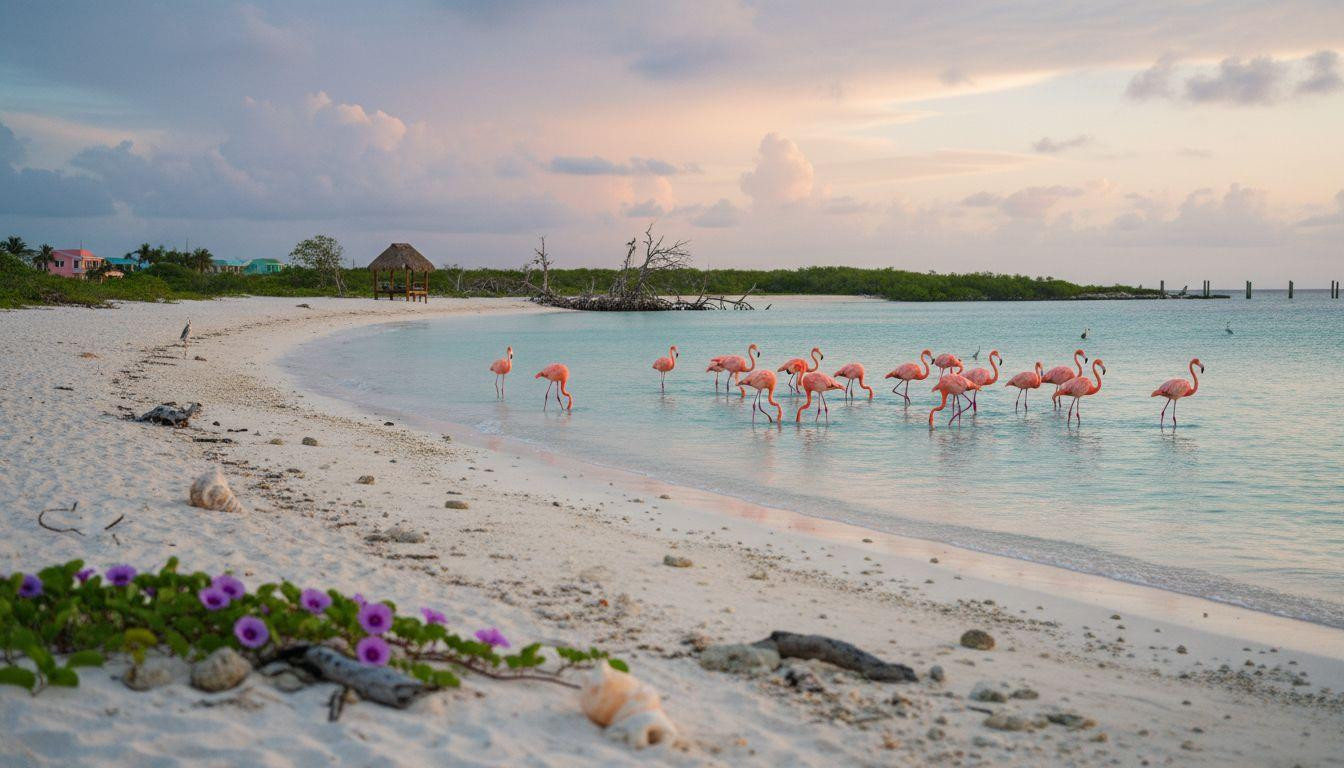
The ferry from Chiquilá cuts through turquoise water so clear you can see the sandy bottom 15 feet below. Flamingos wade through mangrove lagoons in the distance. Golf carts wait at the dock instead of taxis.
This island keeps car-free sand where flamingos wade through turquoise shallows 2 hours north of Cancún. Isla Holbox’s North Beach stretches 6 miles of empty white sand. Only 2,000 residents call this Gulf of Mexico refuge home.
Where Quintana Roo forgot to build resorts
North Beach faces the open Gulf with gentle waves lapping shores devoid of hotel towers. The Yum Balam Nature Reserve protects 43 square miles of island paradise since 1996. Ferry access creates a natural barrier few tourists cross.
Cancún’s hotel strip sprawls 87 miles south while Holbox maintains its fishing village authenticity. Winter brings ideal conditions with 72-82°F temperatures and minimal humidity. Bioluminescent plankton illuminate night waters during calm January evenings.
Local resistance to high-rise development dates to the 1980s car-free ordinance. Golf carts cost $1.50 per ride through sandy streets lined with pastel wooden houses. This Nicaragua beach offers similar Caribbean emptiness during dry season months.
The flamingo secret nobody mentions
Golden hour lagoons
Flamingo migrations peak December through March in nearby mangrove estuaries. Walk 15 minutes from town center to lagoon edges for free viewing. Dawn and dusk light creates pink-orange flocks against turquoise reflections.
Guided boat tours cost $39 per person to Punta Mosquitos viewing areas. Independent exploration reveals quiet lagoons where hundreds of flamingos feed undisturbed. Tulum’s turtle tours charge double for more crowded wildlife encounters.
Bioluminescent nights
Dinoflagellate blooms create liquid starlight trails during winter paddling sessions. January waters reach peak calm for optimal bioluminescence visibility. Kayak tours cost $47.50-$53 per adult for 2-hour evening excursions.
Unlike Puerto Rico’s Vieques with nightly tour crowds, Holbox offers solitary paddles through glowing water. Winter months provide strongest bioluminescent activity when Gulf currents settle. This Maldives village delivers similar underwater magic with dawn manta encounters.
What car-free actually feels like
Golf cart mornings
Daily golf cart rentals cost $80-$129 including fuel and insurance. Sandy streets connect colorful beach shacks without traffic lights or exhaust fumes. Bike rentals offer $13 daily alternatives for island exploration.
Ferry dock to North Beach takes 5 minutes by golf cart through town center. Walking everywhere becomes natural on an island measuring only 43 square miles total. Morning silence breaks only with distant waves and bird calls.
Lobster pizza and quiet evenings
Italian expats invented lobster pizza here during the 1990s, now an island staple for $15. Fresh seafood includes tikin xic marinated fish and empanadas de camarón. Coconut water stands dot sandy pathways between family-run restaurants.
Evening routines center around hammocks, sunset viewing, and comfortable silence. No Señor Frog’s or Hard Rock Cafés disturb the fishing village atmosphere. Grand Anse beaches offer similar Caribbean authenticity with local culture intact.
When to feel it
January through March delivers peak dry season conditions with clearest turquoise water visibility. Post-holiday visitor numbers drop significantly compared to December’s crowds. Whale shark tours extend into March for $150-200 per person.
Cancún Airport connects via 2-2.5 hour shuttle services costing $20-50 roundtrip plus $15 ferry crossing. Day visits miss dawn and dusk magic when flamingos are most active. Guesthouses range $50-250 nightly versus Tulum’s $200-400 rates.
Avoid June through November hurricane season with heavy rainfall and rough seas. Winter 2026 offers optimal weather windows for outdoor activities and wildlife viewing.
Your questions about Isla Holbox North Beach answered
Is it really completely car-free?
Yes, the 1980s local ordinance prohibits all motorized vehicles except golf carts and utility trucks. Streets remain unpaved sand rather than asphalt. No exceptions exist for tourists or emergencies.
How does it compare to Tulum?
Holbox costs 20-30% less than Quintana Roo averages with significantly fewer crowds. No archaeological ruins exist but authentic fishing culture thrives. Better for quiet romance and families versus Tulum’s party atmosphere.
Can I see whale sharks in January?
Whale shark season runs May through September with occasional March extensions. January focuses on flamingo migrations and bioluminescence instead. Different seasonal appeals offer unique wildlife experiences year-round.
Sunset swings along North Beach sway gently as flamingo calls echo across mangrove lagoons. Warm Caribbean breeze carries salt air through car-free streets. This is what Cancún traded for 7 million annual tourists.