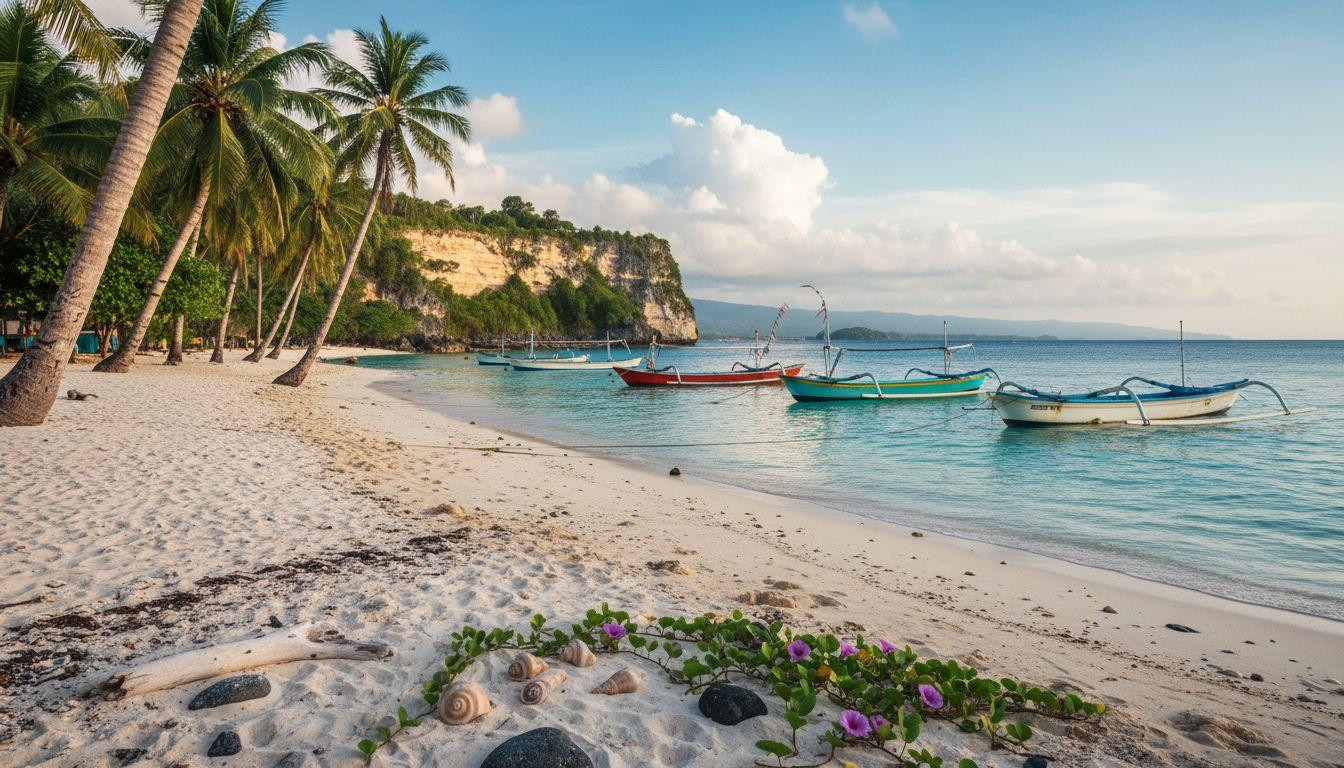
The fast boat from Sanur cuts through turquoise waters toward a limestone cliff rising from the sea. Palm trees sway above white sand beaches where wooden fishing boats rest in glass-calm lagoons. This is Nusa Lembongan, an 8-square-kilometer island that preserves the Bali experience Americans imagine but can no longer find on the mainland.
The island Bali used to be
While Bali welcomed 16.4 million visitors in 2024, Nusa Lembongan maintains just 7,000 permanent residents across its compact landscape. No cars navigate the sandy roads, only scooters and golf carts. Traditional seaweed farming continues along the southwest coast where families have worked the same plots for generations.
Jungut Batu beach stretches 1.5 miles of white sand where fishing boats return at dawn with fresh catches. Local warungs serve grilled fish with sambal for $3-5 while limestone cliffs rise 65-100 feet above crystal-clear waters. Budget bungalows start at $15 per night, compared to Bali’s average $95 in Seminyak during December 2025.
Where calm still exists
The visual that stopped Bali
Dream Beach curves along golden limestone cliffs where turquoise water meets powder-soft sand. Mushroom Bay shelters traditional wooden boats in a natural lagoon surrounded by palm trees and mangrove forests. Devil’s Tear sends dramatic wave sprays across jagged rocks during high tide, witnessed by perhaps two dozen visitors instead of hundreds.
The Yellow Bridge connects Nusa Lembongan to neighboring Nusa Ceningan, offering views similar to this Malaysian floating paradise without the jungle canopy but with equal serenity.
The culture tourism didn’t erase
Pura Goa Giri Putri Cave temple hosts traditional Balinese Hindu ceremonies where locals gather for religious festivals throughout December 2025. Temple festivals celebrate Nyepi Day across the island while maintaining sacred traditions unchanged for centuries. Traditional batik textile crafts continue in family workshops where techniques pass between generations.
Seaweed farming experienced a renaissance during the pandemic when tourism decreased. Local families tend underwater plots visible during low tide, harvesting seaweed for traditional medicine and modern cosmetics.
Why Americans are rediscovering Lembongan
Access without complexity
Fast boats depart Sanur every hour from 7:30 AM to 4:30 PM with 30-minute crossings costing $20-30. No visa complications beyond Bali requirements. Scooter rentals cost $7-10 daily with no international license needed for Americans visiting Indonesia.
The entire island circumference requires just 2 hours by scooter. Jungut Batu to Mushroom Bay takes 15 minutes, while diving experiences rival Maldivian waters at fraction of resort prices.
Activities that honor slowness
Snorkeling trips cost $25-50 including gear and boat transport to coral reefs with 80-foot visibility. Mangrove boat tours through eastern forests cost $15 for two people, offering dawn mist experiences with abundant birdlife. Traditional Balinese offering-making workshops teach temple ceremony preparation for $10.
Sunset viewing at Devil’s Tear requires timing with high tide schedules, creating natural crowd control unlike Bali’s packed clifftop bars charging $15 cocktails.
The difference you feel immediately
Morning soundscapes include gentle waves and rooster crows instead of motorbike traffic. Evening walks pass lantern-lit warungs serving fresh seafood while families gather around traditional games. Water temperatures maintain 82°F year-round with humidity 10% lower than mainland Bali due to constant sea breezes.
Local tourism boards confirm that similar to this Caribbean sanctuary, Lembongan deliberately limits development to preserve its authentic character. The mental reset happens within hours, not days.
Your questions about this tiny island feels like Bali without the crowds answered
When should I visit for best weather?
April through October offers dry season conditions with temperatures 81-90°F and minimal rainfall. December falls during rainy season but Lembongan experiences lighter, more localized showers than mainland Bali. High season peaks during July-August and December holidays when accommodation prices increase 30-40%.
How does it compare to Nusa Penida?
Nusa Lembongan offers better infrastructure with paved roads suitable for scooters, while Nusa Penida (25 times larger) requires 4WD vehicles for rough terrain. Lembongan suits families and casual travelers seeking beach relaxation, while Penida attracts adventure seekers wanting cliff jumping and hiking challenges.
Is three days enough to experience the island?
Three days allows comprehensive beach exploration, snorkeling, and cultural experiences including temple visits and seaweed farming demonstrations. Many visitors extend stays after disappointing mainland Bali experiences. Day trips to nearby calm waters add variety for week-long stays.
Dawn breaks over Jungut Batu beach where fishing boats emerge from morning mist like ghosts from another era. The soft golden light illuminates traditional life continuing unchanged while turquoise waves lap white sand in perfect rhythm. This is Bali as it was meant to be.