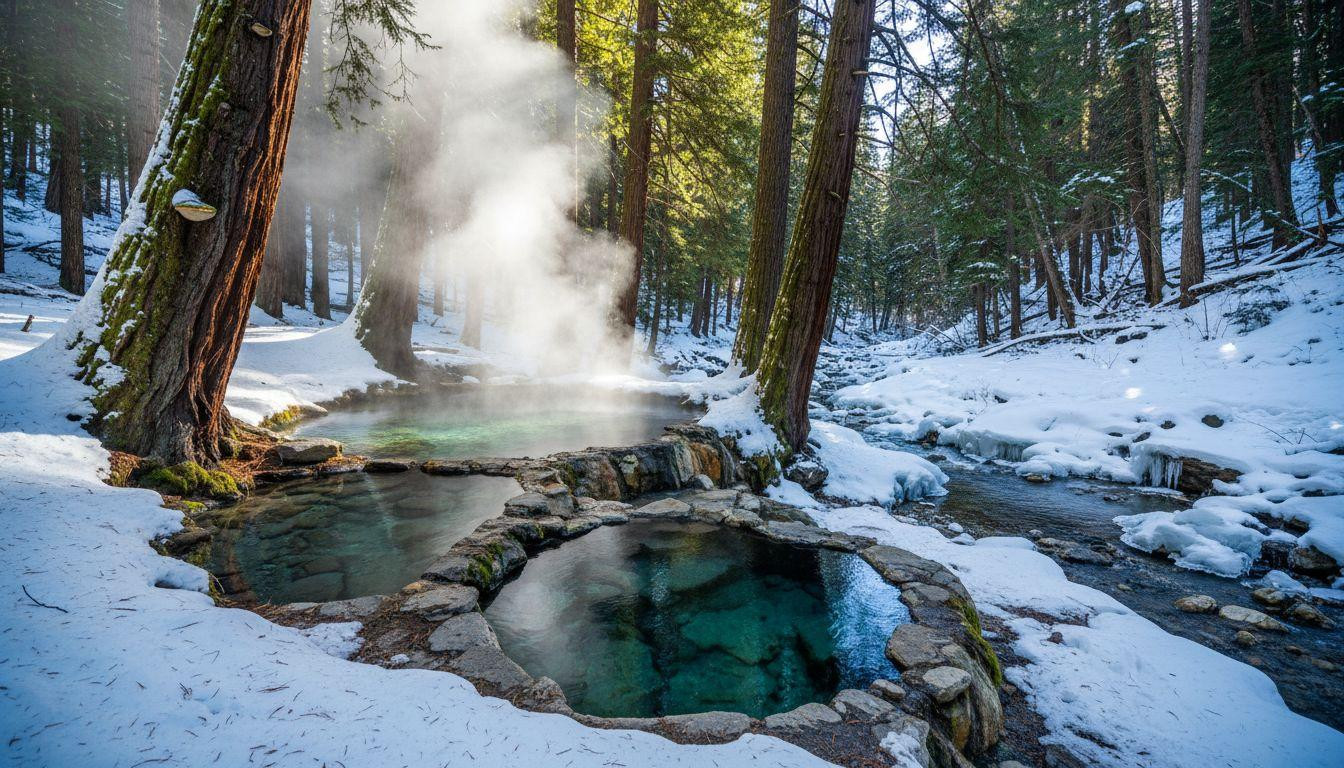
This Idaho forest corridor leads to three steaming pools where 104°F water meets winter snow. Jerry Johnson Hot Springs sits 2.6 miles from Highway 12, free to all who earn their soak through towering cedars and pines.
The trailhead appears at mile marker 152, just across from Warm Springs Pack Bridge. Parking holds 20-30 vehicles in the plowed lot, with overflow along the roadside. January brings 1-3 feet of snow, making micro-spikes or snowshoes essential for the 1-2 hour round-trip hike.
The cedar corridor to warmth
Western Red Cedar dominates this ancient forest, some trees reaching 300-500 years old. Morning light filters green through the canopy around 7:30am. Warm Springs Creek runs alongside the trail, its winter flow reduced to quiet whispers between ice-covered rocks.
The 2.6-mile path gains minimal elevation, staying near 3,200 feet throughout. Winter wildlife includes deer and elk, though deep snow keeps sightings rare. Forest silence dominates, broken only by occasional ice cracking in the distance.
Where winter brings back quiet
Three natural rock pools await at trail’s end, each carved by artesian springs flowing year-round. The upper pool runs hottest at 104°F and deepest at 3 feet, seating 4-6 people comfortably.
The 2017 silt event that changed crowds
Spring runoff in 2017 filled pools with silt and debris, naturally reducing visitor numbers. This geological reset created today’s quieter atmosphere, with winter weekdays seeing 0-5 visitors and weekends hosting 10-20 people maximum.
Three pools of varying heat
The middle pool offers 100-102°F temperatures with easier rock-step access. The lower pool stays cooler at 100°F but draws fewer crowds. High mineral content creates a subtle sulfur scent, while silica deposits smooth the natural rock formations.
Soaking among the cedars
January air temperatures range from 10°F at night to 35°F during the day. Steam rises dramatically from pools against the cold air, creating ethereal morning mist through the forest.
Winter snowshoe access
Sharp rocks in pools require water shoes for safe entry. The clothing-optional tradition continues year-round, though families and solo travelers share the space respectfully. Winter conditions in nearby Montana create similar pristine wilderness experiences.
Lewis and Clark’s highway
U.S. Highway 12 follows the historic Lewis and Clark Trail from 1805. The Nez Perce traditionally used these springs for healing, documented in tribal oral histories. Leave-no-trace principles remain strictly enforced, with nighttime closure from 8pm-6am.
The quiet reward of distance
Free entry sets Jerry Johnson apart from commercial hot springs charging $12+ per adult. The 2.6-mile requirement filters casual visitors, leaving space for those who appreciate earned relaxation. No camping allows on-site, preserving the pristine forest setting.
Unlike drive-up alternatives, this wilderness soak maintains its authentic character. Natural spring systems worldwide offer similar therapeutic benefits, but few combine free access with old-growth forest beauty.
Your questions about Jerry Johnson Hot Springs answered
Best time to visit?
Late spring through fall offers dry trail conditions and easier access. Winter provides maximum solitude but requires proper snow gear. Current January 2026 conditions favor experienced snowshoers seeking peaceful soaks.
Where to stay nearby?
Jerry Johnson Campground sits 1 mile from the trailhead, operating May-September with sites around $15-20 per night. Winter visitors rely on Lochsa Lodge cabins or drive from Missoula, Montana, 75 minutes away via Highway 12.
How does this compare to commercial springs?
Lava Hot Springs charges around $12 per adult for developed pools and amenities. Jerry Johnson offers primitive beauty, forest setting, and complete freedom for the price of a forest hike. Similar old-growth corridors throughout the Pacific Northwest provide comparable natural sanctuary experiences.
Steam rises through ancient cedars as dawn breaks over the pools. Winter snow frames the thermal sanctuary, creating a moment where wilderness and warmth converge in perfect, unhurried silence.