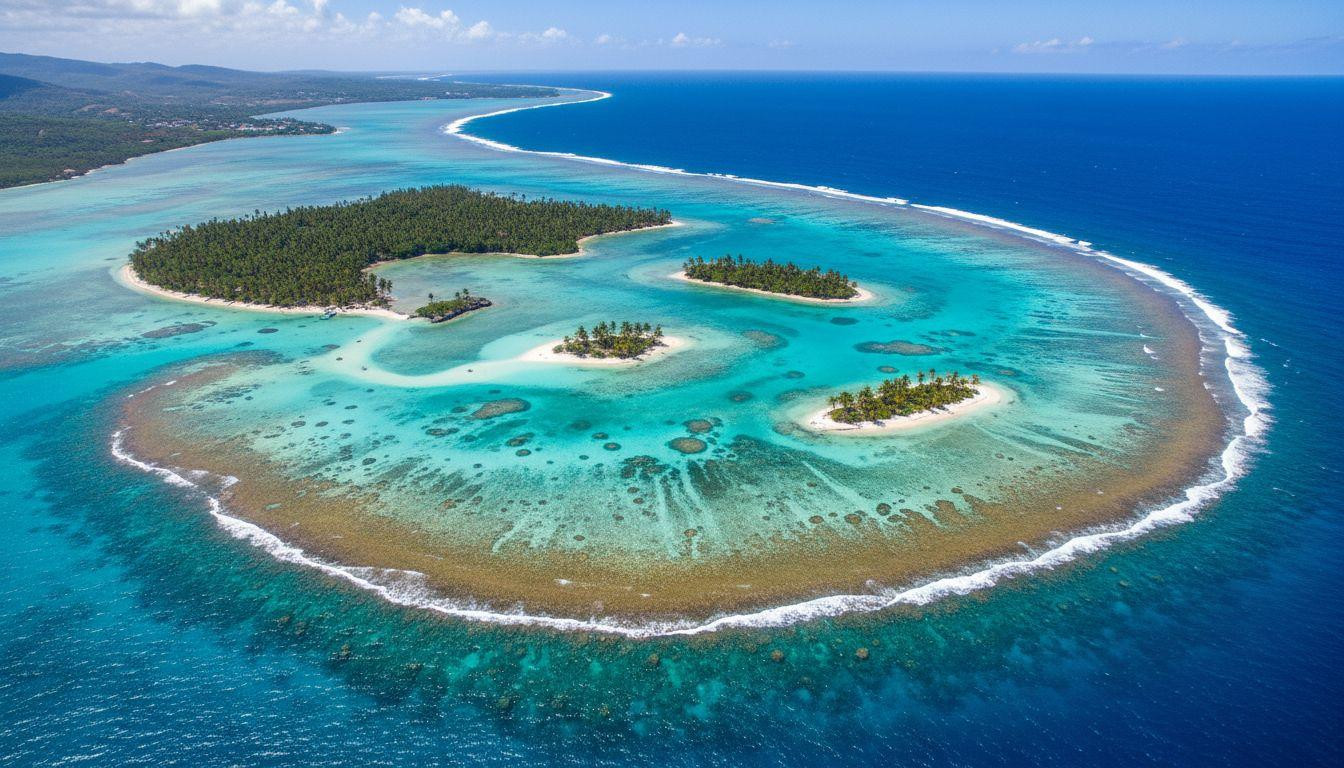
The water taxi cuts through calm Caribbean swells as Union Island shrinks behind us. Ahead, something extraordinary emerges from the turquoise expanse: a horseshoe-shaped reef enclosing five uninhabited islands in what feels like nature’s private swimming pool. This is Tobago Cays, where sea turtles glide through waist-deep water so clear you can count the coral heads below.
Most Caribbean destinations promise paradise but deliver crowds. Here, 50,000 annual visitors spread across an entire marine park means you might share a sandbar with just a handful of snorkelers. The boat approaches the reef’s protective embrace, and suddenly the ocean transforms from deep blue to liquid crystal.
The horseshoe that changed everything
The Horseshoe Reef stretches 2.5 miles in a perfect semicircle, creating a 1,400-acre lagoon protected from Atlantic swells. This natural barrier took millions of years to form as corals built upon a volcanic foundation that slowly subsided beneath the waves. The reef breaks heavy seas and strong currents, leaving the interior waters calm enough for children to snorkel safely.
Inside this protective embrace float five uninhabited cays: Petit Rameau, Petit Bateau, Baradal, Petit Tabac, and Jamesby. Each rises from powder-white sand and shallow turquoise water, crowned with coconut palms that have never known a resort developer’s plans. The marine park designation since 1998 ensures they never will.
Water depths range from ankle-deep sandbars to 16-foot maximums, with most snorkeling zones staying between 3-10 feet. You can literally walk between islands at low tide, following underwater sand highways visible through the crystalline water.
Where turtles own the water
Swimming among ancient mariners
Green sea turtles treat these waters as their personal dining room. The shallow seagrass beds provide perfect grazing grounds, while the reef’s protection creates ideal nesting conditions. I spent an hour floating motionless as a turtle the size of a coffee table grazed just arm’s length away, completely unbothered by my presence.
Morning hours offer the best encounters. Turtles feed most actively between 8-11am when the water temperature hits that perfect 82°F sweet spot. Unlike the crowded turtle experiences at Moorea’s accessible reef zones, here you might count 20 turtles in a single snorkel session.
The reef’s living color
Coral heads rise from the sandy bottom like underwater gardens. Healthy stony corals show 30-40% coverage, remarkable for Caribbean waters. Purple sea fans wave in gentle currents while yellow tube sponges create vertical sculptures across the reef face.
The horseshoe shape creates a unique ecosystem. Calm interior waters support delicate soft corals, while the exposed outer reef hosts hardy brain and elkhorn species that thrive in stronger currents. Fish life includes everything from tiny sergeant majors to cruising barracuda patrolling the reef edges.
A day inside the lagoon
The 45-minute journey
Water taxis depart Union Island’s Clifton Harbour at 8am sharp, carrying 12 passengers maximum. The $95 per person fee includes snorkel gear, lunch, and the $10 marine park entry. Private boats cost $300 for groups but offer flexible timing and secluded anchorage spots.
The journey takes 30-45 minutes depending on sea conditions. Union Island’s guesthouses provide budget bases from $85-150 per night, though some visitors day-trip from nearby Palm Island Resort. Book water taxis the evening before, as morning departures fill quickly during December-April peak season.
Five islands, zero infrastructure
Petit Rameau offers the largest beach area with shade-providing palm groves. Petit Tabac features the most dramatic snorkeling right off its eastern shore. At low tide, sandbars connect the islands, creating temporary walking paths between them. The experience feels similar to exploring Panama’s pristine aquamarine bays, but with even fewer visitors.
No bathrooms, no beach bars, no lounge chairs. Bring everything you need, including shade and drinking water. The pristine nature means pack-it-in, pack-it-out policies apply strictly. Fresh lobster lunch happens on the boat or back at Union Island’s waterfront restaurants.
The quiet season advantage
December through April delivers perfect conditions: 81-86°F air temperatures, minimal rainfall, and calm seas ideal for snorkeling. Turtle activity peaks during winter months as mating season overlaps with the dry season. Trade winds stay light inside the reef’s protection, creating glass-calm conditions even when outside waters show whitecaps.
Tourist seasons work backwards here. Caribbean high season brings just 20-50 daily visitors compared to thousands at mainstream destinations. The remoteness that requires boat-only access naturally limits crowds. Unlike the yacht-heavy scenes at Coron’s popular lagoons, Tobago Cays maintains an authentic wilderness feel.
Recent visitor surveys show the 2025 season drew 20% more travelers than 2024, yet daily numbers remain refreshingly low. Union Island’s small airport and limited accommodation naturally regulate visitor flows.
Your Questions About Tobago Cays Answered
How do I actually get there?
Fly from New York or Miami to St. Vincent via Barbados (5-7 hours total), then catch the 20-minute hop to Union Island for $125-150. Union Island Airport code UNI serves as the gateway. No direct flights from mainland US, and no ferry services operate from other Caribbean islands.
What about food and facilities on the islands?
The cays remain completely undeveloped with no facilities whatsoever. Water taxi operators provide packed lunches featuring local specialties like callaloo soup and grilled fish. Bring extra water, as the tropical sun and saltwater snorkeling increase dehydration. Union Island restaurants serve fresh lobster and conch fritters upon return.
How does this compare to the Exumas?
Tobago Cays costs 40% less than similar Bahamas experiences while offering more reliable turtle encounters. Exumas day trips run $150-250 with yacht crowds, while this stays around $95 with boat-only access. Both feature stunning shallow water, but here you get authentic Caribbean culture rather than resort-focused tourism. The experience rivals Fiji’s remote snorkeling caves for pristine conditions.
Late afternoon light turns the water into liquid gold as our boat prepares for the return journey. A turtle surfaces near the bow, takes a breath, and disappears back into depths so clear they seem like air. The horseshoe reef stands eternal guard over this Caribbean secret, protecting something increasingly rare: untouched paradise where nature still writes the rules.