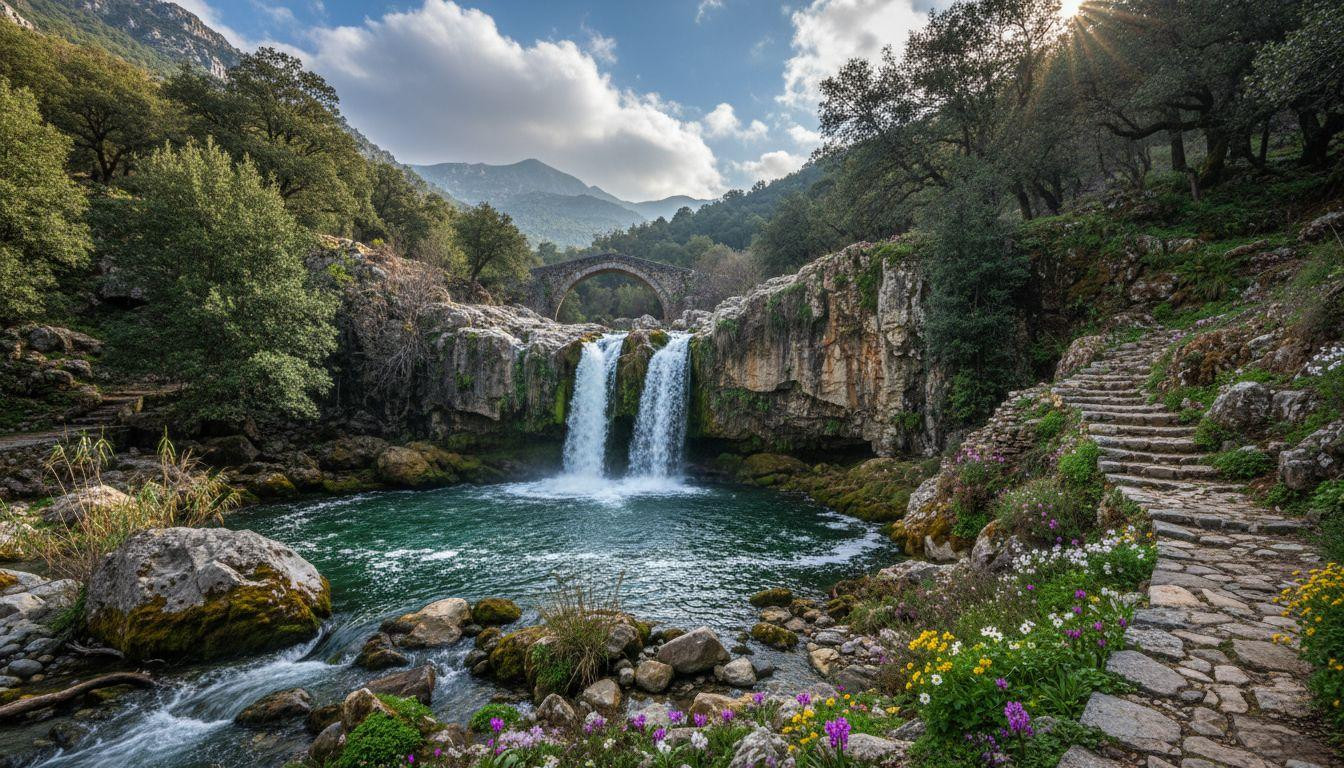
The ferry from Rafina cuts through morning Aegean swells for two hours. Andros emerges not white and blue like Santorini postcards, but emerald green. Waterfalls crash through oak forests where other Cycladic islands show only sunbaked rock. The island hides 240 kilometers of trails winding past Venetian bridges and natural pools fed by springs that never dry. Population 10,000. Visitors who skip this for Mykonos miss the Cyclades before cruise ships arrived.
January brings the strongest waterfall flows. Trails empty out. The quiet feels intentional.
Why Andros breaks the Cycladic pattern
The island sits northernmost in the chain, catching weather systems other islands miss. Springs flow year-round through valleys where oak and chestnut forests descend from 997-meter peaks to hidden coves. Santorini built its reputation on volcanic cliffs and arid drama. Andros chose lush gorges and river paths instead.
Travelers expect barren rock. They find mossy ravines where water sounds replace beach club music. The contrast registers immediately at Gavrio port, where green hills roll down to turquoise water in a way that feels geographically wrong for the Cyclades.
Waterfalls that defy island logic
Gerolimni cascade and its ice-cold plunge
Route 6 starts at St. Nicholas Monastery near Apoikia village. The 5-kilometer trail follows Achla River for three hours over uneven riverbeds and boulders. Trees shade most of the path. The waterfall appears suddenly, gushing into a deep emerald pool surrounded by moss-covered rocks.
Water temperature stays icy year-round from mountain springs. A local fisherman working these waters for 30 years calls it the island’s best-kept cooling spot. The pool sits deep enough for swimming, shallow enough to touch bottom. Morning light filters through the canopy around 8am, turning the water luminous green for maybe ten minutes.
Pythara’s fairytale gully and hidden engineering
One kilometer from Apoikia village, an easy path leads to Pythara Falls. Small cascades feed shallow crystalline pools where locals practice yoga on flat rocks. The site powered the Balkans’ largest water mill from 1863 to 1936, channeling flow to irrigate Stenia valley below.
Look closely at the gully walls. Hidden pipes from the old mill system still divert water to village tanks, a quiet engineering remnant most visitors miss. Wildflowers crowd the banks. Frogs call from the pools. The place feels more Alpine meadow than Greek island, which makes sense given Andros receives three times the rainfall of Paros or Naxos.
Walking the kalderimia network
Ancient stone paths restored for modern feet
The 240-kilometer Andros Routes network follows medieval mule tracks that linked villages before cars arrived. Stone terraces climb hillsides. Venetian bridges arch over streams. EU-standard waymarking guides hikers through landscapes that shift from coastal scrub to dense forest within an hour.
The paths feel unhurried by design. No steep scrambles or technical sections, just steady walking through terrain that rewards attention. A restored bridge over Achla River dates to Venetian rule in the 1400s. The stones fit together without mortar, still solid after 600 years.
Villages that tourism forgot
Apoikia village centers on Sariza spring, where pure drinking water flows from a marble lion fountain. The bakery opens at 6am for locals buying bread before work. No souvenir shops yet. Chora, the main town, maintains two museums and a maritime heritage that feels lived-in rather than performed. Batsi port serves froutalia omelets at family tavernas where menus list prices 20 percent below Mykonos averages.
The island’s population peaked at 30,000 before motor transport arrived. Now 10,000 residents maintain the quiet authenticity that makes other Mediterranean islands feel increasingly rare. Dovecotes dot the hillsides, stone towers built for pigeons that once carried messages between villages.
The rhythm of unhurried immersion
Winter hiking on Andros follows a different clock than summer beach schedules. Trails open at dawn when mist lifts from the valleys. By 9am the light turns golden on waterfall pools. Afternoons slow down for long lunches at village squares where locals gather to talk.
The island rewards visitors who stay longer than a day trip allows. Three days gives time to hike Gerolimni, explore Pythara, walk the coastal paths to sandy Gialia beach, and still find an unmarked trail locals mention casually over coffee. The pace feels restorative in a way that crowded island destinations rarely achieve anymore.
Your questions about Andros answered
When do the waterfalls flow strongest?
December through May brings peak flow after winter rains. Gerolimni gushes dramatically. Pythara’s pools fill deep enough for full immersion. Summer reduces flow but pools remain swimmable through October. January offers the strongest cascades with the fewest hikers on trails.
Can you hike alone or do you need a guide?
Major trails like Route 6 and the Pythara path follow clear waymarking. The Andros Routes app provides GPS navigation. River treks benefit from guides who know unmarked sections and navigate private land permissions. Explore Andros offers guided waterfall hikes that include transport and local knowledge worth the investment.
How does Andros compare to Corfu for green island experiences?
Both islands break Greek stereotypes with lush landscapes. Corfu developed more resort infrastructure and draws larger crowds. Andros stays quieter with authentic village life and focuses on hiking over beach clubs. Costs run similar but Andros offers more solitude. The waterfall trails here feel more remote than comparable hikes elsewhere in the Mediterranean.
Morning fog lifts around 8am at Gerolimni pool. For maybe ten minutes the whole cascade turns gold before the light shifts. Most visitors time their arrival for midday when the trail feels easier. The dawn hikers get the moment when the island shows why locals protect this place so carefully. The ferry back to Rafina leaves at 4:30pm. Plan to miss it at least once.