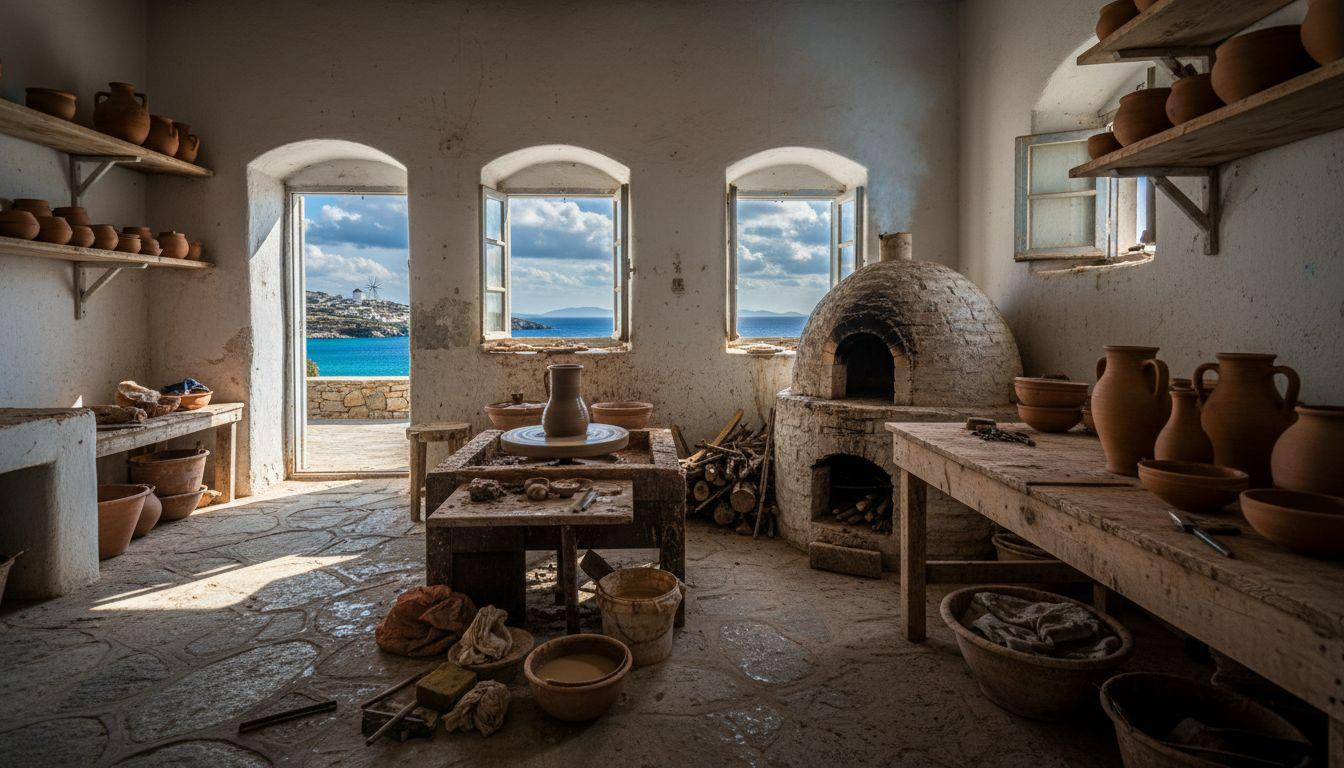
In a quiet pottery workshop in Artemonas, clay spins on an ancient wheel as dawn light filters through dusty windows. The potter shapes what will become tonight’s dinner vessel. On Sifnos, the earth beneath your feet becomes the pot that cooks your meal.
This tiny Greek island has preserved something lost elsewhere: pottery that lives in the kitchen. Every revithada stew and mastelo roast depends on vessels shaped by island hands from local clay.
Where clay becomes kitchen
Sifnos pottery workshops dot the coastline like culinary laboratories. In Vathi, Atsonios Ceramics operates traditional kilns where fourth-generation potters shape cooking vessels from schist-derived clay. The workshop opens daily at 9am when rhythmic wheel sounds mix with wood smoke.
Apostolidis Ceramics in Leivadas welcomes visitors for 2.5-hour sessions at $110 per person. You’ll touch warm clay, smell earth and fire, then watch your creation join centuries of cooking tradition. The island’s 15 remaining workshops once numbered over 200.
These aren’t decorative pieces. Every mastelo dish, revithadaki pot, and tsikali jug serves a kitchen purpose. The refractory clay withstands wood-oven heat while its porous nature allows slow, even cooking that stainless steel cannot match.
The slow fire that built a food culture
Wood ovens and overnight cooking
Traditional wood-fired ovens maintain 250-300°F for 10-12 hours. Revithada chickpeas transform overnight in clay pots, absorbing flavors impossible with metal cookware. The porous earthenware breathes, creating textures that define Sifnian cuisine.
Family tavernas across Artemonas and Vathi still use these methods. Clay vessels go straight from kiln to kitchen, their warm surfaces holding heat long after the fire dies. September mornings smell of thyme wood and slow-cooked beans.
Tselementes and culinary heritage
Nikolaos Tselementes, Greece’s most influential chef, was born here in 1878. The annual Cycladic Gastronomy Festival honoring him runs September 25-27, 2025. Festival events showcase traditional clay-pot cooking demonstrations and pottery workshops.
During festival weekend, hotel rates jump to $150-180 per night from typical $90-120. Early booking ensures access to cooking classes that pair traditional culinary techniques with hands-on pottery experiences.
Tasting the island’s earth
Signature dishes you can only eat here
Revithada arrives in the same clay pot where it cooked for 12 hours. The chickpeas achieve a creamy consistency impossible with metal pots, priced around $18-22 at family tavernas. Mastelo lamb, slow-cooked with dill and wine, costs $28-35 per portion.
Melopita honey-cheese tart emerges from clay baking dishes, while manoura cheese ages in ceramic vessels. Local tavernas charge 30-40% less than Santorini equivalents for authentic clay-pot meals.
Tavernas where pottery meets plate
Traditional establishments in Artemonas serve meals on pottery made within walking distance. Family-run tavernas maintain seasonal schedules, opening May through October when ferry access peaks at 3-4 daily departures from Athens.
According to local tourism surveys, 85% of visitors cite authentic clay-pot cooking as their primary reason for choosing Sifnos over other Cycladic destinations. Pottery workshops report steady bookings from food-focused travelers year-round.
Beyond the kitchen
Beaches exist here, but clay workshops and wood-fired kitchens draw the real crowds. Walking paths connect Apollonia to Artemonas in 20 minutes, passing pottery studios where tourists pause to photograph steam rising from morning kilns.
September brings ideal weather (75-80°F) and the Tselementes Festival atmosphere. Island hopping from Dubrovnik becomes popular as travelers seek authentic craft experiences over crowded beaches.
Your questions about Sifnos pottery cuisine answered
When should I visit for the food festival?
The Nikolaos Tselementes Festival runs September 25-27, 2025. Book accommodations by June for festival weekend, when hotels fill with food enthusiasts. Pottery workshops offer special demonstrations during the three-day event, with advance registration required.
How do I get there from Athens?
Ferries depart Piraeus port 2-4 times daily, journey time 2-5 hours depending on vessel type. High-speed catamarans cost $35-60 one way, conventional ferries $22-44. Book ferries early for September festival weekend when demand peaks.
Is it expensive compared to other Greek islands?
Sifnos costs 30-40% less than Santorini for comparable experiences. Mid-range hotels average $105-145 per night versus $200-300 on Santorini. Traditional tavernas charge $25-35 for clay-pot meals that would cost $45-60 in touristy mountain villages elsewhere.
Evening light catches clay dust in workshop windows as potters shape tomorrow’s cooking vessels. Wood smoke drifts from taverna kitchens where tonight’s revithada slowly transforms in ancient earthenware. The island’s 2,800 residents guard this tactile loop between earth and table.