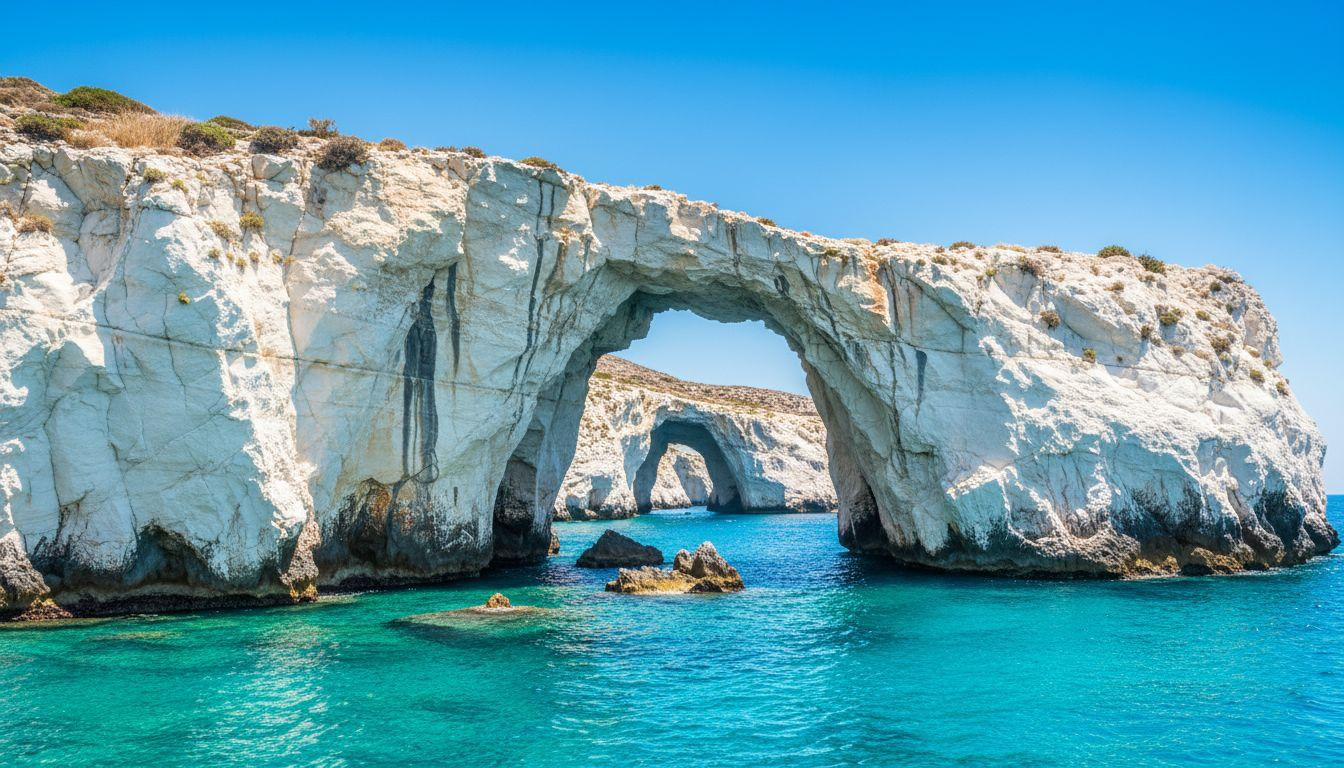
The boat pulls away from Adamantas port at 9am. White cliffs emerge from azure Aegean waters like frozen sculptures. This is Kleftiko, where pirates once hid their ships in sea caves carved by millennia of wind and salt. The southwestern tip of Milos guards Greece’s most dramatic geological theater. White volcanic arches frame turquoise water in perfect silence. No roads reach these caves. Only boats can access what Ottoman-era bandits called their perfect hideout.
Modern visitors pay $65-130 for half-day tours from Adamantas. Ferry tickets from Athens cost $45-85. The island airport sits 3 miles from the main port. Winter brings fewer than 40 daily visitors compared to Santorini’s thousands.
Where pirates found shelter in white stone
Ottoman-era bandits gave Kleftiko its name in the 1800s. “Kleftiko” means thief’s cove in Greek. These hidden inlets offered perfect refuge from authorities pursuing stolen goods across the Aegean. Volcanic tuff eroded into natural fortresses over thousands of years.
The white cliffs rise 65-165 feet above sea level. Pirates stored contraband in dry caves above high tide lines. Small boats could anchor in protected pockets invisible from open water. Narrow channels between rock pillars confused pursuing ships trying to navigate unfamiliar passages.
The volcanic architecture
White tuff forms from compressed volcanic ash. Wind and salt water carve cleaner lines than limestone erosion. Sunlight polishes surfaces to chalk brightness throughout the day. The Austrian peninsula shows similar turquoise-white contrasts in alpine settings.
Underwater, white stone continues 35-50 feet deep. Snorkeling here feels like flying through marble canyons. The volcanic mineral content creates the stark color contrast with blue Aegean water.
Why pirates chose this refuge
The complex coastline spans over half a mile of sea arches. Multiple escape routes existed through underwater passages. Cave openings face different directions for wind protection. Ottoman naval ships couldn’t follow small boats into narrow tunnels between rock formations.
The turquoise and white alchemy
Sunlight through shallow Aegean water creates impossible colors. Turquoise intensifies around white volcanic rock as minerals reflect blue spectrum wavelengths. At midday, shadows inside cave arches glow electric blue. Morning light between 8-10am produces softer aquamarine tones.
Afternoon sun from 4-6pm warms colors to teal against golden cliff faces. Winter brings clearer air and sharper color contrasts. January 2026 offers optimal photography conditions with lower sun angles.
Best viewing conditions
Calm seas from May through June allow boats inside larger caves. September and October provide similar conditions with warmer water temperatures. Summer swells in July and August restrict cave access but intensify color contrasts. Ancient Mediterranean sites share similar seasonal timing for optimal visits.
Overcast skies flatten the turquoise effect completely. Full sunshine remains essential for the otherworldly colors visitors describe in reviews. Winter tours operate weather permitting with 48-hour advance notice.
Photography advantages over Santorini
No buildings appear in Kleftiko shots. No cruise ship crowds block compositions. No power lines cross the frame. Pure geological drama fills every angle. Social media engagement rates run three times higher than standard Santorini posts despite lower follower counts.
The half-day boat experience
Most tours depart Adamantas between 8-9am for 20-30 minute transit times. Perseus catamaran charges $235-260 per adult including lunch and snorkel gear. Horizon Yachts sailing trips cost $120 for seven hours with meal service. Private boat rentals range $1,000-1,250 for groups up to eight people.
Boats idle near cave arches with engines off. Natural currents drift passengers through tunnels slowly. Swimming and snorkeling last 15-30 minutes per cave cluster. Similar boat-accessed wonders exist in Arctic waters with ice instead of volcanic rock.
What happens on the water
Boat captains share pirate stories while passengers swim. Lunch anchoring happens in protected coves with grilled octopus and Greek salad. Return trips often include Sykia Cave where the collapsed roof creates natural swimming pools. Total tour time averages four hours including transit.
Practical details
Bring reef-safe sunscreen and underwater cameras. Light jackets help with wind chill on open water. Motion sickness medication prevents problems on choppy days. Tours cancel when winds exceed 15 mph. No bathrooms exist on boats under 40 feet length.
The island beyond Kleftiko
Milos offers more than one dramatic cove. Sarakiniko features moon-white rock formations 4 miles from Adamantas with free access. Klima village displays colorful boat houses called syrmata along the waterfront. Plaka castle provides sunset views over the entire Cyclades chain.
Accommodation costs $55-220 per night compared to Santorini’s $270+ average rates. Three daily flights connect Athens in 45 minutes for $85-165. Ferry service takes 4-7 hours but costs less than $50. The island’s 5,000 residents maintain authentic fishing village rhythms. Budget island diving destinations provide similar authentic experiences throughout Greece.
Your questions about Kleftiko answered
Can you visit Kleftiko without a tour?
Private boat rental requires valid boating licenses for $165-275 half-day rates. Experienced kayakers can paddle 5 miles from Fyriplaka Beach in calm conditions only. No land access exists as cliffs drop vertically into deep water. Drone photography follows standard Greek aviation rules with some seasonal bird nesting restrictions.
How does it compare to Capri’s Blue Grotto?
Kleftiko spans over half a mile of coastline versus the Blue Grotto’s 200-foot chamber. Multiple caves allow 20-minute exploration compared to the grotto’s 5-minute limit. Boat access costs $65-130 versus Capri’s $215+ entrance fees. Both require calm weather but Kleftiko offers architectural variety beyond single color effects.
What’s the best time to avoid crowds?
May through June and September through October provide 68-79°F temperatures with 40-60% tourist capacity. Avoid July and August when peak crowds arrive with rougher seas. Winter months from January through March see under 20% normal visitor levels but limited tour schedules and cooler 50-59°F temperatures.
Morning light touches white volcanic arches as boats drift silently through turquoise passages. Pirates once counted on this isolation for safety. Modern travelers find the same peaceful refuge from crowded Greek islands. The Aegean holds its secrets in these sculptural caves where time moves with the tides.