“`html
The ferry from Neapoli cuts across Vatika Bay in 15 minutes. Most passengers head straight to Elafonisos’ white sand beaches. Turn left at Pounta Beach instead. Walk 20 meters into shallow turquoise water and you’re floating above streets laid out in 2800 BC. The world’s oldest submerged city sits at 4 meters deep. No dive certification needed. Just a mask and snorkel.
The Bronze Age grid beneath your fins
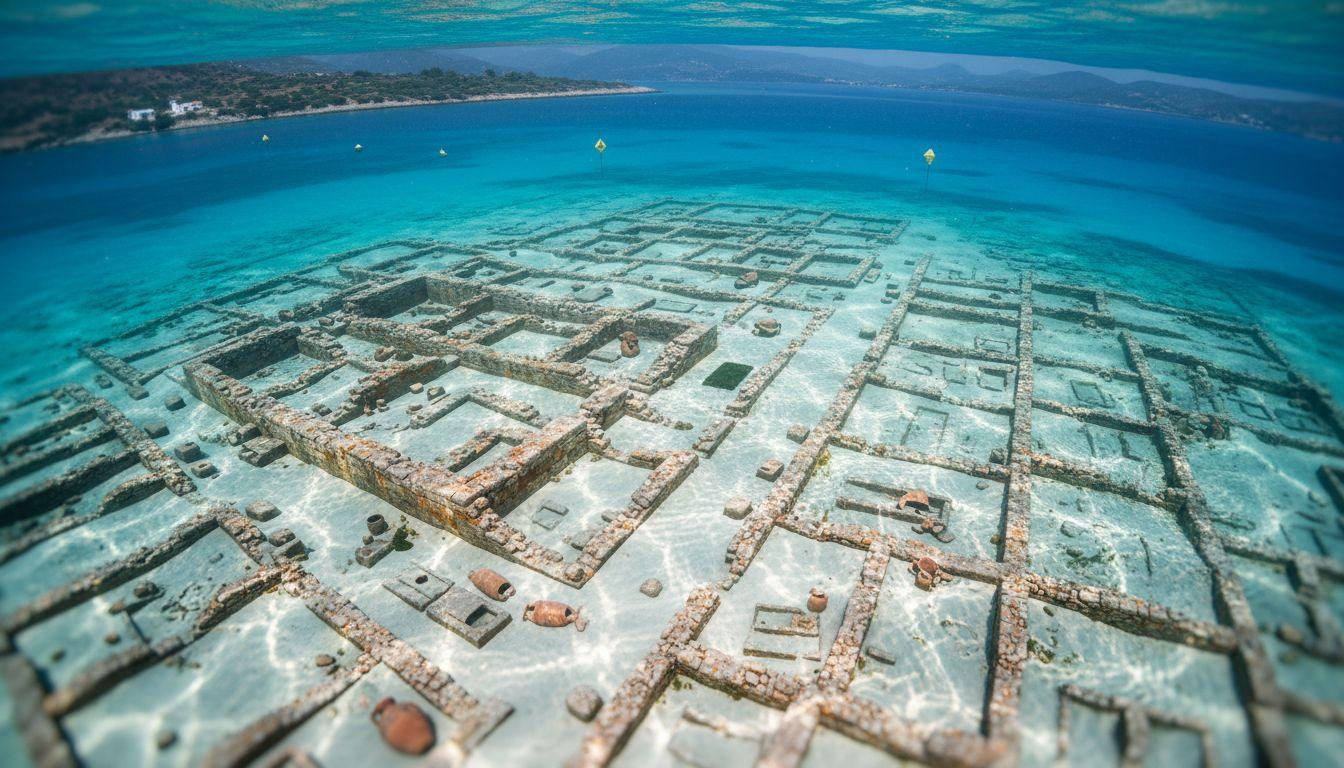
Limestone foundations appear first as darker shapes against sand. Then the pattern clicks. Straight streets running 300 meters. Rectangular buildings with multiple rooms. Courtyards where families gathered 5,000 years ago. The ruins span 50,000 square meters in water so clear you count individual stones from the surface.
British marine archaeologist Nicholas Flemming mapped this site in 1968 using hand tapes and basic snorkels. His team found 15 major structures. Each building had up to 12 rooms. The layout matched Mycenaean urban planning. Earthquakes dropped the entire settlement underwater around 1000 BC. The limestone preserved everything.
Midday sun at this latitude creates shadow-play on the ruins. Light penetrates the full 4 meters. Stone textures emerge. You see where walls met floors. Where doorways opened onto streets. The Greek Ministry of Culture designated this an Underwater Archaeological Site in 1976. UNESCO recognizes it as the oldest submerged city globally.
Swimming through 5,000-year-old streets
What the ruins tell you
The main structure measures 35 meters long. Archaeologists call it the mansion. Twelve rooms branch off a central corridor. Adjacent buildings show similar multi-room layouts. Thirty-seven cist graves lie scattered among the foundations. Two chamber tombs sit at the site’s eastern edge. Pottery fragments mark storage areas.
A University of Nottingham team ran digital surveys from 2009 to 2013. They mapped building orientations. Measured street widths. Documented tomb placements. The data confirmed continuous occupation through Early, Middle, and Late Bronze Age periods. Trade pottery shows connections to Crete and mainland Greece.
Why the water stays this clear
Vatika Bay’s limestone sediments settle quickly in calm conditions. The bay faces south. Elafonisos island blocks northern winds. Summer months bring 5-10 meter visibility. The shallow depth means no thermocline. No current strong enough to stir bottom sediments. Water temperature holds steady at 77°F from June through September.
The site’s protection limits boat traffic. No moorings exist within 100 meters. Ships must follow marked channels. This keeps propeller wash away from the ruins. Fine particles that would cloud the water stay settled on the seafloor.
Snorkeling the site
Getting in the water
Pounta Beach offers sandy entry. No rocks. No sudden drop-offs. Wade out 20 meters and the first foundations appear. Guided tours run $35-55 per person. Price includes mask, snorkel, fins. Tours last 2-3 hours with surface briefings. The Ephorate of Maritime Antiquities installed underwater route markers in 2016. Yellow buoys mark the main street grid.
DIY snorkeling works if you stay within marked zones. Gear rental costs $12-18 per day in Elafonisos village. The ferry from Neapoli runs hourly in summer. Round-trip fare is $3. Most visitors spend 90 minutes in the water. That covers the mansion, main streets, visible tombs. Longer sessions let you explore courtyard layouts and building details.
What makes this different from dive sites
Heracleion off Egypt’s coast requires dive certification. Depths there run 30-50 feet. Atlit-Yam near Israel sits at 26-40 feet and needs permits. Pavlopetri puts Bronze Age archaeology in snorkeling range. You breathe surface air. No time limits. No decompression concerns. Water temperature stays comfortable without a wetsuit from June through early October.
The shallow depth means more bottom time than any dive site. You can return to specific buildings. Study wall construction. Follow street alignments. Other Greek island experiences focus on beaches or hilltop ruins. This combines both. Ancient history you can touch with your eyes while floating in turquoise water.
The quiet reality of visiting
Santorini’s caldera attracts millions. Pavlopetri sees low thousands annually. The site’s protection keeps crowds manageable. No piers. No permanent facilities. Just the beach, the ruins, the bay. Elafonisos village has 1,200 year-round residents. Pounta hamlet counts under 100. Tourism infrastructure stays minimal by design.
Accommodation on Elafonisos runs $45-165 per night depending on season and room type. Peak summer months (July-August) command higher rates. June and September offer the same water clarity at 30% lower prices. Calm aquamarine water like this usually comes with resort development. Here it comes with fishing boats and local tavernas.
The drive from Athens takes 4-5 hours. Rental cars cost $55-90 daily. Most visitors base in Neapoli (18 miles north) where hotels run cheaper. The Archaeological Museum there displays Pavlopetri artifacts. Entry is $7. Pottery, tools, jewelry recovered from the site fill two rooms. Context helps before you snorkel the source.
Your questions about Pavlopetri answered
When can you visit?
June through September offers optimal conditions. Water temperature peaks at 79°F in August. Visibility stays highest during these months. The bay’s southern exposure means calm mornings even in summer. Midday light (11am-2pm) penetrates deepest for viewing ruins. March through May brings cooler water (64-70°F) and fewer tourists. October marks the season’s end as winds increase.
Is it really snorkel-accessible?
All major structures lie at 1-4 meters depth. The mansion sits at 3 meters. Main streets run 2-4 meters down. Chamber tombs rest at 4 meters. Surface swimming puts you directly over foundations. No diving skills required. No special equipment beyond basic snorkel gear. Guided tours provide context but aren’t mandatory. The underwater route markers guide independent exploration.
How does it compare to other underwater sites?
Pavlopetri predates Heracleion by 2,000 years. It’s shallower than Atlit-Yam by 20 feet. Tourist numbers run 90% lower than either site. Ancient sites this well-preserved usually require technical diving or sit behind museum glass. This one floats beneath you in swimming depth. The combination of age, accessibility, and low traffic makes it unique among Mediterranean archaeological sites.
Morning light turns the bay silver before tourists arrive. By 8am the water holds that perfect turquoise clarity. The limestone foundations cast long shadows. You can trace building outlines from the beach. Then you wade in and float above streets where Bronze Age families walked. The ruins stay quiet. The water stays clear. Nothing else compares.
“`