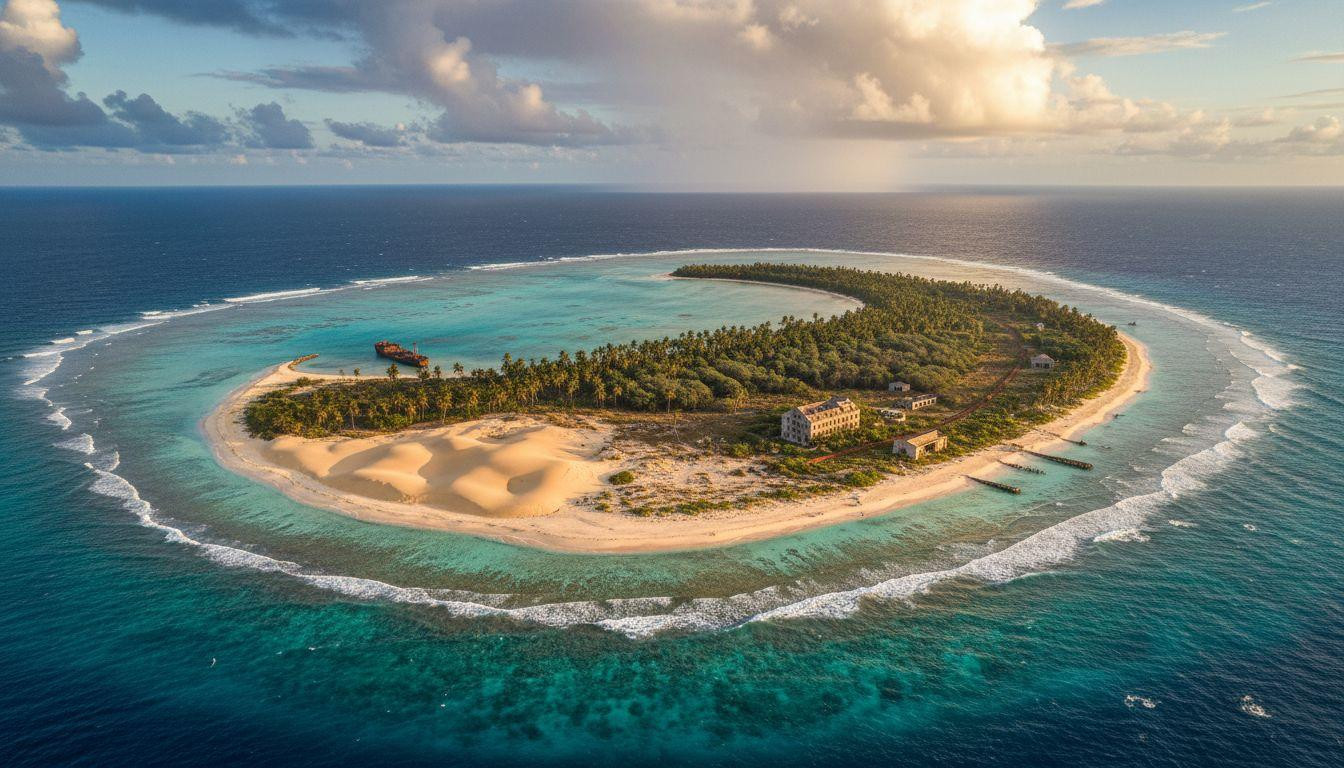
The zodiac glides through turquoise water toward golden dunes rising from nowhere. Juan de Nova Island emerges from the Mozambique Channel like a fever dream. This tiny French territory, 4.4 square miles of coral and coconut palms, receives fewer than 200 visitors per year.
Only luxury expedition cruises reach this nature reserve. No hotels, no restaurants, no civilian population. Just overgrown ruins where history surrendered to the sea.
An island where history surrendered
France claimed Juan de Nova in 1897, finding only seasonal turtle fishermen from Madagascar. By 1900, guano miners arrived for the phosphate-rich bird droppings. Operations peaked at 53,000 tons annually in 1923.
The island bustled with workers, rail lines, and processing facilities. A hangar stored equipment. A jetty welcomed cargo ships. Coconut groves provided 12 tons of copra each year.
World War II changed everything. German submarines found the abandoned outpost during their Indian Ocean raids. They scavenged supplies from empty buildings before vanishing back to sea.
A failed Club Med resort project brought temporary workers in the 1960s. But logistics defeated ambition. In 1975, France designated the island a nature preserve, closing it to public access.
What makes Juan de Nova truly uninhabited
The French military garrison reality
A small rotating garrison of 20-50 French personnel maintains the weather station. They monitor storms, track turtle populations, and protect coral reefs. No civilian infrastructure exists beyond basic military facilities.
Scientists require special authorization for temporary research missions. Madagascar disputes French sovereignty, complicating access further. Bilateral talks in June 2025 favored co-management but reached no final agreement.
Why tourism never happened
A single tidal pass allows boat access to the northeast lagoon. At low tide, it becomes impassable, trapping vessels like a natural moat. The southwest coast remains blocked by coral barriers.
Distance compounds isolation. Juan de Nova sits 70 miles from any inhabited land. Sailing from Durban requires 2-5 days at sea. This Croatian island stayed closed for 36 years and kept emerald hills empty, but Juan de Nova’s restrictions run deeper.
The Robinson Crusoe experience visitors get
Zodiac landings on turtle beaches
Ponant expedition cruises offer 17-day Scattered Islands itineraries starting at $11,000-$22,000 per person. Day 6 brings zodiac landings on Juan de Nova’s white sand beaches where green sea turtles nest from June through August.
Guided walks last 2-3 hours maximum. Visitors explore overgrown guano mining ruins where rail tracks disappear under casuarina forest. The world’s oldest coconut groves provide shade along crumbling pathways.
Unlike this Bahamas beach that keeps turquoise water calm under shade trees year round, Juan de Nova offers no amenities, no refreshments, no comfort beyond nature’s raw beauty.
Snorkeling the protected reefs
The 40-square-mile reef system surrounding Juan de Nova harbors pristine coral formations. Zero fishing pressure preserves marine biodiversity impossible to find elsewhere in the Indian Ocean.
Water visibility exceeds 100 feet in the protected lagoon. Tropical fish species thrive in numbers matching this Japanese island that keeps water so blue you can see coral 30 meters down.
The emotion of true isolation
Standing on Juan de Nova’s beaches creates profound silence. Wind through casuarina needles provides the only soundtrack. Footprints wash away within hours, erasing human presence completely.
The contrast strikes visitors immediately. Tropical paradise aesthetics meet post-apocalyptic ruins. Nature reclaimed concrete structures, twisted metal, and abandoned dreams. This isn’t manufactured solitude like resort islands.
Recent visitor surveys from expedition cruise naturalists consistently describe the same sensation. Vast ocean horizons underscore human insignificance. Ancient coconut groves whisper stories of failed ambitions and natural victory.
Your questions about Juan de Nova answered
How do you actually visit Juan de Nova?
Only Ponant luxury expedition cruises access Juan de Nova legally. Seventeen-day Scattered Islands itineraries depart from Durban, South Africa. Alternative embarkation ports in Madagascar add 1-2 extra sailing days.
Adventure cruise operators require 30% deposits with final payment 100 days before departure. No independent travel options exist due to nature reserve restrictions.
Is the French-Madagascar dispute dangerous for tourists?
The sovereignty dispute creates no tourist safety concerns. French military personnel maintain normal operations regardless of diplomatic tensions. June 2025 bilateral talks proceeded peacefully with co-management proposals under consideration.
Expedition cruise schedules continue unaffected. Access restrictions focus on environmental protection, not political security.
How does Juan de Nova compare to other uninhabited islands?
Robinson Crusoe Island in Chile welcomes 500-1,500 visitors annually with eco-lodge accommodations starting at $550-$1,650 nightly. Seychelles’ Aldabra Atoll receives similar visitor numbers through liveaboard diving trips.
Juan de Nova’s 100-200 annual visitors make it exponentially more exclusive. This fort rises from turquoise Gulf waters 70 miles past Key West’s last dock offers comparable isolation with easier access.
Golden morning light filters through coconut palm fronds as zodiac engines fade toward the horizon. Juan de Nova returns to silence, keeping its Robinson Crusoe secrets until the next rare expedition arrives.