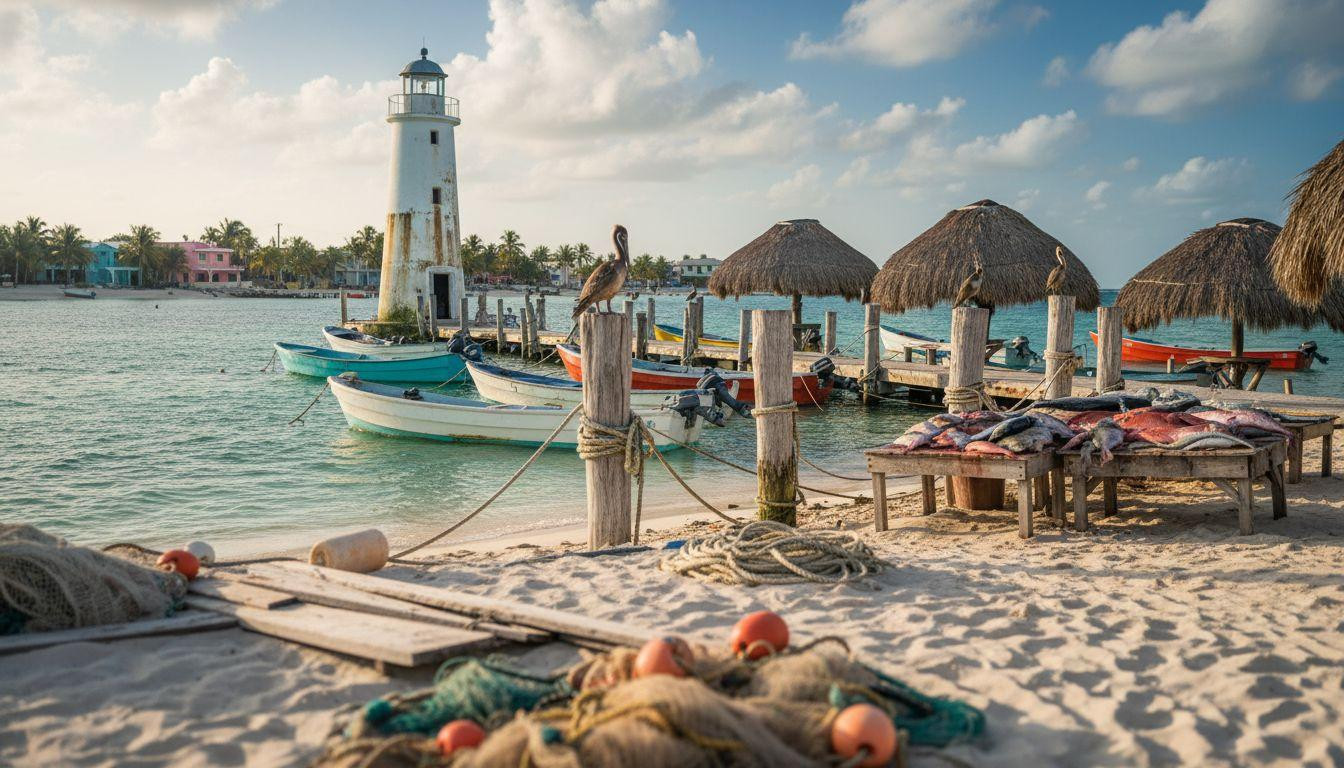
The fishing boat returns at 9am. You watch the captain gut your catch on the pier. Twenty minutes later, you’re eating ceviche made from the dorado you pulled from Caribbean waters an hour ago. Nothing tastes better than fish you caught yourself.
Puerto Morelos sits 22 miles south of Cancun International Airport on Highway 307. Population 10,000. The village evolved from a 1920s fishing settlement into a protected reef town, but the morning ritual stayed the same. Fishermen leave at dawn, return by mid-morning, sell the catch at beach palapas.
The difference now is that tourists join them. Half-day charters run $495-600 per boat from Marina El Cid. You catch barracuda, snapper, grouper within a kilometer of the Mesoamerican Reef. The crew prepares your fish as ceviche while you motor back. Lime-cured, habanero chile, local cilantro. Served on the boat with cold drinks.
Where fishing stayed real
Playa del Carmen charges $650 for private sportfisher charters 30 minutes south. Puerto Morelos boats cost 40% less and leave from a working marina where locals repair nets at sunrise. The town square sits 0.5 kilometers from the reef pier. Pastel wooden houses line streets named after fishing families.
December through March brings calm seas and 75-82°F air temperatures. Water stays 80°F year-round. This is peak family season when green sea turtles nest and sailfish run offshore. The village draws 20,000 visitors monthly during these months versus 1,500 daily in summer high season.
Captains like Benjamin, Diego, Edgar, and Jaime Canche run the Mojito and Mezcal fleet boats. Four-hour trips depart at 6am or 1pm. Tackle, bait, fishing license, and non-alcoholic drinks included. Tips and photos extra. Book 48 hours ahead December through March. Same-day slots open in low season.
The catch becomes lunch
The crew fillets your snapper or grouper on the return trip. Ceviche prep takes 20-30 minutes. Key limes cure the raw fish. Habanero adds heat. Fresh cilantro from morning markets finishes it. Some captains prepare it onboard. Others grill it at marina palapas for $10-20 per group.
Sailfish and marlin go back in the water per Mexican regulations. You keep everything else within daily limits of 5-10 fish per person depending on species. Traditional methods use handlines and bottom trawling. The 1998 establishment of Puerto Morelos Reef National Park protects the fishing grounds while allowing sustainable catches.
What the water shows you
The Mesoamerican Barrier Reef runs one kilometer offshore. Second largest reef system globally. Shore-access snorkeling costs $5-10 park entry versus $50 ferry-inclusive trips to Isla Mujeres. Visibility reaches 65-100 feet in February. Water temperature holds at 75-81°F December through March.
Green sea turtles feed in shallow reef zones during morning hours. Stingrays glide over white sand between coral heads. The reef stays calm with 1-2 foot waves most days. Occasional 4-foot swells break the pattern. Five islands where coral walls start 50 feet from the beach includes similar shore-access reef systems.
The unhurried village pace
The white inclined lighthouse tilts from 2005 Hurricane Wilma damage. Rebuilt in 2007, it marks the fishing pier where morning charters depart. Locals joke it leans to catch more fish. The structure dates to the 1940s and serves as a navigational aid.
Morning markets run 6-11am on Avenida Melchor Ocampo. Fishermen unload fresh dorado onto wooden tables. Vendors sell mangoes, chiles, and local produce. No aggressive sales pitches. The town stays quiet enough to hear panga outboard engines and waves lapping pier posts at dawn.
Why February works
December through March combines low crowds with calm seas and turtle season. Puerto Morelos draws 200,000 annual visitors versus Cancun’s millions. Daily reef traffic runs 500-1,000 people in winter versus 1,500 in summer. This Mexican island stays car-free where water fades through 7 turquoise shades offers similar low-season advantages three hours north in Holbox.
Air temperatures hold steady at 75-82°F with minimal humidity. Sunrise hits the pier at 7am, lighting white fishing boats against turquoise shallows. Playa del Carmen 30 minutes south packs beaches with high-season crowds. Puerto Morelos stays under-the-radar.
Getting there from Cancun
Cancun International Airport sits 32 kilometers away. Drive time runs 35-45 minutes via Highway 307. Taxis charge $40 flat rate in 2026. Colectivo vans cost $3-4 per person and run every 30 minutes from 5am-10pm at airport terminals. No ferry or train needed unlike Isla Mujeres.
Town square to reef pier measures 0.5 kilometers walking distance. Nearest cenotes like Las Mojarras sit 8 kilometers inland, accessible by colectivo or taxi. This Yucatan village bubbles freshwater into turquoise Gulf water at an ocean cenote shows similar freshwater swimming four hours west in Dzilam de Bravo.
Where to stay under $150
Beachfront guesthouses like Casa Sofia run $80-100 per night. Boutique hotels near the pier charge $120-140. Ocean Coral and Turquesa resort starts at $200 for all-inclusive packages. VRBO condos with kitchens rent for $100-150 and allow guest catch preparation.
Charters drop 20% in low season May through November. Rooms follow the same pattern. Book direct with marina captains through FishingBooker or walk-up at El Cid Marina. This La Paz beach keeps one restaurant serving fresh fish on turquoise shallows delivers comparable fishing culture 1,000 miles northwest in Baja California.
Your questions about Puerto Morelos answered
When should I book fishing trips?
December through March requires 48-hour advance booking through marina platforms. Same-day availability opens in low season May through November. Half-day timing runs 7-11am or 1-5pm. Morning trips catch calmer seas. Afternoon slots work for families sleeping in after travel days.
Do I need Spanish to enjoy this?
Boat captains speak functional English for fishing instructions and safety. Palapa staff mix Spanish and English at beach grills. The welcoming culture keeps language barriers low. Point at fish species on catch boards if needed. Locals appreciate basic Spanish greetings but don’t require fluency.
How does this compare to resort fishing?
Puerto Morelos charters cost $495-600 per boat versus $650 resort trips in Playa del Carmen. Local boats hold 4-8 people versus 20-person resort groups. Authenticity shows in working marina settings versus branded resort docks. Ceviche prep from your catch runs $10-20 at palapas versus $30 separate resort meals.
The morning light at 7am turns the pier golden for ten minutes. Fishermen tie up boats while tourists sleep in beachfront rooms. By 9am, the first catches hit cutting boards. By 10am, someone is eating ceviche they helped catch. The village keeps this rhythm every day.