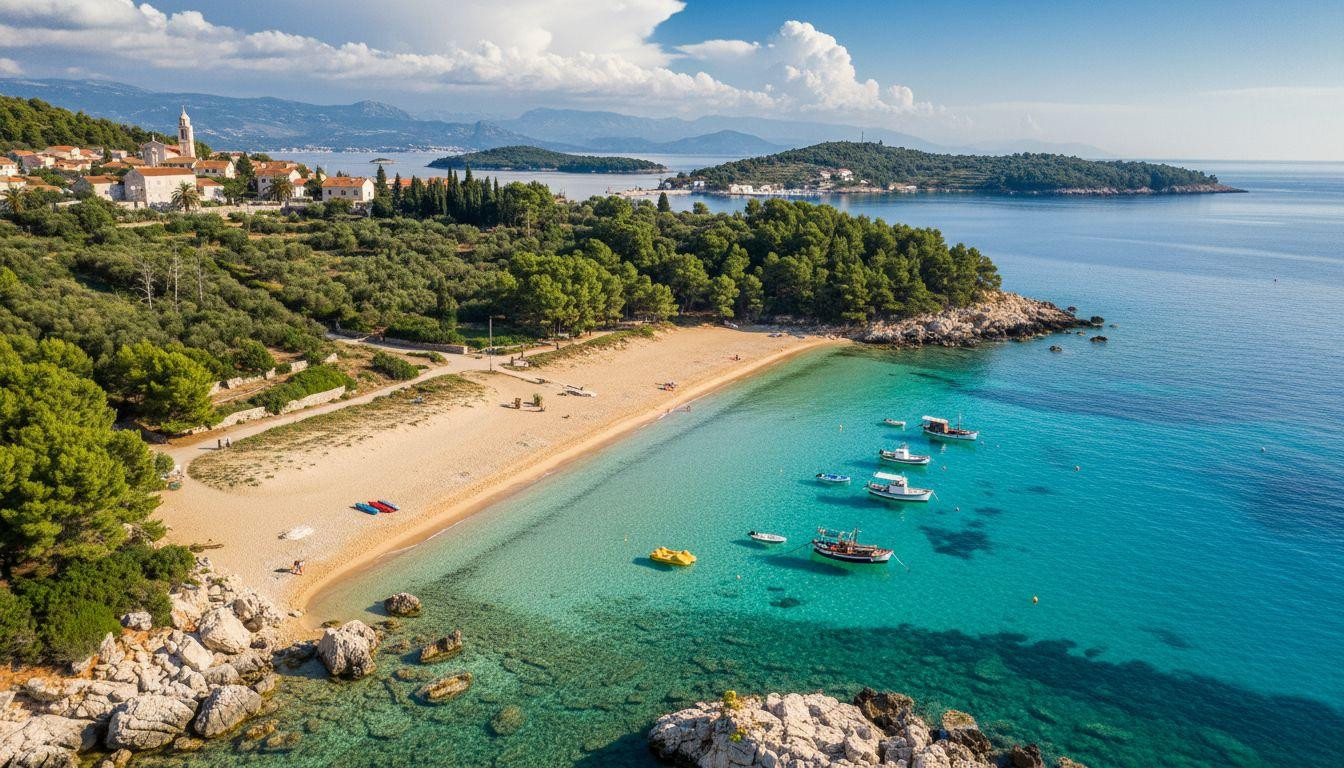
Forty minutes from Dubrovnik’s cruise ship chaos, a tiny Croatian island guards something extraordinary. Lopud Island hides golden sandy beaches where most of Croatia offers only pebbles. Here, 250 year-round residents share their car-free sanctuary with turquoise coves that shimmer like liquid glass.
The ferry from Dubrovnik’s Gruž port cuts through morning mist toward this overlooked gem. Golf buggies replace cars on stone paths that wind through cypress groves. Time moves at the pace of church bells echoing across empty bays.
Croatia’s rare sandy secret revealed
Sandy beaches are geological miracles along Croatia’s rocky Dalmatian coast. Only 5% of the region features true sand, making Lopud’s Šunj Beach a precious anomaly. This crescent-shaped bay stretches 2,600 feet of soft golden sand backed by Mediterranean forest.
Local tourism boards confirm that visitors can walk 330 feet into shallow turquoise water without reaching swimming depth. The sand remains fine and golden even underwater, contrasting sharply with the crushed limestone beaches that dominate Croatia’s coastline.
Unlike Mykonos where crowds overwhelm beaches, Šunj Beach accommodates fewer than 800 visitors even during peak summer hours. The 20-minute walk from the ferry port through untouched countryside acts as a natural crowd filter.
Where time moves at ferry speed
No cars, no rush
Lopud enforces complete car-free policies across its 1.8 square miles. Golf buggies charge $3 per person each way to transport visitors from the harbor to Šunj Beach. Walking remains the primary transportation method for locals who’ve preserved this unhurried pace for centuries.
Stone paths connect 30 hidden churches scattered across hills that rise 709 feet above sea level. The Dominican Monastery anchors the village center where Renaissance architecture meets working fishing boats. Morning coffee scents mix with sea salt while locals tend gardens behind stone walls.
The quiet harbor reality
Winter occupancy drops to 20% of summer levels, transforming Lopud into a peaceful retreat. Recent visitor surveys reveal that December through February offer the most authentic island experience. Ferry schedules reduce to six daily connections during off-season months.
Dubrovnik Old Town welcomes 15,000 daily visitors during peak season while Lopud hosts approximately 120,000 annual visitors total. This dramatic difference preserves the island’s authentic Dalmatian character where car-free policies maintain tranquility like Thailand’s quieter islands.
Šunj beach and hidden coves beyond
The shallow bay phenomenon
Šunj Beach creates ideal conditions for families with water temperatures reaching 75°F during summer months. The bay’s protection from southern winds keeps waters calm when the open Adriatic churns with whitecaps. Clear visibility extends 50 feet underwater where small fish dart between swimmers’ legs.
Morning visits before 11:00 AM offer the most serene experience according to local tourism data. Sunrise illuminates empty crescents of sand while morning mist rises from shallows that extend hundreds of feet from shore.
Rocky isolation beyond the crowds
Beyond Šunj, walking paths lead to secluded rocky coves facing neighboring Šipan Island. These hidden spots remain empty even during peak summer hours. Snorkeling reveals crystal clear waters where Mediterranean marine life thrives in protected bays.
The coastline stretches 7 miles total with multiple small sandy beaches near Lopud Bay offering authentic island atmosphere. Stone steps carved into cliffs provide access to swimming spots where shallow reefs create calm conditions similar to Hawaii’s protected bays.
The Dominican monastery whisper
Renaissance stones rise from the village center where the Dominican Monastery has anchored island life since the 15th century. Local historians note that Lopud peaked as a maritime hub during the Republic of Ragusa era when noble palaces lined the harbor.
Ancient Greek influence remains visible in place names like Delaphodia for present-day Lopud. Overgrown paths reveal abandoned chapels from the island’s seafaring heyday when 30 churches served a thriving community. Traditional fishing practices continue with locals using small boats for daily catches.
Village konobas serve lopudski makaruni, handmade pasta unique to the island, alongside fresh seafood caught in surrounding waters. Medieval architecture meets modern tranquility in settings that preserve authentic Dalmatian culture.
Your questions about Lopud Island answered
How do you reach Lopud from Dubrovnik?
Jadrolinija ferries operate six daily connections from Dubrovnik’s Gruž port year-round. Tickets cost approximately $3 each way with journey time averaging 40 minutes. Winter schedules typically run from 9:00 AM to 7:00 PM with reduced frequency during off-season months.
When is Lopud emptiest for the most peaceful experience?
November through March offers the quietest island atmosphere with near-deserted beaches and authentic local life. Summer peak hours between 11:00 AM and 4:00 PM bring day-trippers from Dubrovnik. Early morning and evening visits provide the most serene experience even during busy season.
How does Lopud compare to other Croatian islands?
Lopud offers rare sandy beaches while most Croatian islands feature pebble or rocky coastlines. Accommodation costs 40% less than popular Hvar Island. The car-free environment creates more authentic atmosphere compared to developed destinations like Korčula. Proximity to Dubrovnik provides easy access without the crowds.
Golden afternoon light filters through cypress branches above empty Šunj Beach. Gentle waves lap against soft sand while church bells echo across the bay. This is Croatia as tourism hasn’t yet discovered it.