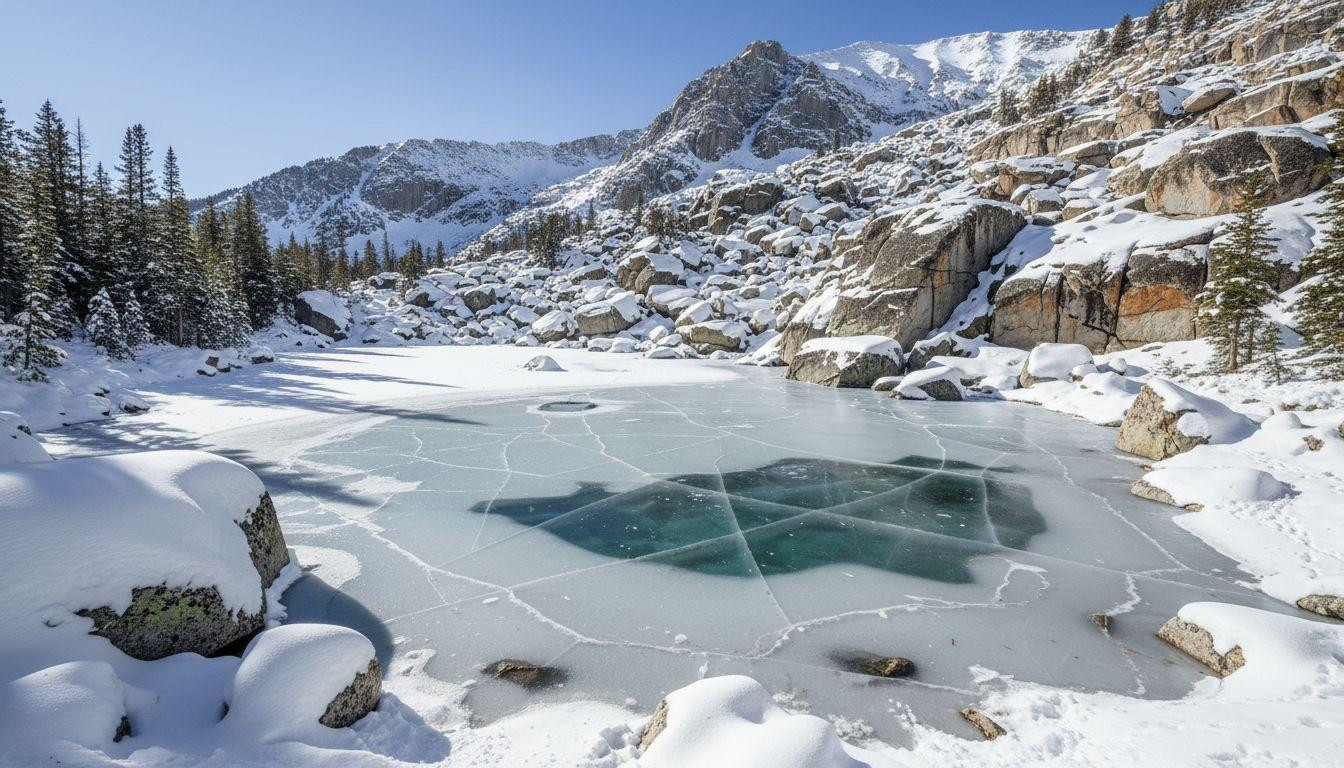
The snowshoe trail from Bear Lake climbs 1.8 miles through silent forest. At 10,200 feet, the boulder basin opens. Turquoise ice patterns frame granite walls under fresh powder. This is Haiyaha Lake in January, when 90% of Rocky Mountain National Park’s summer crowds stay home.
The trailhead parking lot holds twelve cars at 7am. In July, it fills by 6am with 200 vehicles. Winter changes the math. The same path that sees 10,000 hikers monthly in summer now welcomes maybe 150 snowshoers.
The glacial basin at 10,200 feet
Haiyaha sits in a cirque carved by ice thousands of years ago. The name comes from Arapaho language meaning “rock.” Massive granite boulders ring the shoreline, some the size of small houses. In summer, the water runs clear turquoise from glacial sediment. By late December, ice covers the surface in geometric patterns.
The basin faces east under Hallett Peak’s 12,713-foot summit. Morning light hits the frozen lake around 8am. Snow depth measured 24 inches at Bear Lake trailhead on January 26, 2026. At Haiyaha’s higher elevation, it likely reaches 30 inches. The surrounding peaks hold 200-plus inches of annual snowpack.
Temperature at this altitude runs arctic. Clear days bring 15°F to 25°F. Sudden blizzards drop it to -5°F. The Park Service recommends gear rated for -35°F. Wind chill matters more than thermometer readings up here.
Winter’s quiet transformation
The visual shift from summer crowds
Summer brings families with children, trail runners, photographers with tripods. The lake sees 15 to 20 visitors per hour during peak season. Winter cuts that to 2 or 3 per day. Midweek in January, you might have the entire basin to yourself for an hour.
Fresh powder buries the boulder field in soft white. Ice on the lake surface creates patterns like cracked glass. The granite walls frame everything in gray and white. No green, no crowds, no noise beyond wind and your own breathing.
The crowd escape from Bear Lake corridor
Bear Lake itself sits just 1.8 miles back down the trail. That trailhead serves as the park’s busiest access point. Dream Lake and Emerald Lake branch off the same route. They pull most winter visitors. Haiyaha requires an extra push beyond the junction, gaining 500 feet more elevation. That filters out casual snowshoers.
Rocky Mountain National Park recorded 4.15 million visitors in 2024. Winter months account for roughly 500,000 of that total. The east side around Bear Lake gets the heaviest winter use. But Haiyaha remains the overlooked option. Most people turn back at the more accessible alpine lakes lower down.
The snowshoe experience
Trail logistics and timing
The round trip covers 3.6 miles with 500 feet of elevation gain. Moderate difficulty for winter conditions. Snowshoe rentals in Estes Park run $10 to $20 per day. Park entry costs $35 per vehicle for seven days. No permits required, unlike some restricted alpine destinations.
National Park Service runs ranger-led snowshoe hikes on Tuesdays and Thursdays at 12:30pm, starting January 27 through mid-March 2026. These two-hour programs explore the 9,400 to 9,700-foot elevation zone. Reservations open seven days ahead at rmconservancy.org. The rangers provide snowshoes. Ages 8 and up can join.
Drive time from Denver International Airport to Bear Lake trailhead takes about 90 minutes covering 70 miles. Estes Park sits 10 miles from the trailhead, a 30-minute drive. Most visitors base in town. Budget motels start at $100 per night. Mid-range cabins run $200 to $300. Resort properties like YMCA of the Rockies cost $400-plus.
What you actually encounter
Pine resin scent hangs in cold air. Your snowshoes crunch through crusty surface snow into softer powder beneath. Elk tracks cross the trail in places. The animals winter at lower elevations but pass through this zone. No ptarmigan sightings reported recently, but their white winter plumage makes them invisible against snow anyway.
The final approach to the lake requires scrambling over snow-covered boulders. In summer, hikers rock-hop along the shore. Winter buries that chaos under white. The ice on the lake surface rumbles sometimes. Hidden streams beneath create distant thunder sounds. It startles first-timers.
Golden hour light at this elevation lasts maybe 20 minutes. The sun drops behind western peaks by 4:30pm in January. Plan to start your descent by 3pm. Headlamps work, but navigating boulder fields in darkness adds unnecessary risk. Local outfitters emphasize this timing in their winter briefings.
The return to silence
Afternoon descent reveals fresh animal tracks crossing your morning route. Elk, maybe a fox. The forest stays quiet except for wind through pines. By the time you reach Bear Lake trailhead, the parking lot holds six cars instead of twelve. Everyone else already left.
This contrasts sharply with summer’s chaos. July and August bring 80% capacity crowds to Rocky Mountain National Park. The Bear Lake corridor becomes a parade. Haiyaha sees its share of traffic then. But winter resets everything. The same trail that requires patience and timing in summer now offers unhurried solitude.
The emotional payoff comes from earning that quiet. A 3.6-mile snowshoe trek filters out casual visitors. The elevation gain at altitude tests fitness. The cold demands proper gear. What remains is a small group of people willing to work for the experience. That self-selection creates the peace you find at the lake.
Your questions about Haiyaha Lake answered
When should I visit for the best conditions?
January through March offers the lowest visitor numbers. Park-wide winter visitation runs 10% to 15% of annual totals. Ranger-led programs operate through mid-March 2026. Fresh powder after storms creates the best snowshoeing. Weekday mornings see the fewest people. Avoid weekends if solitude matters to you.
What gear do I actually need?
Snowshoes handle the trail’s moderate terrain. Traction devices help on icy sections. Layering for -35°F protects against wind chill. Carry water since streams freeze solid. The Park Service provides snowshoes for ranger-led hikes. Private rentals in Estes Park offer similar equipment. No avalanche gear required for this specific route, as no recent activity has been reported.
How does this compare to famous Canadian alternatives?
Moraine Lake in Banff National Park offers similar glacial-blue water and dramatic peaks. But winter access there requires more planning. Haiyaha delivers comparable alpine beauty with easier US access. The 90-minute drive from Denver beats flying to Calgary. Park entry at $35 costs less than Banff’s fees. Most importantly, Haiyaha sees far fewer tourists. It feels more like the backcountry snowfields that replace crowded ski resorts.
The trail back down passes through forest where morning sun never quite reaches. Snow stays pristine here all winter. Your footprints from the ascent mark the only human presence. By 4pm, shadows deepen. The temperature drops five degrees. You reach the parking lot as the last light fades from Hallett Peak’s summit. Twelve cars became six became three. Yours is one of them.