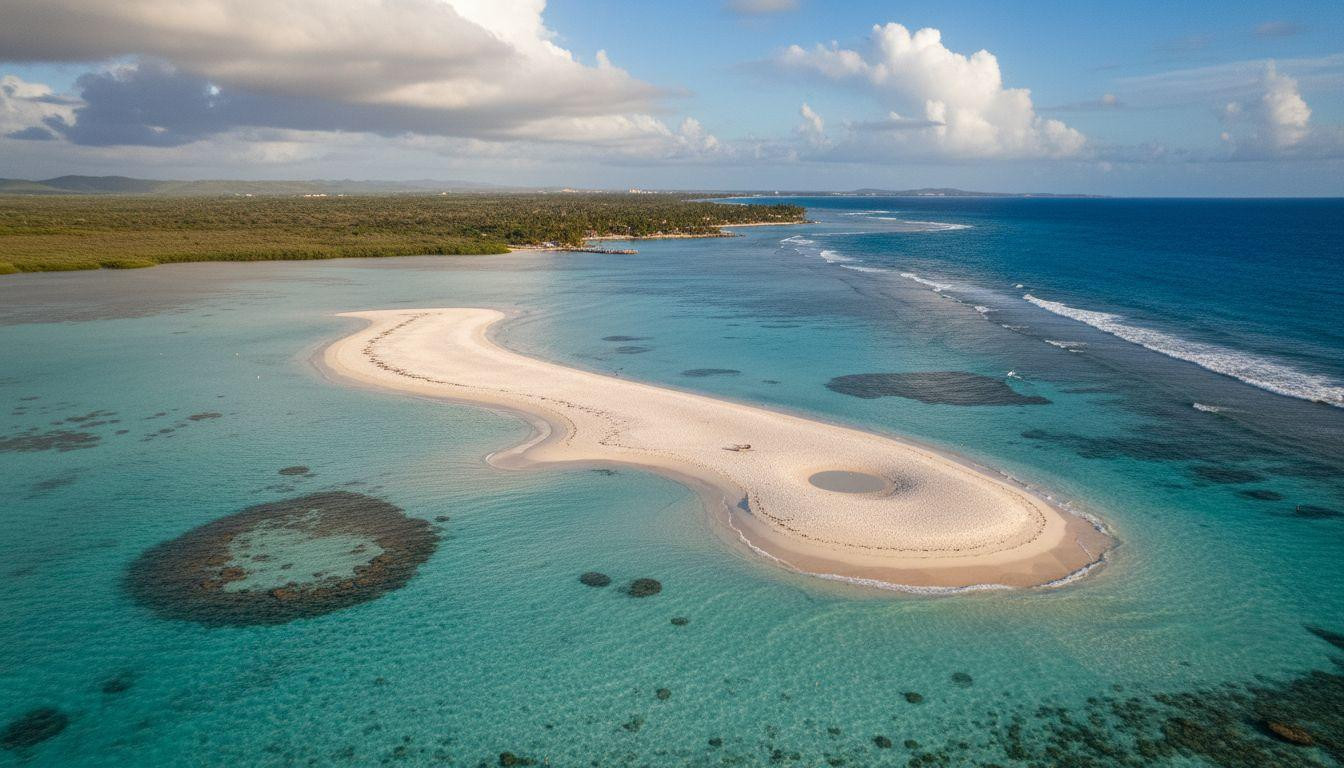
Twenty minutes across La Isabela Bay, a white speck materializes in turquoise water. This is no ordinary Caribbean island. Cayo Arena shifts shape with every tide, a living sandbar that defies permanence off the Dominican Republic’s northwest coast.
The speedboat cuts through crystalline water toward something that shouldn’t exist. A powder-white sandbank floating in aquamarine shallows, changing size with Caribbean currents. From Puerto Plata’s Gregorio Luperón International Airport, this ephemeral wonder waits just 90 minutes away.
The sandbar that rewrites itself
Cayo Arena is coral geology in motion. This tiny outcrop shrinks and expands depending on seasonal sea currents, creating a different island with each visit. The exposed sand measures roughly 300 feet at low tide, though dimensions shift monthly.
Twenty-minute speedboat crossings from Punta Rucia reveal the phenomenon. Mangrove channels give way to open water where the sandbar emerges like a mirage. Tour operators navigate by GPS coordinates that shift: 19.870171, -71.305748 marks today’s approximate center.
Colonial Tours explains the science simply. This sandy bank contracts and expands with ocean currents, creating an island that literally lives. No vegetation survives the constant reshaping. Pink sand coves elsewhere offer stability; Cayo Arena offers mystery.
Where Caribbean light performs impossible tricks
The morning transformation window
First light at 6:15 AM transforms everything. Turquoise water becomes golden-pink for exactly 20 minutes before reverting to crystalline blue. December’s post-hurricane clarity creates visibility exceeding 100 feet underwater.
The sandbar sits 5-6 meters above sea level, surrounded by shallow water extending 650 feet offshore. Snorkelers wade waist-deep while observing coral bommies below. Parrotfish and sergeant majors circle reef patches in water temperatures reaching 77°F.
The powder sand phenomenon
Unlike packed Caribbean beaches, Cayo Arena’s sand remains powdery fine. The constant tidal movement prevents compaction, creating a surface that coats bare feet and dries instantly. Simple wooden structures provide shade, designed to move with the shifting substrate.
Recent visitor surveys reveal water clarity rivals the Maldives. The shallow gradient allows 360-degree ocean views while standing on sand. Greek islands promise similar colors; few deliver this intimacy.
The fishing village contrast
Punta Rucia’s authentic harbor rhythm
The journey begins at Punta Rucia, a working fishing village of approximately 800 residents. Nets dry on weathered piers while fishermen arrive at 5 AM with fresh catches. Charcoal smoke from seafood stands mingles with salt air.
Local operators charge 4,000 Dominican pesos ($80) for independent boat transfers. Small paladars serve pescado frito and lobster for $8-15 per plate. The contrast feels deliberate: authentic village life launching tourist paradise trips.
The organized tour paradox
Full-day excursions from Puerto Plata cost $60-150 per person, including hotel pickup, speedboat transfers, and champagne lunch service. Tour groups average 12-15 people, maintaining intimacy impossible on larger islands.
Amstar and other operators schedule Tuesday, Thursday, and Saturday departures during peak season. The 1.5-2 hour drive through Dominican countryside provides cultural context before the aquamarine revelation. Similar shallow water experiences exist elsewhere; none offer this geological uniqueness.
The feeling nobody mentions
Standing on sand that won’t exist tomorrow creates profound temporal disorientation. Visitors describe the sensation as floating between permanence and impermanence. The marketing promises paradise; the experience delivers philosophical contemplation.
Floating in waist-deep clarity while touching moving sand challenges perception. The reef below appears close enough to touch, yet remains safely distant. Returning to Punta Rucia’s fishermen rhythm after tourist spectacle highlights the genuine versus performed Caribbean.
Tour operators avoid discussing the existential aspects. Pacific atolls offer remoteness; Cayo Arena offers ephemeral beauty that changes while you watch.
Your questions about Cayo Arena answered
When does the sandbar look largest?
Low tide reveals maximum exposed area, typically occurring twice daily. December through March offers optimal visibility with minimal rainfall. However, no fixed schedule exists for size variations. The mystery remains part of the appeal.
How does this compare to Saona Island?
Saona Island accommodates 1,500+ daily visitors on large catamarans with beach resort infrastructure. Cayo Arena limits groups to 15 people maximum, focusing on snorkeling and photography rather than beach lounging. The experience feels more intimate than commercial.
What should visitors bring?
Reef-safe sunscreen prevents coral damage in shallow water. Waterproof cameras capture the shifting phenomenon. Cash tips for boat crews follow Dominican custom. Water shoes protect feet near coral edges during low tide exploration.
Morning light gilds the disappearing island while speedboats return to Punta Rucia’s harbor. The white speck shrinks in turquoise distance, already reshaping for tomorrow’s different discovery.