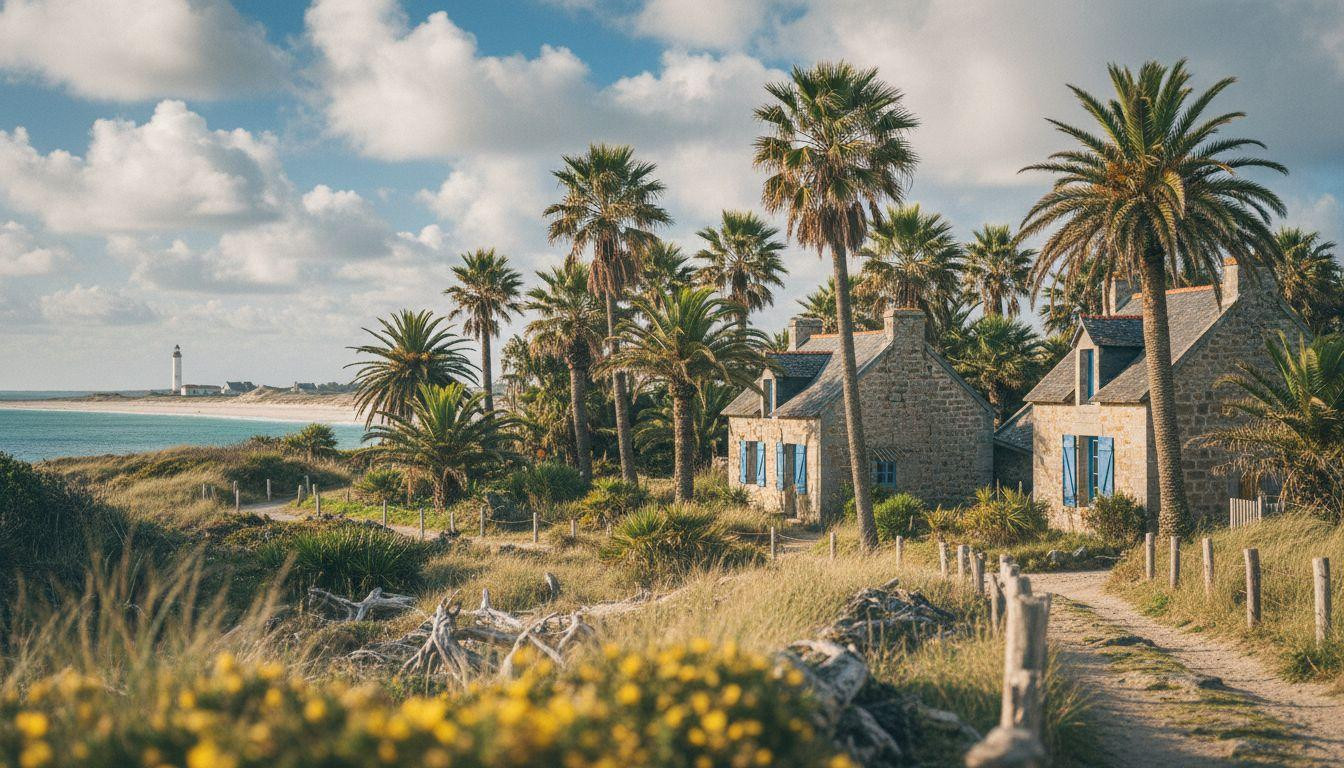
The ferry from Roscoff cuts through Atlantic waves for fifteen minutes before revealing something unexpected. Palm trees sway against a white lighthouse on what should be a windswept Breton island. This is Île de Batz, where Gulf Stream currents create a botanical anomaly just 2.2 miles from the French coast.
Car-free paths wind between 17th-century granite cottages with blue shutters. The island measures 2.2 miles long by 0.9 miles wide. No engines disturb the morning quiet.
An island shaped by Gulf Stream warmth
Winter temperatures here stay 5°F warmer than mainland Brittany. The Gulf Stream creates a microclimate that enables Mediterranean plants to thrive at 48°N latitude. This is farther north than Quebec City, yet frost rarely touches the ground.
Georges Delaselle, a Parisian insurance broker, recognized this botanical opportunity in 1897. He established exotic gardens on the eastern headland after observing how sea captains’ foreign plants survived the crossing. Today, the Conservatoire du Littoral manages over 2,500 species from five continents in his island paradise.
Walking from the small ferry dock to the village takes ten minutes through coastal trails that lead to quiet Breton granite coves. The 505 year-round residents maintain bio-farms and traditional fishing methods unchanged since the 1950s.
Where Mediterranean plants meet Atlantic tides
The Jardin Georges Delaselle
Thirty-four palm varieties grow alongside Chilean succulents and New Zealand flax. Eucalyptus trees tower over agapanthus blooms while bamboo groves from Asia rustle in salt breezes. Two-thirds of the collection originates from Chile, South Africa, Australia, and New Zealand.
The garden’s eastern location protects plants from Atlantic storms. Admission costs approximately $11 in 2025. Island beaches where turquoise water stays calm year-round stretch just 500 yards from these exotic plantings.
Granite villages with blue shutters
Low stone cottages line narrow lanes dotted with Breton mosaic “eye” symbols. These protective talismans guard against evil spirits according to local tradition. The Église Notre-Dame du Bon Secours displays stunning stained glass windows crafted by regional artisans.
Village walls reveal centuries of maritime influence. Fishing nets dry beside doorways where families have lived since the 1600s. Traditional seaweed harvesting continues each spring when residents gather goémon for fertilizing island crops.
Experiencing island rhythms
The 2,625-foot Grève Blanche
White sand stretches along the island’s southern coast backed by wild dunes. January brings complete solitude with only seabirds disturbing the quiet. Summer visitors enjoy picnics featuring island-grown vegetables that taste uniquely briny from the salt air.
Swimming conditions remain mild year-round thanks to Gulf Stream influence. Low tide reveals tidepools where children discover sea anemones and hermit crabs. The beach connects to car-free island zones where traditional boats remain the only transport.
The 1836 lighthouse walk
One hundred ninety-eight steps lead to panoramic views 144 feet above sea level. The base museum houses displays about 19th-century smuggling operations when ships used the island for clandestine cargo transfers. Clear days reveal the entire Brittany coastline stretching toward Roscoff.
Evening lighthouse beams sweep across waters where lighthouse stations where Atlantic fog wraps coastal history create dramatic silhouettes. The keeper’s quarters display maritime artifacts from the golden age of coastal navigation.
The appeal of true quiet
No ATMs exist on the island, requiring cash planning that preserves an unhurried atmosphere. Ferry crossings cost $13 round-trip with three daily departures during winter months. Hourly service operates June through August when day-trippers arrive from Roscoff.
Bike rentals cost approximately $13 daily from village operators. Accommodation ranges from $55-$88 nightly for guesthouses to $220+ for rare luxury rentals. Restaurant meals featuring galettes and fresh seafood average $17-$28. Local oysters sell for $13 per dozen.
The island offers costs 20-30% below mainland Brittany averages during off-season months. This authentic working community maintains traditional rhythms while welcoming respectful visitors.
Your questions about Île de Batz answered
When should I visit Île de Batz?
Summer months June-August offer warm beach weather and full garden blooms with hourly ferry service. Shoulder seasons April-May and September-October provide mild swimming conditions with fewer crowds and wildflower displays. Winter visits January-March deliver complete tranquility with three daily ferry crossings and crisp luminous days perfect for coastal walks.
Why do palm trees grow on a Brittany island?
Gulf Stream currents moderate temperatures year-round, preventing frost while providing steady humidity. The island’s microclimate stays 5°F warmer than mainland Brittany with annual sunshine hours comparable to Mediterranean France. Georges Delaselle recognized this unique environment in 1897 and successfully cultivated subtropical species that continue thriving today under professional conservation management.
How does Île de Batz compare to other French islands?
Ferry access requires only fifteen minutes versus hours to Channel Islands, with costs 20-30% below Île de Ré or Belle-Île pricing. The island maintains working agriculture and fishing traditions unlike tourist-focused destinations. Authentic Breton culture persists with 505 year-round residents compared to seasonal populations elsewhere. Car-free status ensures genuine quiet unavailable on larger developed islands.
Morning light catches granite walls as ferry horns fade into the distance. Salt air carries eucalyptus scents while palm fronds rustle overhead. This botanical island preserves unhurried rhythms where Mediterranean dreams meet Atlantic reality.