The gravel beneath your 4WD crunches for 6 miles through sun-baked lava fields. No signs mark the way. No guardrails protect the rough track. Only your determination carries you toward the Big Island’s most remote black sand coastline.
This beach earned its solitude through geology. When Kīlauea’s 2018 flows reshaped Hawaii’s southeastern shore, they created new lava fields that remain largely unexplored. Where other volcanic beaches welcome tour buses, Road to the Sea Beach demands commitment.
The volcanic coast that tourism forgot
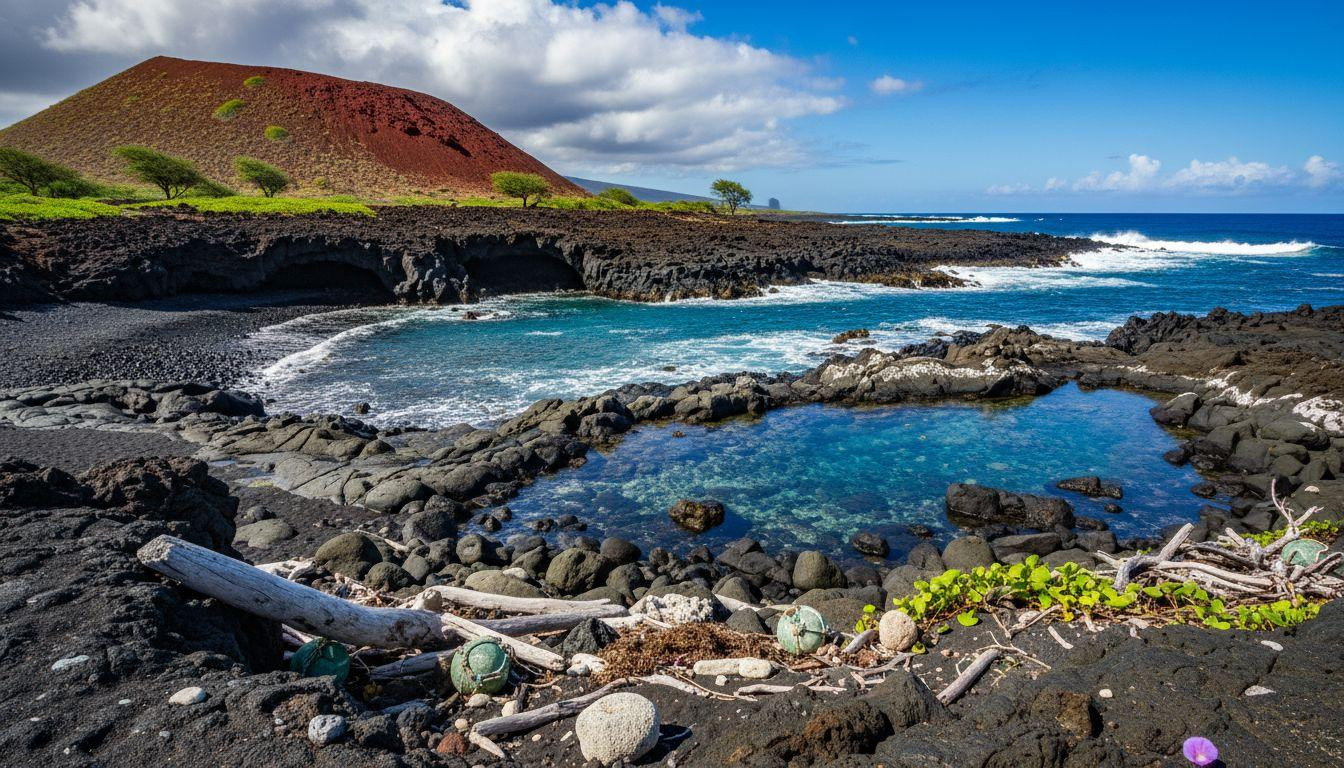
Black and grey lava fragments stretch toward turquoise tide pools here. Angular volcanic rock creates a shoreline unlike anywhere else on the Big Island. The 2018 eruption added fresh basalt layers that still feel warm underfoot during afternoon visits.
While Punalu’u Black Sand Beach receives 200,000 annual visitors via paved Highway 11, Road to the Sea Beach sees perhaps 50 people per week. The Department of Hawaiian Home Lands protects this coastline through natural barriers rather than fences.
A red cinder cone rises behind the beach. Local residents call it a puʻu. Sea turtles rest in its shadow during morning hours. Three sparse trees provide the only shade across this desolate landscape.
Six miles between you and solitude
What the track demands
True 4WD capability starts at mile 3.1 from Highway 11. Regular SUVs with all-wheel drive get stuck here regularly. Jeep Wranglers handle the terrain best. High clearance remains essential for the sharp lava chunks.
The unsigned entrance sits between mile markers 79 and 80. GPS coordinates 19.09611, -155.80261 mark the turnoff. Getting towed from this remote location costs $400-600 according to local mechanics.
The Ocean View landscape
Lava tubes create natural arches near the water’s edge. Tide pools hold sea urchins and small tropical fish. Wave action varies from gentle lapping to powerful crashes depending on Pacific swells. No facilities exist beyond the scattered trees.
Fresh water sources remain nonexistent. Cell phone service cuts out 4 miles from Highway 11. Emergency services require satellite communication for serious incidents.
Raw Hawaii before resorts
The black lava experience
Volcanic rock temperatures reach 110°F during midday sun. The coarse texture grabs shoe soles with each step. Ocean waves create percussion against jagged formations. Salt spray mixes with mineral scents from heated basalt.
Ancient lava flows created this coastline over centuries. The 2018 additions still show sharp edges. Historical records indicate traditional fishing trails once crossed these flows. Hawaiian cultural protocols emphasize respect for volcanic landscapes.
What you actually do here
Tide pool exploration requires careful timing with ocean conditions. Photography works best during golden hour light. Sea turtle observation happens from appropriate distances. Swimming remains risky due to sharp underwater rocks and unpredictable currents.
Recent visitor surveys indicate 3-4 hour average stays. Most people arrive between 8am-11am for cooler conditions. Afternoon winds increase wave action and rock temperatures significantly.
The empty coast feeling
Silence defines this place beyond wave sounds. No resort music drifts across the lava. No jet skis disturb the horizon. Only Pacific winds and seabird calls break the volcanic stillness.
This isolation costs effort but delivers authenticity. Where Waikiki accommodates 40,000 daily visitors, Road to the Sea Beach preserves Hawaii’s raw geological power. The journey filters casual tourists while rewarding adventure seekers with untouched coastline.
Local tourism boards estimate less than 0.1% of Big Island visitors reach this beach. Distance and difficulty create natural preservation better than any regulation.
Your Questions About Road to the Sea Beach answered
Can I make it without 4WD?
Walking remains possible but challenging. The final 3 miles require hiking over sharp lava rock. Proper hiking boots become essential. Bring 2-3 liters of water per person. Summer heat makes afternoon hikes dangerous.
Best time to visit
December through April offers cooler temperatures averaging 75-80°F. Morning hours provide calmest ocean conditions. Winter swells can create dangerous wave action. Check surf reports before attempting the journey.
How it compares to Punalu’u
Punalu’u offers paved parking and restroom facilities 40 miles northeast. Road to the Sea requires serious preparation but rewards visitors with complete solitude. Punalu’u sees tour buses hourly. This beach might have zero other people during weekday visits.
Morning light transforms black lava into silver reflections here. Pacific waves crash against volcanic formations while trade winds carry salt spray across empty shoreline. This is Hawaii as geological forces shaped it.