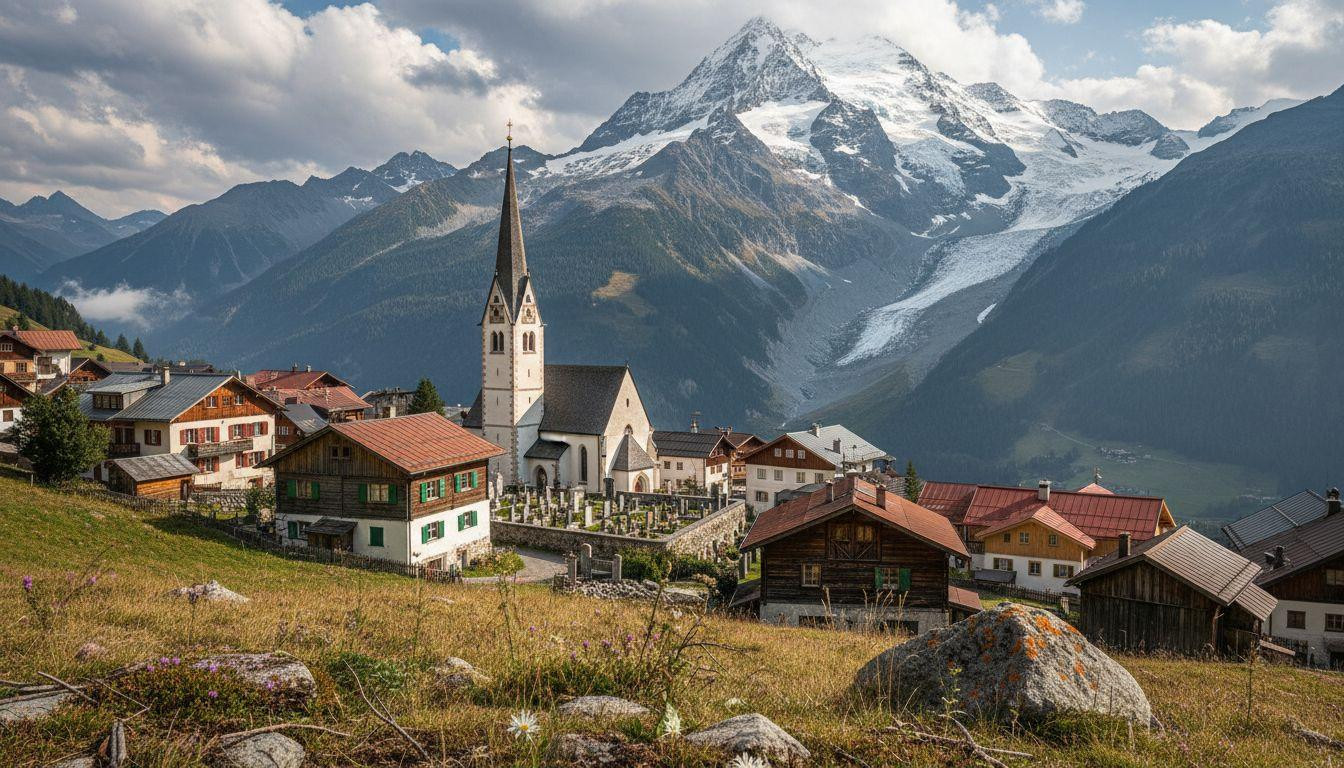
Hallstatt’s cobblestone streets overflow with 10,000 daily visitors who queue 45 minutes for lakefront selfies while paying $320 per night. Tour buses idle outside Austria’s most photographed village, engines running as guides shepherd groups through souvenir shops. Two hours south, Heiligenblut’s 1,000 residents barely notice the handful of climbers who arrive for Austria’s highest peak. The same painted-chalet aesthetic cascades down valley slopes where a Gothic church spire frames Grossglockner’s snow-covered pyramid in complete silence.
Why Hallstatt drowns in its own success
The lakefront photo everyone wants requires a 45-minute wait at Gosau viewpoint. Chinese tour groups dominate the narrow streets from 9am-4pm daily. Hotel rates hit $320-450 per night even in January 2026, with mandatory three-night minimums.
Parking costs $28 daily when available. The village installed visitor number caps after UNESCO warnings about sustainability. Local bakeries now stock more postcards than bread. What began as a 800-person farming village became a theme park where residents flee during peak hours.
January 2026 brings no relief. Post-Christmas crowds linger through winter, drawn by Instagram’s frozen lake images. Better than Hallstatt where hotels cost $275 and Rothenberg keeps medieval walls for $165 captures the same overtourism pattern spreading across Austria’s Alpine icons.
Meet Heiligenblut, Austria’s forgotten Alpine masterpiece
The setting that rivals any postcard
Carinthia region, 4,265 feet elevation, facing Austria’s highest mountain. Grossglockner rises 12,461 feet directly behind the village like a painted backdrop. Population holds steady at 1,000 residents who still greet visitors personally.
The 15th-century Wallfahrtskirche pierces valley mist with its white Gothic spire. Traditional Alpine chalets tumble down slopes with red geranium boxes and carved wooden balconies. The same painted-valley aesthetic Hallstatt promises but delivers without crowds blocking every viewpoint.
Price reality that makes sense
January 2026 accommodations: $48-185 per night versus Hallstatt’s $320 minimum. Weekend rates at 3-star properties average $109-124. No parking fees, no reservation stress, no three-night minimums.
Village restaurants serve fondue for $22 per person, mulled wine for $6. This Norwegian fjord turns mirror smooth on windless mornings where waterfalls double in glass water shows similar painted-landscape calm that overtourism destroys.
The Heiligenblut experience Hallstatt lost decades ago
What you actually do here
Dawn at Wallfahrtskirche reveals the holy blood relic from a 914 shipwreck legend. Gothic spire cuts morning mist as Grossglockner’s pyramid emerges in alpenglow. No queues, no crowds, no tour guide megaphones.
Village cafes serve locals and climbers planning Grossglockner High Alpine Road routes. January snowshoe trails lead into Hohe Tauern National Park through silent forests. The avalanche museum documents climbing heritage dating to the 1800s.
Painted valley authenticity
Red-roof chalets cascade exactly like Hallstatt’s but face Austria’s dramatic peak instead of a lake. Church bells mark actual time rather than tour schedules. Grossglockner creates pyramid drama that changes with light throughout the day.
January snow enhances fairytale aesthetics without Instagram crowds blocking compositions. 15 villages where castle towers rise 6 times higher than medieval houses below demonstrates the vertical drama Gothic spires create in Alpine settings.
Practical details for winter 2026
Salzburg sits 2.5 hours by car, Vienna 5 hours by bus for $55. No direct train like Hallstatt’s tourist convenience, but rental cars cost $50 daily. GPS coordinates: 47.033°N, 12.742°E places you at Austria’s most serene valley sanctuary.
January weather ranges 23-41°F with 3-10 feet of snow creating perfect painted scenery. Grossglockner High Alpine Road closes until May, making winter village-focused and crowd-free. Local guesthouses include Hotel Kaiservilla and Berghotel Hois with traditional Alpine hospitality.
14 places where locals cap visitors to stop becoming the next viral spot highlights the preservation mentality Heiligenblut maintains naturally through its climbing-focused identity rather than tourist servitude.
Your questions about European fairytale villages answered
Which Alpine village offers the best value in winter 2026?
Heiligenblut provides 60% savings over Hallstatt with identical painted-chalet aesthetics. Accommodations average $110 versus Hallstatt’s $320, with superior mountain drama from Grossglockner’s pyramid backdrop. January brings maximum snow beauty with minimal crowds.
How do local residents view tourism in these villages?
Heiligenblut residents maintain climbing and mountaineering traditions, welcoming visitors as fellow mountain enthusiasts rather than revenue sources. Village culture centers on Grossglockner High Alpine Road and glacier access rather than souvenir commerce. Personal greetings remain standard practice.
What makes painted valley views authentic versus staged?
Authentic painted valleys function as working communities where church bells mark local schedules and chalets house families rather than tour groups. Heiligenblut preserves this reality while Hallstatt’s residents increasingly abandon their village during tourist seasons for quieter surrounding towns.
Church bells echo across Heiligenblut valley at 6am, marking dawn prayers while Grossglockner’s snow pyramid catches first light. Alpine silence returns what overtourism stole from Austria’s painted villages. The Gothic spire frames Austria’s highest peak in compositions tourists never crowd.