“`html
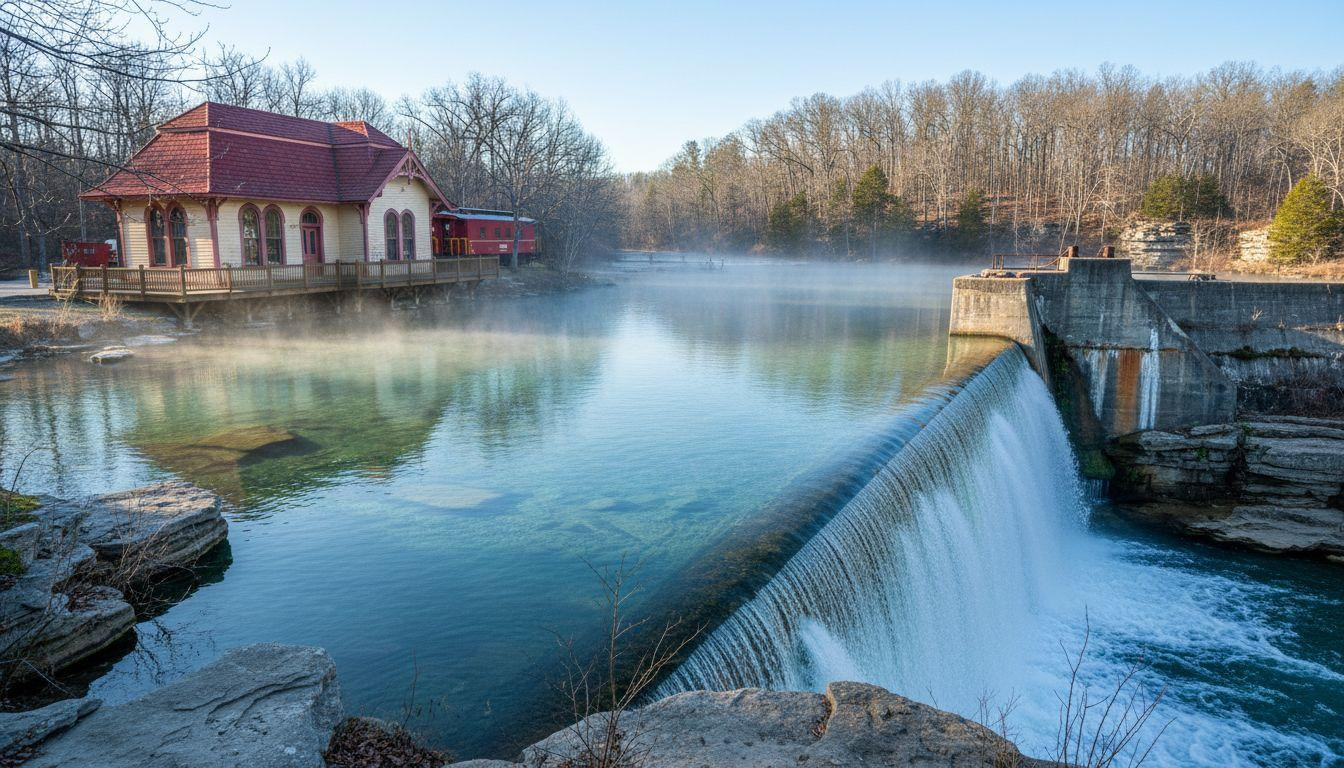
The mist lifts around 7am in February. Below, a 10-acre lake glows turquoise against bare Ozark hardwoods. Water flows at 9 million gallons per hour, constant since before recorded time. Temperature holds at 58°F whether snow falls or summer sun bakes the ground. This is Mammoth Spring, Arkansas. Population 1,000. No crowds. Just water that never stops.
The spring that defies winter
Mammoth Spring sits on the Arkansas-Missouri line, 80 miles south of Springfield. The spring emerges from limestone aquifers 80 feet below the surface, invisible source creating visible power. It forms Spring Lake, then cascades over a 1920s dam into the Spring River. National Natural Landmark status confirms what your eyes see: this is among the largest springs in the Ozarks.
Winter reveals what summer hides. When air drops to 35°F and water holds at 58°F, fog curtains rise from the lake. Ice forms on branches overhanging the shore. The water stays clear enough to count stones 15 feet down. Calcium and magnesium bubble through, creating that turquoise glow photographers chase. Most springs slow in drought. This one never changes.
Victorian rails meet constant flow
The 1886 Frisco depot
The depot sits 200 yards from the spring, cream paint and gingerbread trim preserved under a red Victorian roof. Inside, telegraph equipment still works. Color-blindness test wheels once failed engineers who couldn’t distinguish signal lights. The National Register of Historic Places listing came in 1976. Trains stopped running decades ago, but the building stayed. It reopened March 1, 2025 as a museum, hours 9am to 4pm daily.
The 1920s dam ruins
Walk the dam-top path and water roars 60 decibels at your feet. The cascade drops 15 feet over concrete built to power a grist mill. That mill closed when floods made maintenance impossible. The dam stayed. You can stand directly over the plunge, watching 9 million gallons per hour turn to white rapids. In February, mist from the falls freezes on your jacket. The sound carries 200 yards through empty forest.
Where trout live year-round
The 1903 fish hatchery
Mammoth Spring National Fish Hatchery opened in 1903, making it one of the oldest federal hatcheries in the U.S. Fish and Wildlife Service system. Spring water quality allows rare breeding programs. The facility maintains the world’s only captive Gulf Coast striped bass spawning population. Rainbow trout grow in concrete raceways you can view from 10 feet away. Tours run free, Monday through Friday, 8am to 4pm. The hatchery stocks 50,000 pounds of trout annually into Spring River.
Spring River fishing access
The river flows cold and clear for 10 miles below the spring. Constant 58°F water means year-round fishing when other Ozark streams freeze or dry up. You can see the bottom through 8 feet of current. Winter brings advantages: no summer boat traffic, no crowds, steady water levels. Missouri and Arkansas licenses both work here since the border runs through the middle. Daily permits cost $6. Most anglers fish from shore near the hatchery outflow where trout concentrate.
The quiet stays quiet
Branson sits 80 miles north, pulling 20,000 visitors daily to theme shows and outlet malls. Mammoth Spring sees fewer than 500 on winter weekdays. Lodging averages $60 per night at places like Relax Inn, compared to Branson’s $150. The Spring River Coffee House serves trout plates for $12. Park entry costs nothing. Pavilion rentals run $85 per day if you want covered picnic space.
Local culture moves at spring-water pace. People wave from porches. The general store sells bait and groceries from the same counter. No chain restaurants. No traffic lights. Springfield airport sits 120 miles northeast, 2.5 hours by car. Most visitors drive from Little Rock (170 miles) or Memphis (130 miles). Cell service works on major carriers. The town prefers it this way.
Your questions about Mammoth Spring answered
When should I visit?
Late winter through early spring (February to April) brings the best conditions. Temperatures run 40-60°F, comfortable for walking trails without summer’s 90°F heat or bugs. Winter fog over the spring creates the most dramatic photos. Crowds stay minimal: under 500 daily compared to 1,000-plus in summer float season. The constant spring flow means no dry-season concerns. Water stays clear and cold regardless of weather.
Why isn’t this place more famous?
No resort development. The town sits off Interstate corridors, requiring intentional routing. Branson’s $10 million marketing budget overshadows natural sites with minimal promotion. Locals prefer low-key tourism that preserves the quiet. Recent social media traction shows #MammothSpringAR gaining 100,000-plus views on TikTok and Instagram in 2025, mostly from winter trout fishing videos. The secret is getting out slowly.
How does it compare to Hot Springs, Arkansas?
Opposite experiences. Hot Springs offers thermal waters at 140°F, commercial bathhouses charging $30-plus, and spa tourism focus. Mammoth Spring flows cold at 58°F, free park access, and outdoor trout recreation. Hot Springs draws 3 million visitors annually. Mammoth Spring sees 150,000. The drive between them takes 3.5 hours (190 miles). You could combine both in a week-long Ozark trip. For more small-town mountain escapes, Leadville preserves Victorian streets at similar affordability. If you prefer coastal quiet, Camden keeps working harbors for half Bar Harbor’s prices.
Morning light hits the depot’s gingerbread trim around 8am. The spring fog thins. Turquoise water holds steady at 58°F. A fisherman walks the trail toward the hatchery outflow. The roar from the dam never changes. Neither does the flow. This is what constant looks like in the Ozarks. For winter serenity in natural settings, California’s sequoia groves offer similar uncrowded access. And if Victorian mill heritage interests you, eight places preserve that exact combination of clear rivers and 1800s industry.
“`