Dawn breaks at 6:47 AM over Arholma’s northern ferry dock. Baltic mist lifts as three locals board the 7:15 Stockholm-bound ferry, thermoses steaming in hand. You’re the only tourist. They know something 13 million Stockholm visitors never discover: the 270-kilometer trail threading 20 archipelago islands where red cottages, sailing culture, and Swedish silence remain protected by ferry schedules tourists can’t decode.
National Geographic named it “Best of the World 2025” yet occupancy remains 40% of Stockholm’s hotels. The trail’s recognition came only this year, revealing what Swedish families have walked for generations.
The archipelago trail Stockholm doesn’t advertise
The first ferry from Stavsnäs departs at 6:30 AM, carrying locals to Möja, Grinda, and islands where no tour buses reach. The trail spans from Arholma’s northern pine forests to Landsort’s southern lighthouse across 20 islands.
Public ferries connect the route, but timetables in Swedish and local knowledge of optimal hiking sequences keep it hidden. Trail segments require timing precision. Locals instinctively know the 6:30 AM Stavsnäs departure connects perfectly to Möja’s 8:15 onward route.
Official tourism data shows the archipelago receives fewer than 50,000 annual visitors while Stockholm welcomes 13 million. These protected island networks maintain authenticity through transportation barriers.
What makes these islands different from Stockholm’s waterfront
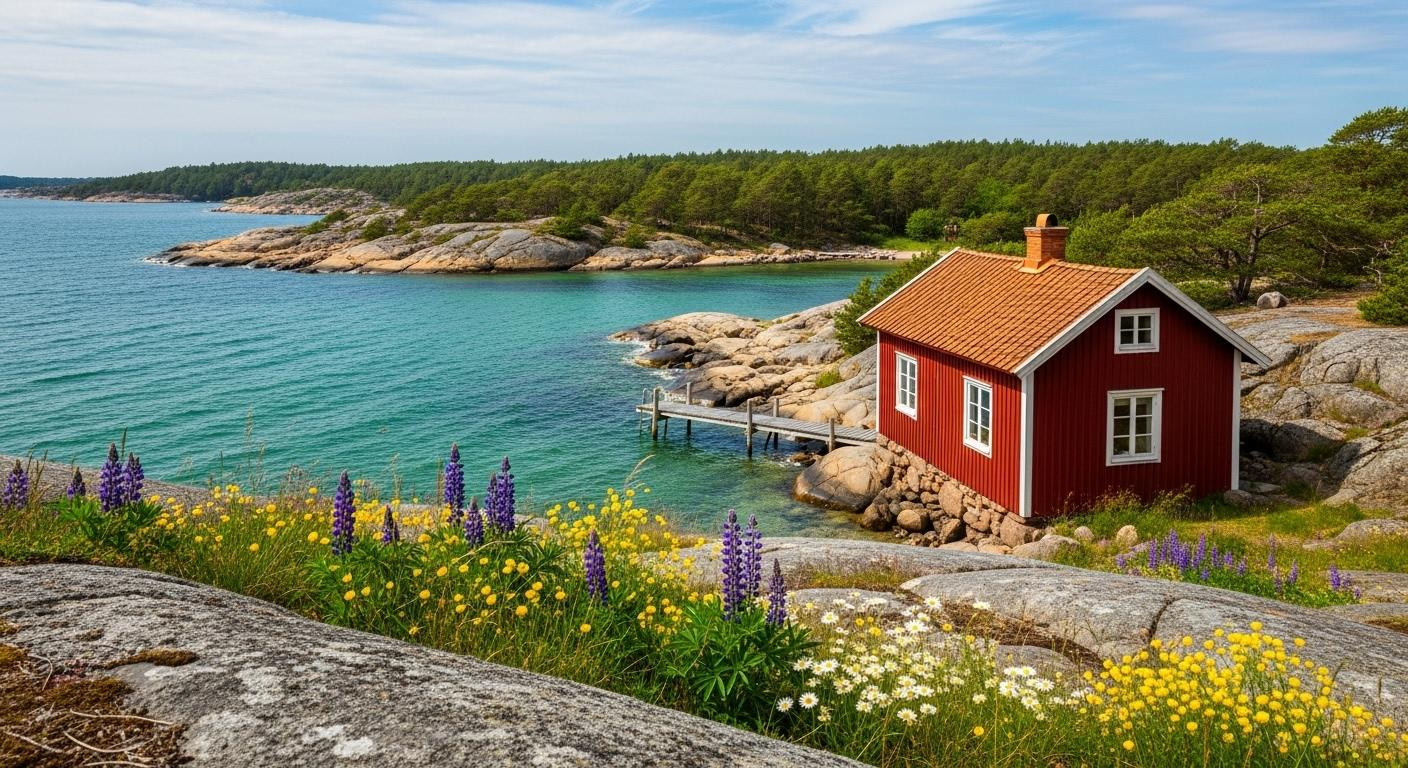
The revelation waiting beyond the city’s archipelago boat tours transforms Nordic travel expectations. Traditional Swedish cottages painted in falu red dot the landscape, weathered wooden sailing docks preserve maritime heritage, and hand-painted house numbers mark homes built in the 1800s.
Red cottage architecture versus urban facades
Islands maintain fewer than 100 permanent residents each. Building codes prevent resort development, preserving architectural simplicity that Instagram’s Stockholm accounts never capture. Wooden structures date to the 18th century, with traditional sailing boat moorings unchanged for decades.
The Baltic’s turquoise secret
Water temperature reaches 68-77°F in summer, creating swimming conditions tourists assume require Mediterranean flights. Rocky outcrops and sandy beaches alternate across islands, with zero beach clubs or rental chairs. Seabirds, sailing boats, and pine forest scent define the sensory landscape. Similar island networks worldwide offer authentic experiences where locals outnumber visitors.
Hiking the trail locals navigate by ferry memory
Concrete island-hopping logistics require understanding Swedish ferry culture. The complete route takes three to seven days depending on pace. Arholma’s northern wilderness stretches 12 miles to Landsort’s southern lighthouse.
The 168-mile route through 20 islands
Trail segments vary dramatically: Grinda’s 2.5-mile forest loop, Möja’s 7.5-mile coastal path, Utö’s abandoned mining villages spanning 5 miles. Ferry connections demand timing precision that locals navigate instinctively but confounds tourists. The Waxholmsbolaget ferry system operates 50 routes connecting archipelago islands.
Swedish midsummer food and island provisions
Fresh seafood including gravlax costs $18-30 per meal at island cafés. Local bakeries provide trail provisions. Kayaking rentals range $45-90 daily. Midsummer celebrations (June 21-24) transform islands into feast locations with traditional dancing and herring plates. Northern European islands maintain similar maritime traditions at lower costs than commercialized destinations.
The cost truth: $45 hostels versus Stockholm’s $135 hotels
Island guesthouses range $45-70 nightly versus Stockholm’s $135-220 mid-range hotels. Ferry passes cover unlimited travel for $139 weekly. Total week-long trips cost $600-900 including accommodation, ferries, and meals.
The archipelago offers half the expense of equivalent Stockholm city stays. Free hiking, swimming, and wilderness access compensate for limited WiFi and ferry schedule dependence. Alternative trail systems nationwide deliver similar savings versus mainstream destinations.
Your questions about Stockholm’s unknown archipelago answered
When should I hike the archipelago trail?
Summer offers 68-77°F temperatures and extended daylight. Sweden’s midnight sun extends hiking hours until 10 PM. Spring and fall provide 50-59°F weather with fewer visitors but reduced ferry frequencies. Winter closes most island accommodations.
Do islands have English-speaking services?
Most islanders speak English, but ferry timetables and trail markers appear primarily in Swedish. Download offline maps and pre-book accommodations. Island shops stock limited provisions, requiring essentials from Stockholm.
How does this compare to Norway’s fjord trails?
The archipelago offers flatter, island-to-island hiking versus Norway’s mountain fjords. Public ferries provide easier logistics than Norwegian trail connections. Costs run 30% less than Norwegian equivalents while maintaining similar Nordic wilderness aesthetics.
The 7:45 PM ferry returns from Möja as sunset gilds Baltic waters gold. Stockholm’s skyline glows 9 miles away, close enough to see, distant enough to forget. This is the Sweden that red cottages and ferry schedules quietly protect.