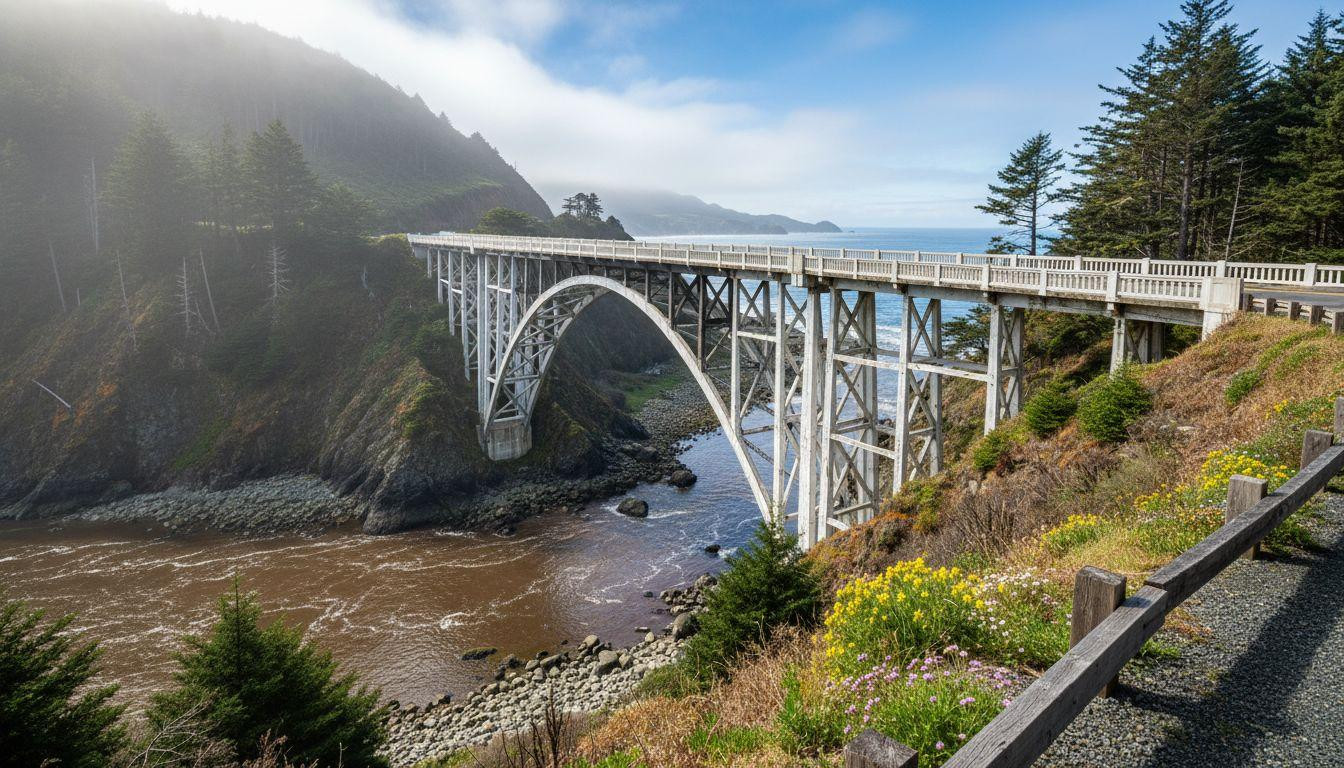
The white wooden bridge appears through morning fog at Albion, arching 980 feet over the river mouth where fresh water meets Pacific salt. Highway 1 crosses here 7 miles north of Fort Bragg. Most drivers pass without stopping. The pullout on the south side holds a few cars and delivers the view California coast tourism forgot.
This is the last wooden highway bridge on Route 1. Built in 1944 when wartime shortages forced engineers to use timber instead of concrete. Eleven Douglas fir trusses flank a central steel span salvaged from a 1929 railroad bridge. The structure rises 120 feet above water at high tide.
The bridge that frames two waters
The Albion River runs 15 miles from inland hills to ocean. At the bridge, tidal flow creates a visible line where river meets Pacific. River water runs rust-brown after rain, clear green in dry months. Ocean stays gray-blue year-round.
The color contrast marks the confluence from the bridge deck. No pedestrian walkway exists on the 26-foot-wide span. The view works better from the pullout anyway. Around 3,200 vehicles cross daily. Few stop.
Harbor seals haul out on the south bank at low tide. Great blue herons fish the shallows at dawn and dusk. Brown pelicans dive where the two waters mix during sardine runs from March through May.
How fog creates two daily versions
Morning gray from 6am to 10am
Fog banks roll through the river canyon from the ocean. The bridge vanishes into white. Douglas fir on the north bluff emerge as silhouettes. Temperature holds around 52°F from March through October.
Visibility drops to 100 feet. The effect creates cinematic isolation. Photographers arrive early for this. The fog-wrapped bridge against dark trees makes the shot worth the cold.
Afternoon clarity from 11am to 6pm
The marine layer burns off between late morning and noon. Full bridge arc becomes visible against blue sky. River mouth detail emerges with the light. Tide pools on the south bank. Driftwood piles. Occasional seal.
Temperature rises 10 to 15 degrees by afternoon. Sunset turns the white paint golden around 6:30pm from May through August. The transformation happens daily. Plan accordingly.
What you see from the south pullout
River mechanics and tidal exchange
Tides push salt water half a mile upstream twice daily. Low tide exposes gravel bars and algae-covered rocks. Spring tides during new and full moons create a 6-foot range. The river mouth shifts 20 to 30 feet seasonally depending on winter storm flow.
Gray whale spouts appear a quarter mile offshore from December through April. Binoculars help but naked eye works for close spouts. Canadian geese and goslings nest in the reeds upstream. Otters follow the tidal waters into the river to fish.
The inn with the bridge view
Albion River Inn sits on the north bluff half a mile from the bridge. The restaurant deck offers bridge views with seating. Rooms overlook the cove. Rates run higher than Fort Bragg motels but lower than Bodega Bay waterfront properties.
No other commercial district exists in Albion. Population holds around 500. One inn, no tasting rooms, zero boutique shops. The bridge and cove are the destination. This makes Albion work as a 20-minute stop between Mendocino and Fort Bragg tourism clusters.
The quiet that Fort Bragg lost
Fort Bragg sits 7 miles south with Glass Beach crowds and Noyo Harbor tourist traffic. Albion has no commercial strip. Highway 1 carries thousands of vehicles past this spot daily. Maybe 30 stop.
The contrast makes Albion work. It sits between two tourism magnets without becoming one. Locals listed the bridge on the National Register of Historic Places in 2017 to block replacement plans. They want to preserve what remains.
The wooden structure feels fragile compared to concrete spans elsewhere on Highway 1. That fragility is part of the appeal. This bridge looks like it belongs to 1950s California before the coast became famous. Other coastal spots lost that quality decades ago.
Your questions about Albion answered
When does fog clear completely?
May through September offer best odds for afternoon clarity. October through April brings all-day fog frequently. Check Mendocino coast webcams for real-time conditions. Morning fog guarantees atmospheric photos even when distance views stay blocked.
Can you walk on the bridge?
No pedestrian walkway exists. Shoulder width measures roughly 12 inches. The view from the pullout delivers the same perspective without traffic risk. Alternatively, the Albion River Inn restaurant deck on the north side offers bridge views with seating and safety.
How does this compare to Bixby Bridge?
Bixby Creek Bridge in Big Sur draws 500-plus daily visitors with limited parking and concrete construction. Albion Bridge uses wood arches over a river mouth with free pullout parking and around 10 visitors daily. Different aesthetic serving different purposes. Bixby is dramatic icon. Albion is quiet discovery similar to Oregon’s overlooked coast.
The white arches frame the confluence at 8am when fog lifts for ten minutes. River water meets ocean current beneath the deck. The moment passes quickly. Then fog returns or burns off completely depending on the season. Either version works. Both feel like finding California before everyone else arrived.