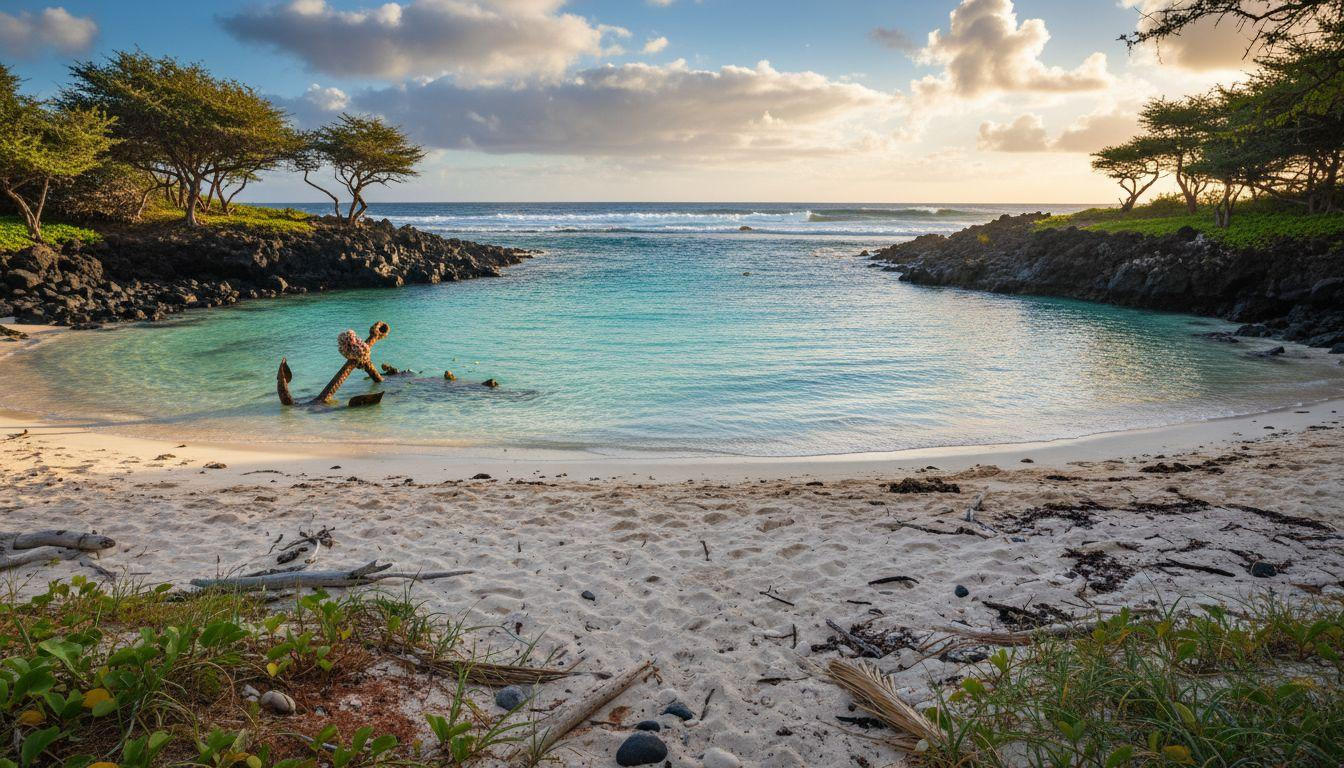
A rusted metal nameplate hangs near the parking area at the end of Pohakuloa Road. “Dixie Maru” reads the weathered sign, a ghost from 1916 when a wooden Chinese fishing sampan built in Honolulu met its fate in the breaking surf offshore. The vessel’s legacy lives on in this protected crescent cove on Molokai’s west coast, where turquoise water laps against white sand and the ship’s iron anchor still rests among the reef.
Where the schooner found its resting place
Kapukahehu Beach curves in a perfect half-moon shape, stretching 250 feet between black lava outcroppings. The Hawaiian name means “white sand bay,” though locals have embraced the English moniker that honors the doomed vessel. Protected by a natural reef barrier, the shallow waters here remain calm even when Pacific swells crash against the outer rocks.
The cove sits at Molokai’s remote western edge, accessible via a 45-minute drive from Ho’olehua Airport. Kiawe trees with thorny branches frame the shoreline, their twisted silhouettes creating natural shade for the handful of visitors who make the journey to this overlooked corner of Hawaii.
Remnants of the Dixie Maru’s final voyage
The anchor that tells the story
Snorkelers swimming on the left side of the cove discover the Dixie Maru’s iron anchor resting in 8 feet of clear water. Hull fragments scatter across the sandy bottom, slowly being claimed by coral growth after more than a century underwater. The wreck occurred on April 26 when the vessel “sprung a leak in heavy sea” while attempting to navigate through the breaking surf.
Two crew members swam to shore and walked 25 miles to Kaunakakai for help. The ship’s nameplate washed ashore days later, eventually finding its way to the beach gate where it announced this hidden cove to future generations.
When red rain transforms the bay
After heavy downpours, Molokai’s iron-rich red soil washes into the cove, temporarily turning the turquoise water a rusty crimson color. Locals call this phenomenon the “bleeding bay,” a dramatic transformation that can last several hours. The red water creates an otherworldly contrast against the white sand and black lava rocks, reminiscent of volcanic beaches with unusual colored sand found elsewhere in Hawaii.
Swimming in shipwreck waters
Summer calm versus winter caution
From May through October, the reef protection creates ideal conditions for swimming and snorkeling. Water temperatures reach 82°F, and the shallow depths make it perfect for families. Winter months bring possible high surf advisories, though January 2026 visitors can expect post-holiday tranquility with occasional trade wind breezes.
Fish schools gather in the 6-10 foot depths on the cove’s northern edge. Just 5 minutes north, Pohakumauliuli Beach offers twin crescents for those seeking additional secluded swimming spots along Molokai’s west coast.
Earned solitude at road’s end
A small parking area accommodates fewer than 12 vehicles, with a single outdoor shower for rinsing off sand and salt. The short dirt path to the beach takes under 5 minutes to walk, making this one of Molokai’s most accessible remote beaches. With only 7,345 residents on the entire island and fewer than 100,000 annual visitors, Dixie Maru Cove sees perhaps 20-30 people on busy weekend days.
Watch for scattered fishing gear and navigate carefully around kiawe thorns that guard the shaded areas. The thorny trees serve as natural crowd control, ensuring only determined visitors reach the best resting spots.
The peace that shipwrecks preserve
Evening light transforms the cove into a golden amphitheater as the sun sets over the Pacific. Waves continue their eternal dance against the outer reef while the protected waters remain mirror-calm. This contrast between wild ocean energy and sheltered tranquility captures the essence of Molokai’s unhurried character.
Unlike expensive South Pacific lagoons that cost hundreds for boat access, Dixie Maru Cove offers free admission and parking. The isolation that once spelled doom for a fishing vessel now preserves paradise for those willing to venture beyond Hawaii’s crowded beaches.
Your questions about Dixie Maru Cove answered
How do I reach the cove from the main airport?
From Ho’olehua Airport, drive 25 miles west via Highway 460 to Maunaloa, then follow Pohakuloa Road to its terminus. The drive takes 45 minutes and requires a standard rental car, though 4-wheel drive is recommended during rainy periods. Car rentals average $80 per day, and gas costs approximately $5 per gallon on Molokai.
What happened to the original Dixie Maru vessel?
Built in Honolulu in 1916 by Harold L. Morris, the wooden Chinese fishing sampan wrecked when attempting to navigate heavy surf. The crew of Jack Kailianu and Makuka survived by swimming to shore. The ship’s nameplate washed up and was hung at the beach entrance, giving the cove its dual identity alongside the traditional Hawaiian name Kapukahehu.
How does this compare to other Molokai beaches?
Dixie Maru Cove stays significantly less crowded than Papohaku Beach, Molokai’s famous 3-mile white sand stretch. While Papohaku can experience strong currents and wind, this protected cove offers calm water for swimming. Unlike Caribbean shipwreck beaches that charge entrance fees, access here remains completely free with basic facilities.
Dawn breaks over the lava arms that cradle this forgotten bay, revealing glassy water unmarked by footprints. The Dixie Maru’s nameplate still watches over visitors, a century-old reminder that some of Hawaii’s most precious discoveries wait at the end of quiet roads.