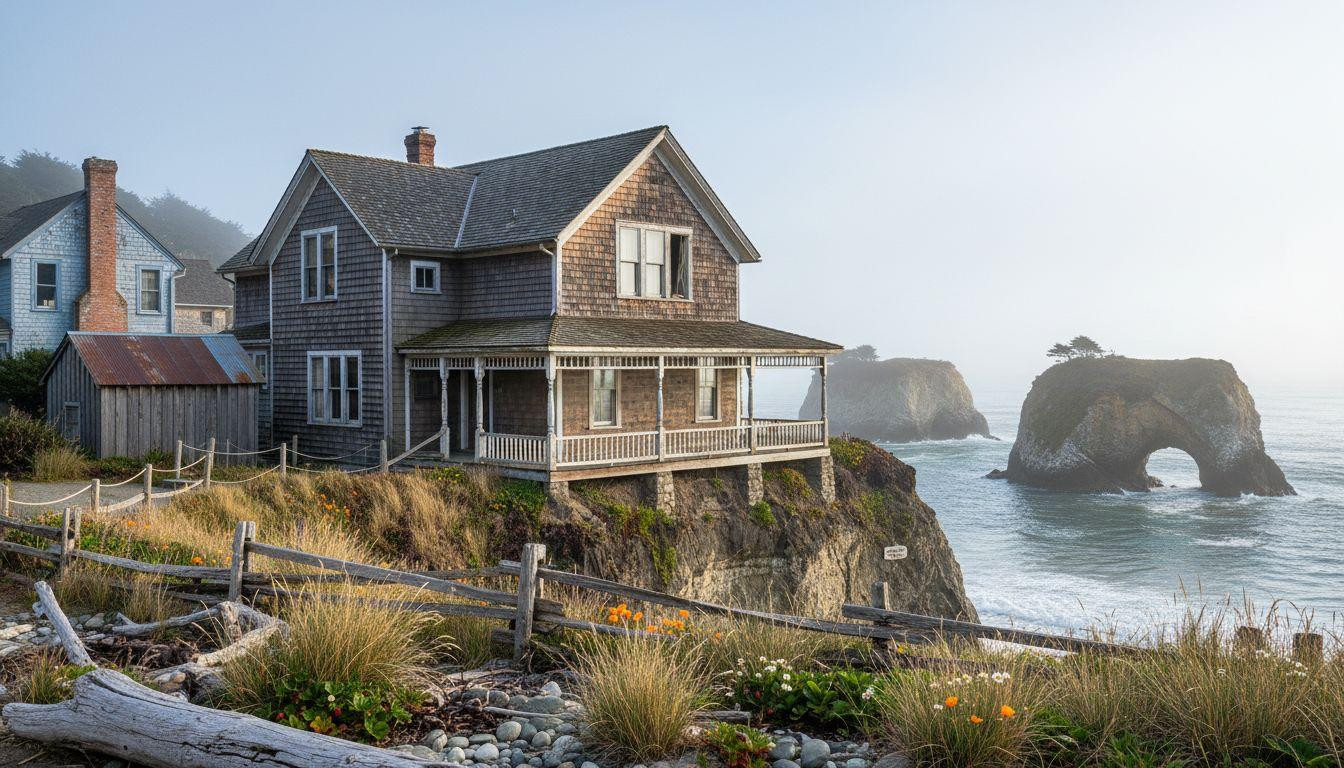
Morning fog drifts between Victorian porch columns while sea stacks emerge from the mist like ancient sentinels. This lumber town of 275 residents keeps 1890s architecture alive where Pacific waves crash against 100-foot bluffs. Elk preserves the quiet beauty of California’s logging era without the crowds that overwhelm nearby coastal destinations.
The hamlet sits 150 miles north of San Francisco along Highway 1’s most isolated stretch. This California mining town keeps 1852 Victorian storefronts alive 45 minutes from Sacramento shares similar preservation spirit. Elk’s remoteness protected its timber-era character when other coastal towns modernized.
The 1870s lumber port that time forgot
Greenwood Wharf operated from 1887 through 1929, shipping 100,000 board feet daily at its peak. The mill town supported over 1,000 residents and 14 saloons during the lumber boom. When resources depleted, the population dropped to just 50 by the 1930s.
Victorian inns like Elk Cove Inn (built 1893) housed mill executives negotiating lumber sales. Griffin House (constructed 1890) served as the town doctor’s office and pub. These structures survive because isolation prevented development pressure that transformed other coastal communities.
The 1960s brought counterculture retreats to abandoned buildings. Artists discovered affordable spaces with dramatic ocean views. Today’s creative community emerged from this quiet renaissance, maintaining the unhurried pace that defines Elk’s character.
Where fog meets sea arches
Thick morning mist reveals and conceals dramatic rock formations offshore. Gunderson Rock and Wharf Rock rise from churning waters while the Arch of Navarro frames distant horizons. This French village carved red granite into sculptures above turquoise coves offers similar coastal geology drama.
Cliffs and sea stacks
Bluffs drop 100 feet to pebble beaches strewn with silvered driftwood. Sea stacks emerge at low tide, creating natural sculptures against gray-blue waters. The fog patterns change hourly, alternately hiding and revealing these coastal monuments.
Victorian inns above the Pacific
Elk Cove Inn maintains its 1893 executive guesthouse character with wraparound porches facing the ocean. Harbor House Inn preserves lumber-era architecture in weathered shingles and redwood frames. Modern artisan cottages blend with historic structures, painted in coastal blues and sandy tones that echo the natural palette.
Beachcombing and unhurried days
Greenwood State Beach offers half-mile trails to secluded coves where seals bask on offshore rocks. The pebble shores crunch underfoot as visitors search tide pools for anemones and hermit crabs. This fog-draped artists town hides where Walter Anderson painted in bayou silence shares Elk’s artistic heritage.
Trails and tide pools
The coastal path winds through native grasses to viewpoints above crashing waves. Morning walks reveal migrating gray whales December through April. Tide pools teem with purple sea urchins and bright orange starfish during low tides.
Artist galleries and local flavor
Matson Mercantile has served the community for over 100 years, selling everything from hardware to artisanal teas. The Artist’s Collective showcases work from 30 regional creators. Greenwood Restaurant elevates coastal cuisine with Dungeness crab ravioli and uni carbonara featuring local sea urchin.
The feeling of arriving
Highway 1 curves reveal fog-shrouded Victorian silhouettes perched above endless Pacific waters. The absence of traffic lights or chain stores signals entry into a different era. Time moves with tide rhythms rather than digital clocks.
Visitors describe the profound quiet that settles over evening conversations on inn porches. 6 desert waterfalls where sandstone canyons hide swimming pools you can hike to provides contrasting desert solitude. Elk offers coastal equivalent of that pristine silence.
The hamlet’s isolation creates space for reflection impossible in busier destinations. Cell service fades, encouraging present-moment awareness of fog patterns and wave sounds.
Your questions about Elk answered
When does the fog clear?
September and October offer the clearest skies with afternoon temperatures reaching 65°F. May brings wildflower blooms but persistent morning fog. Winter fog often lasts all day but creates dramatic wave-watching conditions.
Where should visitors stay?
Elk Cove Inn offers Victorian authenticity from $300-500 nightly. Budget travelers find motels from $150-250. Sacred Rock Inn provides luxury accommodations from $600 when operational. Book Victorian inns for the full historical immersion experience.
How does Elk compare to Mendocino?
Elk sits 15 miles south with one-tenth the crowds and 20-30% lower lodging costs. Mendocino offers more dining options but Elk provides authentic quiet impossible in busier coastal towns. Both preserve Victorian architecture but Elk feels genuinely undiscovered.
Dawn light pierces lingering mist to reveal sea stacks and porch railings in golden relief. The Pacific whispers against ancient rocks while coffee steams in Victorian inn windows.