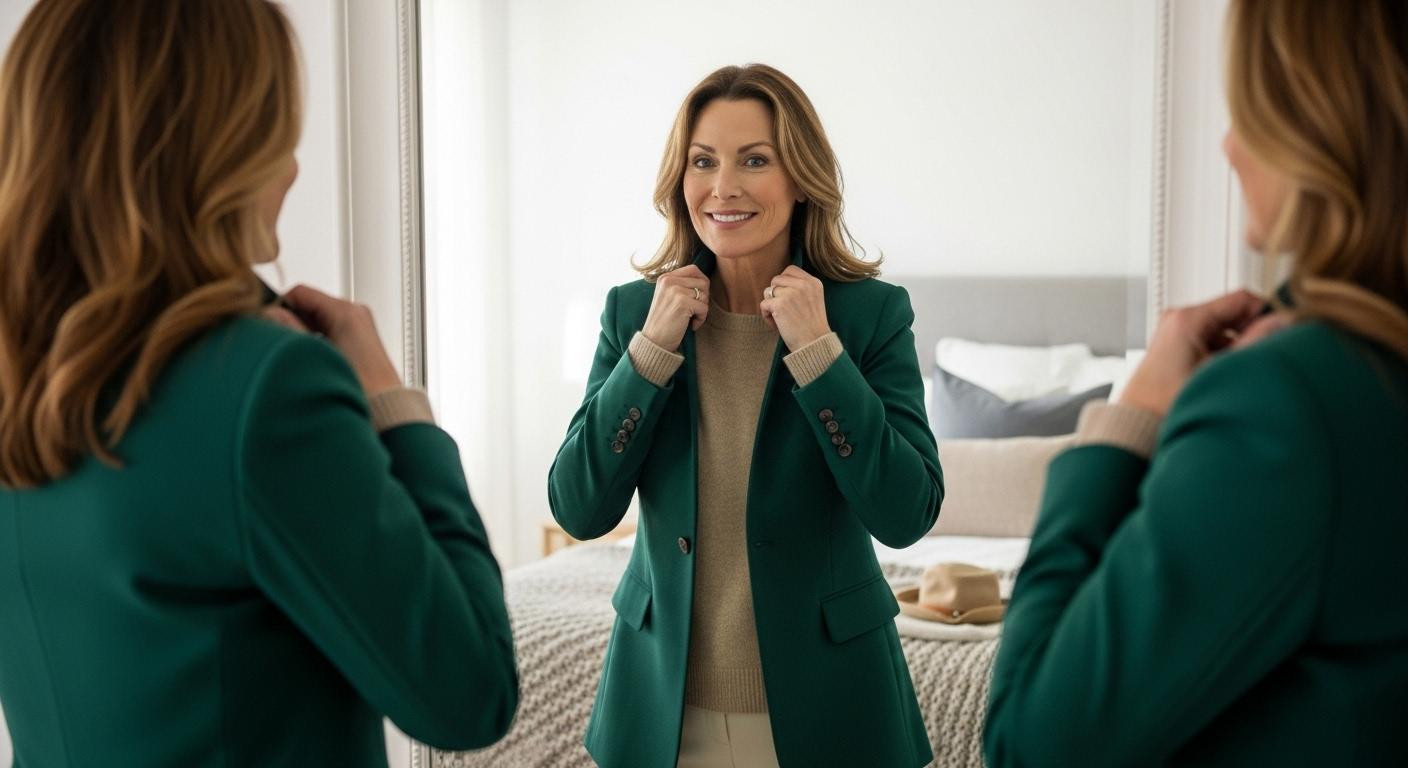
Standing before your mirror at 7:15am this morning, you hold a $200 cashmere sweater and $180 tailored trousers. Yet somehow, the reflection whispers “basic.” The disconnect isn’t your budget. It’s the missing formula that transforms quality pieces into expensive-looking outfits. Fashion insiders use texture contrast, strategic layering, and color sophistication to elevate mid-range wardrobes into $2,000 looks without buying anything new.
The texture contrast principle fashion editors never mention
Perceived expense comes from material diversity, not individual piece cost. Matching textures photograph flat regardless of quality. A $300 silk blouse with smooth wool pants reads basic because both surfaces reflect light identically.
The three-texture minimum rule creates visual complexity. Every expensive-looking outfit combines smooth, textured, and structured elements. Silk blouse (smooth) plus herringbone blazer (textured) plus rigid denim (structured) instantly elevates perceived value 300%.
Professional stylists layer at least three different surface treatments per outfit. Matte suede diffuses attention softly. Shiny leather commands focus. Chunky cable knits add dimension without color overload. Texture mixing became the 2025 quiet luxury hallmark because it creates sophistication through construction rather than price tags.
Formulas 1-4: transforming basics through strategic layering
The elevated jeans formula
Dark straight-leg jeans plus tucked cashmere tee equals $50 basic look. Add chunky woven belt and tailored blazer for instant $2,000 transformation. The belt introduces texture contrast. The blazer provides structured silhouette definition.
Before: flat surfaces, loose fit, no visual interest. After: three distinct textures, defined waistline, professional polish. The same $380 investment reads completely differently through strategic styling.
The monochrome depth formula
All-beige outfits transform through texture layering within the same color family. Smooth silk tank plus chunky cable knit plus suede jacket creates visual depth without pattern risk. Each surface catches light differently despite identical color.
This formula works because texture contrast diffuses attention across multiple elements instead of creating harsh focal points. Matte surfaces recede softly. Textured pieces add dimension. The eye registers complexity and quality simultaneously.
Formulas 5-7: color sophistication without risk
The two-tone power formula
Neutral base (taupe trousers plus cream blouse) plus one statement color accent creates sophisticated contrast. Emerald scarf or cobalt cardigan elevates the entire outfit through strategic color placement. Muted metallics work similarly without pattern commitment.
Less saturated colors enhance luxury perception through heritage associations. Dusty rose outperforms hot pink. Forest green beats lime. The principle: faded colors suggest quality that ages beautifully rather than trending pieces that date quickly.
The metallic elevation trick
Any basic outfit gains expensive appearance through one brushed metal accessory. Bronze belt, muted gold jewelry, or silver bag hardware adds visual complexity without pattern risk. Shiny metals command attention. Brushed surfaces integrate seamlessly.
The key: metallics must complement, not compete. One metallic accent per outfit maintains elegance. Multiple metals create confusion. Brushed finishes read more expensive than high-shine because they suggest quality craftsmanship over flashy trends.
Formulas 8-10: the tailoring transformation
Three scenarios where $30-50 tailoring transformed perceived value 300%. Oversized blazer taken in at waist creates custom silhouette. Wide-leg trousers hemmed to exact break point eliminates slouchy appearance. Basic sheath dress fitted through bodice suggests bespoke construction.
Tailoring delivers highest ROI for wardrobe transformation. Off-the-rack pieces fit nobody perfectly. Minor adjustments create custom appearance that photographs expensively. Proper fit signals investment in quality over quantity.
Professional alterations cost $35-65 per garment but multiply perceived value exponentially. A $120 blazer fitted properly reads more expensive than a $400 designer piece worn loose. Fit trumps brand recognition in visual perception studies.
Your questions about 10 everyday outfits that look expensive answered
What’s the minimum budget to start these transformations?
Zero new purchases required if you own quality basics. Tailoring investments of $30-50 deliver maximum impact. Texture pieces like woven belts or chunky knits range $38-85 at accessible retailers. Formula knowledge costs nothing but transforms everything you already own.
How do these formulas compare to European versus American styling?
European approaches emphasize monochrome texture mixing within neutral palettes. American styling uses higher contrast and bolder color accents. Both paths create expensive appearance through different visual sophistication strategies. Choose based on personal comfort level with contrast.
Which formula works best for petite versus tall frames?
Petite frames benefit most from monochrome depth formulas because they create vertical line continuity. Tall frames can leverage contrasting textures without height concerns. Texture placement matters more than height. Position textured pieces strategically to enhance proportions.
Tomorrow morning, you reach for those same jeans and cashmere tee. But your hand moves automatically to the woven belt, the structured blazer. The mirror reflects not new clothes, but new knowledge. Texture, tailoring, strategic color. Expensive is a formula, not a price tag.