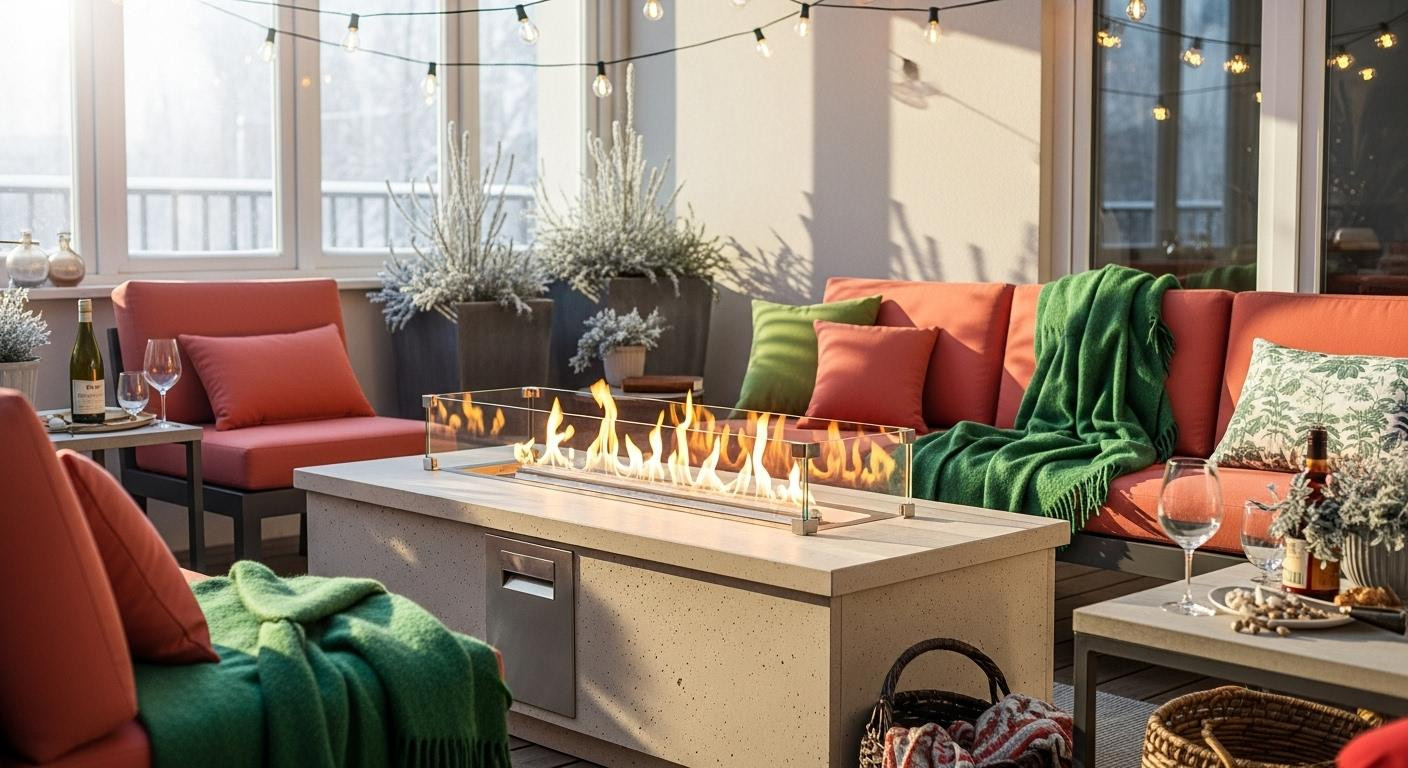
Your garage door opens in October. The fire pit gets covered with a tarp. Patio chairs stack against the house until April. This seasonal storage ritual feels responsible, protecting your outdoor investment from winter weather. Interior designers creating the most-saved outdoor spaces of 2026 call this routine the two thousand dollar mistake.
Modern fire pit technology has demolished the winterizing mandate. Weather-resistant materials now withstand January snow. Smokeless propane systems function in freezing temperatures. The European approach to four-season outdoor living reveals what American homeowners lose during those 180 days of backyard abandonment.
The storage habit that sabotages your outdoor investment
The October ritual follows a predictable pattern. Fire pits disappear into garages. Cushions get vacuum-sealed in basements. Furniture migrates to storage units. This protective instinct costs homeowners more than they realize.
The average patio furniture set runs two thousand dollars or more. Stored from October through March, that investment sits unused for six months annually. Family gatherings crowd indoors when they could happen around flickering flames. According to outdoor living experts, this winterizing mentality suppresses our instinctual nature to connect with outdoor spaces year-round.
The storage habit emerged before modern materials existed. Pre-2020 outdoor furniture used fabrics that mildewed in cold rain. Traditional stone fire pits cracked under freeze-thaw cycles. Those limitations no longer apply. Weather-resistant outdoor furniture now performs through harsh winters without degradation.
What designers do instead: the four-season fire pit blueprint
The 2026 fire pit revolution centers on materials that actually work. Stainless steel resists rust in snow. Concrete composite handles freeze-thaw cycles. Porcelain tiles maintain integrity through temperature swings.
Smokeless propane technology changed the winter equation entirely. These systems produce consistent heat without smoke irritation. Flames reach nine thousand BTUs in tabletop models. Larger units deliver enough warmth for 200 square foot patios in January cold.
Weather-resistant materials that actually work
Natural stone fire pits age beautifully when properly installed with drainage considerations. Modern alternatives eliminate maintenance entirely. Concrete composite bowls cost one thousand dollars at Wayfair. Stainless steel tables with hidden propane compartments run two thousand to five thousand dollars.
Budget options deliver real performance. The Harmony tabletop fire pit costs two hundred dollars and works on small balconies. Key Largo glass fire pits at one thousand dollars provide UL-rated safety. Sonoma ventless fireplaces assemble in under one hour for three thousand dollars.
The bioclimatic integration strategy
Bioclimatic pergolas represent the ultimate four-season solution. Motorized louvers adjust to weather conditions. Integrated linear fire features provide radiant heat below. This combination extends outdoor usability by six months annually.
The investment transforms property value. Four-season outdoor spaces boost home appeal by ten to twenty percent. Real estate professionals confirm that functional winter patios accelerate sales in competitive markets.
The European four-season outdoor formula
Scandinavian design philosophy rejects seasonal storage entirely. Nordic households layer outdoor spaces for cold weather. Wool throws drape over chairs. Wind protection screens create cozy zones. Fire features anchor these winter terraces.
The hygge approach prioritizes adding warmth over removing furniture. String lights provide ambient glow. Fire pits deliver heat and visual drama. This layering strategy costs less than storage unit rentals while maintaining year-round outdoor access.
Nordic design that defies winter
Linear gas fireplaces dominate European outdoor design. These sleek horizontal features integrate into modern architecture. Black tile surrounds create sophisticated focal points. Concrete bases provide durability through harsh seasons.
American homeowners adopting this approach see immediate benefits. The mindset shifts from protection to utilization. Nordic balcony strategies apply equally to fire pit areas. Layer up rather than shut down.
Shopping the winter-proof fire pit
Product tiers accommodate every budget. Tabletop gel pits start at two hundred dollars from Target. Mid-range propane stone models cost two thousand to five thousand dollars. Custom linear fireplaces reach ten thousand dollars for permanent installations.
Dual-use fire pit tables solve multiple problems. Hidden propane compartments eliminate visible tanks. Glass surrounds provide wind protection. These designs create magnetic focal points that draw conversation naturally. Outdoor living professionals confirm that fire features anchor successful gathering spaces.
Fire plus water plus light: the resort-like winter trifecta
Luxury outdoor design now layers multiple elements. Fire bowls position near pools or water walls. This fire-water combination creates spa-like atmosphere. The visual drama intensifies at dusk when flames reflect in water surfaces.
String lights add the final layer. Warm Edison bulbs combine with flickering embers. Frost on surrounding plants catches light. This immersive scene transforms ordinary backyards into Pinterest-worthy sanctuaries.
The emotional payoff extends beyond aesthetics. Winter outdoor spaces provide stress-free family gathering spots. January evenings around fire pits create memories impossible during storage months. The comfort and connection drivers justify every dollar invested.
Your questions about the firepit trend taking over winter homes answered
Can I use a fire pit in snow or rain?
Modern smokeless propane and gas fire pits function in all weather conditions. Snow melts near the heat source. Rain does not extinguish gas flames. Gel tabletop models require covers between uses. Stone and concrete designs need proper drainage consideration during installation to prevent water pooling.
What about propane tank visibility?
Current solutions eliminate visible propane tanks entirely. Hidden compartments in fire pit tables cost around two thousand dollars. Decorative screens provide quick coverage. Built-in cabinetry integrates storage seamlessly. Designers prioritize clean sophisticated aesthetics over exposed utility elements in 2026 outdoor spaces.
Is this only for big backyards?
Small spaces benefit most from compact fire features. The Harmony tabletop model works on 40 square foot balconies for two hundred dollars. Vertical arrangements maximize limited patio space. Dual-use tables provide surfaces and warmth. Average patios of 200 to 400 square feet accommodate mid-range propane pits easily.
Your fingertips graze warm limestone at six in the evening. January air bites but flames push back the cold. Embers flicker against frost-covered perennials in the garden bed. The propane hums softly beneath winter stars. Your family gathers around heat you once stored away.