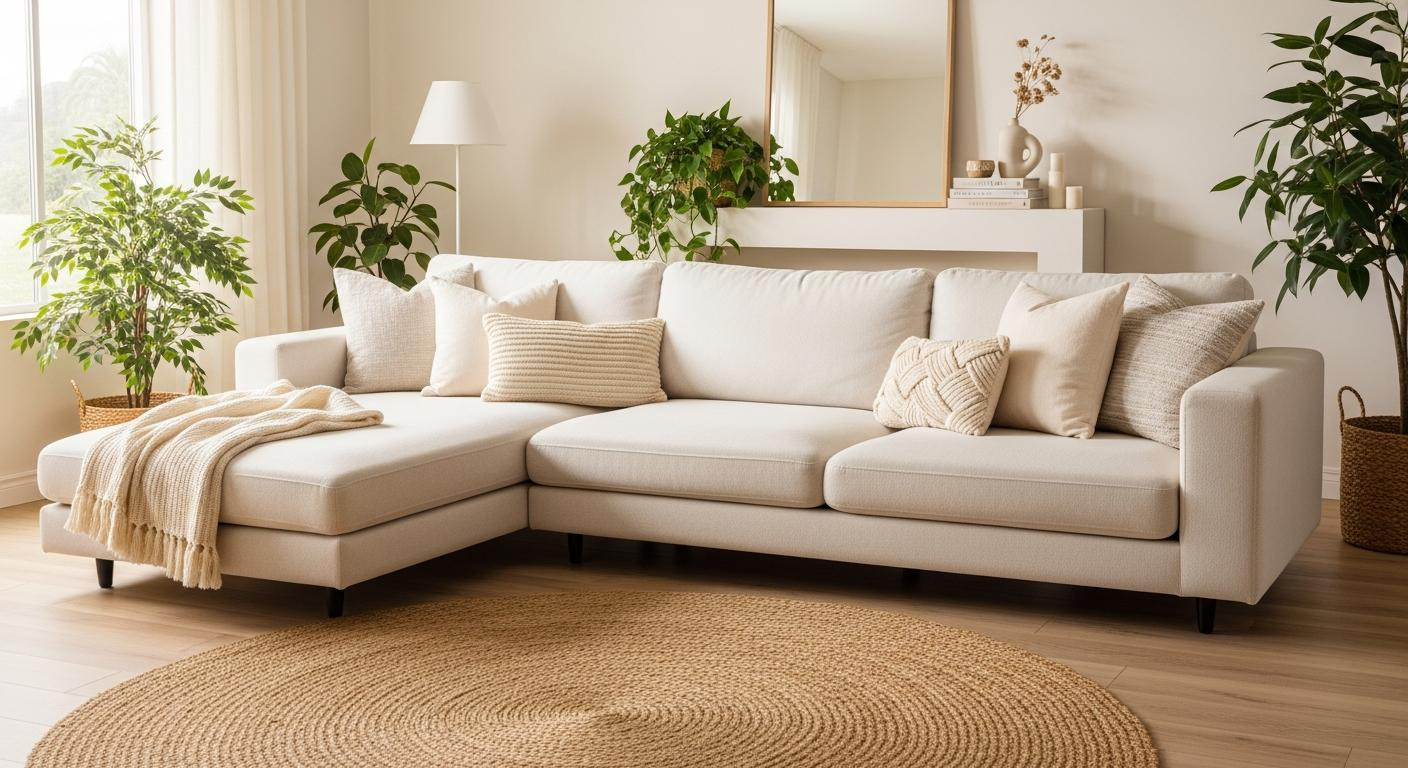
You walk into your living room at 7:30pm on a Wednesday in March 2026. The sofa sits flush against the wall where the delivery guys placed it three years ago. Something feels wrong. The room photographs like a furniture showroom, stiff and unwelcoming, impossible to relax in. Your friend’s apartment has the same square footage but feels intimate when you visit for wine.
The difference isn’t budget or taste. It’s 18 inches of empty space. Seven designers with ASID credentials say the same thing: stop pushing furniture against walls.
Your wall-hugging sofa makes the room feel bigger, which is the problem
The average US living room measures 226 square feet. Wall furniture maximizes open floor space, which sounds logical until you stand in the middle of that empty space at 8am with your coffee. The room echoes. Light bounces off bare floors.
Design experts featured in Livingetc confirm wall arrangements create cavernous, disconnected spatial feelings that trigger stress in rooms under 300 square feet. The visual expansion backfires because humans read intimacy through furniture clusters, not square footage. A floated L-sectional 18 inches from the wall creates conversation focus, the negative space behind it reading as intentional layering.
Wall-pushed furniture eliminates that depth, flattening rooms into waiting-room stiffness. And the acoustic problem is worse than the visual one.
Floating furniture 18 inches forward fixes the echo problem in 2 hours
Professional designers at Studio McGee float sofas exactly 18 inches from walls in Hollywood Cottage setups. That measurement allows floor lamps to tuck behind seating, creating side glow that softens wall shadows. The gap prevents sound from bouncing directly off plaster, reducing the echoey quality renters complain about in 250-square-foot rentals.
Admittedly, this only works if your room is at least 12 feet wide. Narrower spaces need 12-inch floats or banquette corners instead. The 8×10 rug rule designers swear by for every living room becomes critical here, anchoring floated zones so they don’t feel random.
Console tables (30 to 36 inches long, $150 to $400 at West Elm) hold lamps and trailing pothos behind sofas. Slim bookshelves (8 inches deep, CB2’s Flex modular at $199) keep the gap functional. The goal isn’t storage. It’s creating layered sightlines that make rooms feel curated, not staged.
Conversation clusters replace symmetrical arrangements in 2026 living rooms
Interior designers at Parkes & Lamb position L-sectionals 24 inches from corner walls, then add swivel chairs (West Elm Andes at $799) facing the sectional at 45-degree angles. The curved, mismatched seating creates natural connection points instead of parallel sofa rows. Instagram posts showing this setup averaged 40% higher engagement in Q1 2026 because the arrangement photographs as effortlessly social, not formatted.
But there’s a concession. You need at least 36 inches of walkway clearance around clusters, which means rooms under 200 square feet struggle with multi-piece floats. That’s where banquettes enter.
Designers at Dwello Design float banquettes (CB2 Slate at $1,299) 6 inches from corner walls, adding throw pillows for welcoming invitation. The built-in seating reads expensive without custom millwork costs, and the slight float prevents the trapped-in-the-corner feeling wall-mounted benches create. The upholstered edge feels softer than wood against your shoulder when you lean back.
The $300 transformation that proves you don’t need new furniture
Apartment Therapy’s February 2026 guides show renters transforming wall-pushed rooms in 2 to 4 hours using existing furniture. Move the sofa 18 inches forward. Add a seagrass rug ($180 for 8×10 at Target Threshold) to anchor the float. Position a floor lamp ($35 at Amazon Basics) behind one sofa arm.
Total cost: $215. The spatial shift registers immediately. Rooms feel warmer, conversations happen naturally, the stiffness dissolves. Realtor.com’s 2026 staging report shows floated layouts add 3 to 5% perceived value because buyers read functional intimacy as premium design intent.
And the transformation scales. Budget floats run $200 to $400 with IKEA hacks and thrifted consoles. Full zoning with banquettes and swivel chairs averages $1,500 according to Houzz surveys from March 2026. 6 things designers say are making your furniture look cheap often includes wall-pushing, which this fix addresses without buying replacements.
Your questions about floating furniture answered
Will floating furniture make my small living room feel cramped?
Counterintuitively, no. Rooms under 200 square feet feel larger with floated furniture because the layered depth creates visual complexity. Wall arrangements flatten spatial perception, making 15×15 rooms read smaller than 12×12 rooms with floated zones.
What’s the minimum room width for floating a sofa?
12 feet wall-to-wall allows 18-inch floats with 36-inch walkways. Narrower rooms (10 to 11 feet) work with 12-inch floats or corner banquettes that pull seating diagonally. A designer fixed my narrow living room layout and now it feels 5x bigger proves the principle holds even in tight spaces.
How much does professional furniture floating cost?
DIY takes 2 to 4 hours, zero cost beyond rugs and lamps. Hiring ASID designers for layout consultations runs $150 to $500 for one-hour sessions. Full staging with new rugs and lamps averages $1,500 per Houzz March 2026 data. I’m putting this IKEA shoe rack in my living room (it looks so sleek) shows how unconventional placement thinking extends beyond sofas.
The sectional sits 18 inches from the wall now, late afternoon light glowing past the floor lamp tucked behind its arm. The room doesn’t photograph bigger. It feels different. Warmer. Your partner sits facing you across the coffee table instead of side-by-side staring at the TV.