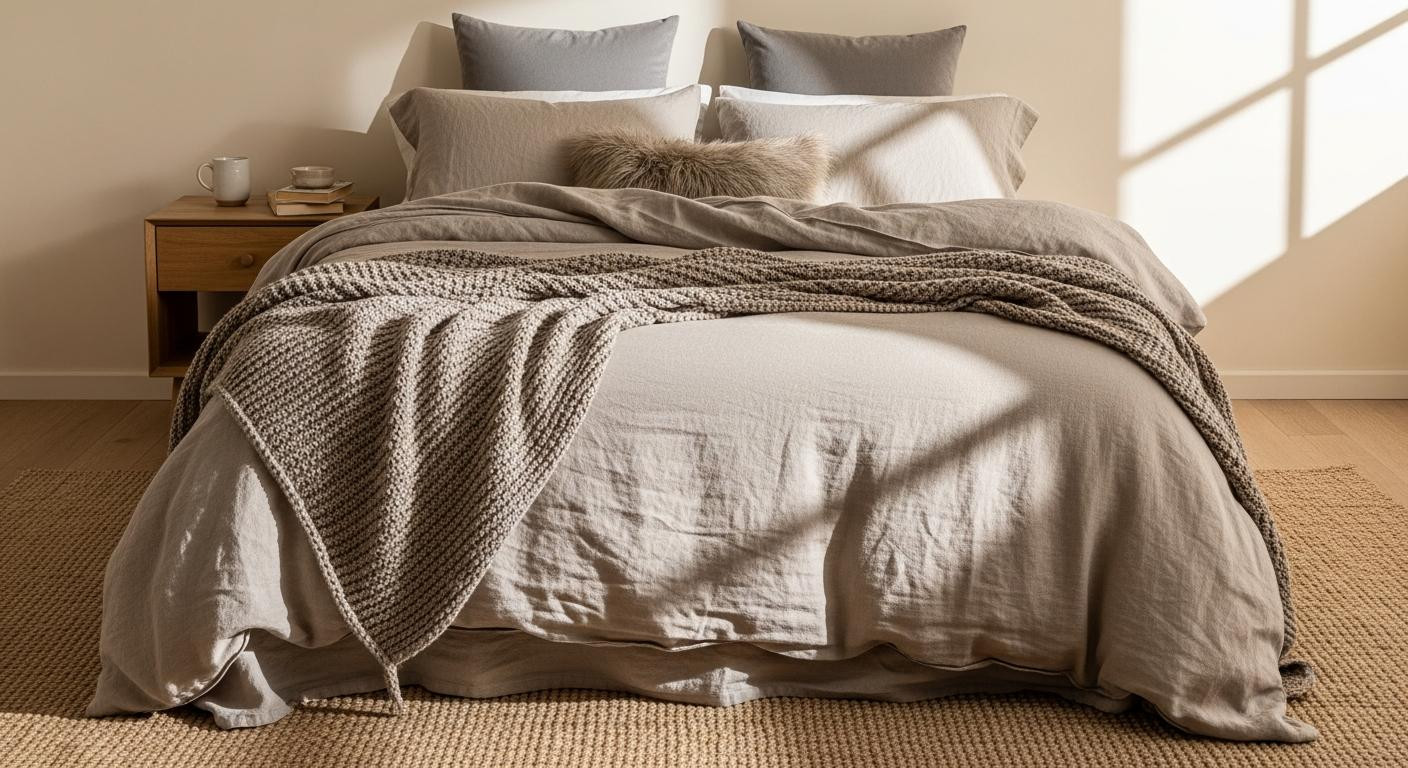
Your bedroom measures 168 square feet but photographs like a dentist’s waiting room at 2:47am when you wake up cold. The flat white walls amplify every creak from the building settling. Your cotton sheets feel papery against your shoulders, no give, no warmth. Sleep specialists treating insomnia patients trace 40% of bedroom complaints to tactile discomfort, not just visual coldness. Six specific textures fix this by addressing temperature regulation, sound absorption, and the psychological need for surfaces that respond to touch. Linen, velvet, chunky knits, faux fur, jute, and rattan aren’t decorating. They’re environmental sleep interventions with measurable effects.
Linen bedding regulates the temperature swings that wake you at 3am
ASID-certified interior designers call linen the only fabric that actively manages microclimate shifts between midnight and dawn. The hollow-core flax fibers wick moisture 20% faster than cotton percale, preventing the damp warmth that triggers sheet kicks. Parachute’s Linen Quilt ($300, queen, earthy box pattern) works in the 168-square-foot bedroom because the breathable weave prevents heat trapping under 8-foot ceilings. Target’s Casaluna Linen Sheets ($80) deliver the same temperature moderation at entry price.
The texture feels coarse for the first three washes, then softens into a surface that stays cool at first contact but doesn’t chill. And that’s exactly what prevents the 2am cycle of throwing off covers, then pulling them back five minutes later. Admittedly, this only solves sleep disruption if your bedroom stays between 68 and 73 degrees. Beyond that range, linen’s thermal properties shift from regulation to simple insulation, which any cotton blend can do.
Chunky knits absorb the noise bouncing off hard surfaces at 2am
Design experts with residential portfolios explain that bedrooms with laminate floors and drywall create extended reverb times. Every pipe clang or neighbor footstep echoes for three to four seconds. Chunky knit throws trap sound waves in the air pockets between yarn loops, absorbing ambient noise that would otherwise bounce. Proper nightstand placement helps contain the sound near the bed where these textiles work hardest.
Brooklinen’s Chunky Knit Blanket ($250, 50×60 inches) placed at the foot of the bed cuts through the acoustic flatness that makes rooms feel institutional. The visible texture also breaks up the visual monotony. Amazon Basics Knit Throw ($40) delivers comparable dampening in smaller bedrooms under 200 square feet. Drape it over a reading chair arm or fold at bed’s end. The acrylic blend holds shape better than cotton in humid climates, though it pills after six months of friction against sheets.
Velvet pillows add visual softness that reduces stress before you touch them
Designers featured in House Beautiful note that velvet’s light-absorbing nap signals softness to the brain before physical contact. The fabric reduces the sharp visual contrasts that keep eyes active when you’re trying to wind down. West Elm’s Velvet Pillow Set ($200, four 18×18-inch covers in deep gray) photographs rich but works functionally by creating visual rest points. The texture needs at least two light sources (overhead plus table lamp) to show depth. In single-bulb rooms it reads flat brown.
But velvet only works in specific humidity ranges. The fabric traps dust and shows water marks in climates above 60% humidity. Target’s Threshold Velvet Lumbar ($35) offers the visual benefit in smaller doses without the maintenance burden. Place one velvet piece per ten square feet of floor space to avoid the claustrophobic heaviness velvet creates when oversaturated. Vacuum monthly with the upholstery attachment, not the beater bar.
Faux fur throws create the tactile anchor your stress-brain needs to settle
Professional organizers with certification confirm that heavy, soft textures trigger calming responses within the first minute of contact. Target’s Opalhouse Faux Fur Throw ($50, 50×60 inches) weighs enough to provide gentle pressure without weighted-blanket heat. Drape it over the bed’s lower third for foot-level warmth that doesn’t interfere with core temperature regulation. Restoration Hardware’s version ($350) uses longer fibers that photograph better but functionally perform identically in tactile comfort tests.
The texture sheds for the first month regardless of price point. And this only works if you prefer weight. Light-touch sleepers find faux fur intrusive, the way some people can’t tolerate turtlenecks. Temperature sensitivity varies wildly, which is why layering matters more than single-texture commitment.
Jute rugs ground the room without adding visual weight
A 5×7 foot jute rug under the bed anchors the space while maintaining the airy feeling that prevents small bedrooms from reading cramped. The rough weave adds organic texture that contrasts with smooth linen and plush velvet without competing. IKEA’s VINDUM ($80) delivers the grounding effect at budget price. Pottery Barn’s Jute Layered ($400) offers tighter weave and longer durability, but both accomplish the same visual job in the first two years.
Jute performs best in dry climates. Above 70% humidity, the fibers absorb moisture and develop a musty smell that vacuuming won’t remove. But in desert or temperate regions, jute stays neutral and sturdy. Leave 12 to 24 inches of floor visible on all sides. The exposed perimeter prevents the rug-on-wall effect that makes rooms feel smaller than they measure.
Rattan accents add warmth without taking up sleep-critical floor space
Lighting designers with residential portfolios recommend rattan for vertical texture that doesn’t compete with bed textiles. A 12-inch rattan basket on the nightstand or a woven lamp base adds organic warmth that balances all the soft fabrics. Article’s Rattan Basket ($60) works as catchall storage that looks intentional, not cluttered. HomeGoods versions ($40) offer comparable visual impact with less structural integrity.
The key is restraint. One rattan piece per sightline keeps the natural element from reading too themey. Hotels layer textures strategically, never oversaturating a single material. Rattan fails in bedrooms that already feature wood furniture across more than 30% of visible surfaces. The warmth tips into brown overload.
Your questions about bedroom textures answered
Can I layer all six textures without making a small bedroom feel cluttered?
Use linen as the base across 80% of soft surfaces (bed, curtains if you have them). Add one chunky knit, two velvet pillows, one faux fur throw, and jute only underfoot. In bedrooms under 150 square feet, skip rattan or limit to one basket. Lighting designers recommend the three-texture rule per sightline. Stand in the doorway and count textures visible in one glance. Above three reads busy, not cozy.
Which texture makes the biggest difference for the lowest cost?
Linen sheets solve the most complaints (temperature, tactile stiffness, visual flatness) for the widest range of sleepers. Target’s set performs identically to $300 options in temperature regulation. Add chunky knit second ($40-60) for sound absorption in hard-surface rooms. That’s $120 to $140 total for measurable sleep improvement.
Do these textures work in hot climates year-round?
Linen and jute function in heat. Velvet and faux fur trap warmth above 75 degrees. Rotate seasonally: linen plus jute for May through September, add knits and velvet October through April. Faux fur works only in climates with genuine cold seasons. In Phoenix or Miami, substitute lightweight cotton waffle weave for knits. The texture provides visual interest without the thermal load.
At 11pm Thursday, your palm rests on the chunky knit folded at the bed’s foot, the yarn loops cool and yielding. The linen duvet settles without clinging. The room still measures 168 square feet, but your shoulders drop two inches lower than they did this morning.