You reach for the vitamin C tablets at CVS, certain supplements deliver winter immunity better than food. Your doctor mentioned consistency, your wellness influencer swore by liposomal formulations. Yet the $45 bottle in your hand represents a fundamental misunderstanding of how your body actually absorbs this critical nutrient. Recent studies tracking vitamin C levels revealed something that overturns decades of supplement marketing: dietary vitamin C from nine winter vegetables activates immune pathways more efficiently than isolated pills, with preparation methods mattering far more than you’ve been told.
The vitamin C absorption myth supplement companies never mention
Research from specialized nutrition labs demonstrates that liposomal vitamin C shows 27% higher peak plasma concentration than standard ascorbic acid. Yet this advantage disappears when comparing isolated supplements to whole food sources. Vitamin C from winter vegetables includes natural cofactors like bioflavonoids and fiber that enhance absorption through different pathways.
Clinical studies reveal vegetables trigger immune response patterns that supplements cannot replicate. The food matrix provides quercetin, kaempferol, and glucosinolates that work synergistically with vitamin C. White blood cell production increases more dramatically from dietary sources than from isolated ascorbic acid alone.
Why your $45 liposomal vitamin C skips your immune system
Vitamin C absorption saturates at approximately 400mg per dose, with excess amounts excreted unchanged. Most supplements deliver concentrated doses that overwhelm absorption capacity. Meanwhile, winter vegetables provide sustained release throughout meals, maintaining steady blood levels that support continuous immune function.
The cost reality that changes everything
Nine winter vegetables delivering 200-300mg vitamin C weekly costs approximately $12. The same vitamin C intake from premium supplements runs $45 monthly. That’s an 85% savings while gaining additional nutrients like vitamin K, folate, and fiber that supplements omit entirely.
Science demolished the “raw is always better” rule
Nutrition researchers studying cooking methods discovered a paradox that contradicts popular belief. While vitamin C is water-soluble and heat-sensitive, certain cooking techniques actually preserve more nutrients than raw consumption. The key lies in understanding which methods protect vitamin C while enhancing other compounds.
Steaming winter vegetables preserves approximately 90% of vitamin C content compared to raw. Boiling reduces levels by 50% due to leaching into water. Roasting at moderate temperatures maintains 80-85% of original vitamin C while concentrating flavors and breaking down cell walls for better mineral absorption.
The cooking paradox: when heat activates more vitamin C
Registered dietitians studying vegetable preparation note that proper cooking techniques avoid the “black and brown” overcooking that destroys nutrients. Steaming Brussels sprouts for 5-7 minutes keeps them soft while maintaining their 75mg vitamin C per 100g serving.
Temperature control matters significantly. Brussels sprouts roasted at 375°F for 20 minutes retain 82% of their vitamin C content while developing caramelized edges that enhance palatability and nutrient density.
Brussels sprouts case study: 75mg holds steady when prepared correctly
Food science research demonstrates that Brussels sprouts maintain vitamin C stability better than most winter vegetables. Their dense structure protects water-soluble vitamins from heat degradation. Proper preparation involves minimal water exposure and controlled cooking times to preserve both texture and nutrients.
The 9 winter vegetables that deliver 75-150mg vitamin C per serving
Winter produces some of the most vitamin C-dense vegetables available year-round. These nine options provide reliable immune support while offering additional nutrients that supplements cannot match. Each serving delivers substantial vitamin C alongside complementary compounds that enhance absorption and effectiveness.
Tier 1 powerhouses providing 70-79mg per 100g
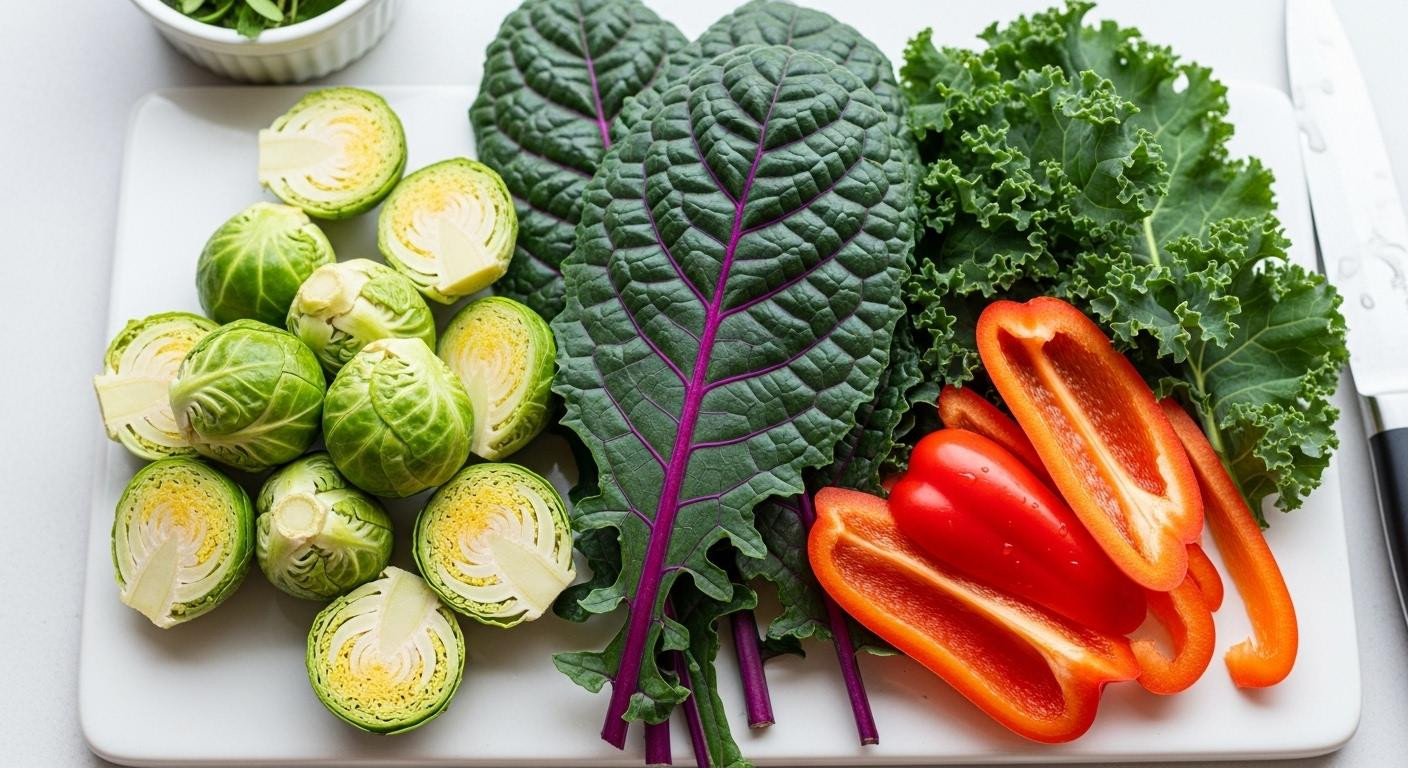
Brussels sprouts lead with 75mg vitamin C plus glucosinolates that boost immune cell activation. Broccoli provides 79mg raw, with optimal retention when lightly steamed for 3-4 minutes. Kale delivers 71mg when cooked, containing four times more vitamin C than spinach according to nutrition databases.
These vegetables also supply vitamin K for proper immune cell development and folate for DNA synthesis in rapidly dividing white blood cells. Their combined nutrients create immune support that isolated vitamin C cannot provide.
Tier 2 reliable sources delivering 30-50mg per 100g
Cabbage varieties provide 36-50mg vitamin C with exceptional storage stability. Winter squash offers 20-30mg plus prebiotic fibers that support gut immunity. Swiss chard and collard greens contribute 30mg alongside potassium for cellular function. Red bell peppers deliver 150% daily vitamin C needs in one medium pepper, surpassing citrus fruits.
Turnips and rutabagas supply 35mg vitamin C plus glucosinolates for enhanced immune defense. Parsnips contribute vitamin C while providing compounds that aid iron absorption for optimal immune cell production.
Why January 2026 makes dietary vitamin C more critical than supplements
Cold weather stress increases vitamin C oxidation by approximately 25% as your body burns through reserves faster. Supplement timing becomes problematic when taken without food, reducing absorption by 15-30%. The nine vegetables above deliver vitamin C within protective food matrices that extend nutrient half-life in your bloodstream.
Winter vegetables provide bioflavonoids like quercetin in kale and anthocyanins in purple cabbage that enhance vitamin C effectiveness. Cruciferous vegetables also support thyroid function while delivering immune-boosting compounds that supplements cannot replicate. Red peppers’ 150% daily value outperforms single supplement doses for sustained white blood cell activation throughout winter months.
Your questions about 9 winter vegetables high in vitamin C for immune defense answered
Do frozen winter vegetables retain vitamin C for immune support?
Flash-freezing preserves 80-90% of vitamin C content compared to fresh produce sitting 5+ days in storage. Frozen vegetables often contain more vitamin C than “fresh” options that have oxidized during transport. Steam frozen vegetables directly without thawing to prevent nutrient leaching.
Can I combine these vegetables with vitamin C supplements, or does that waste money?
Your body absorbs maximum 400mg vitamin C per dose, excreting excess amounts unchanged. Nine winter vegetables easily provide 200-300mg daily, making additional supplements redundant and expensive. Food sources boost white blood cells more effectively than isolated supplements.
Which preparation method preserves the most vitamin C for immune benefits?
The hierarchy runs: raw consumption, steaming (90% retention), roasting (80-85%), then boiling (50%). However, some vegetables like tomatoes and carrots increase beneficial compounds when cooked. Proper preparation optimizes both vitamin C and complementary nutrients for comprehensive immune support.
January evening, you roast Brussels sprouts at 375°F, their edges crisping to caramel while vitamin C holds steady inside. No pill bottle. No measuring. Just 75 milligrams per serving activating white blood cells in ways chemistry never taught supplements to replicate. Your immune system recognizes food.