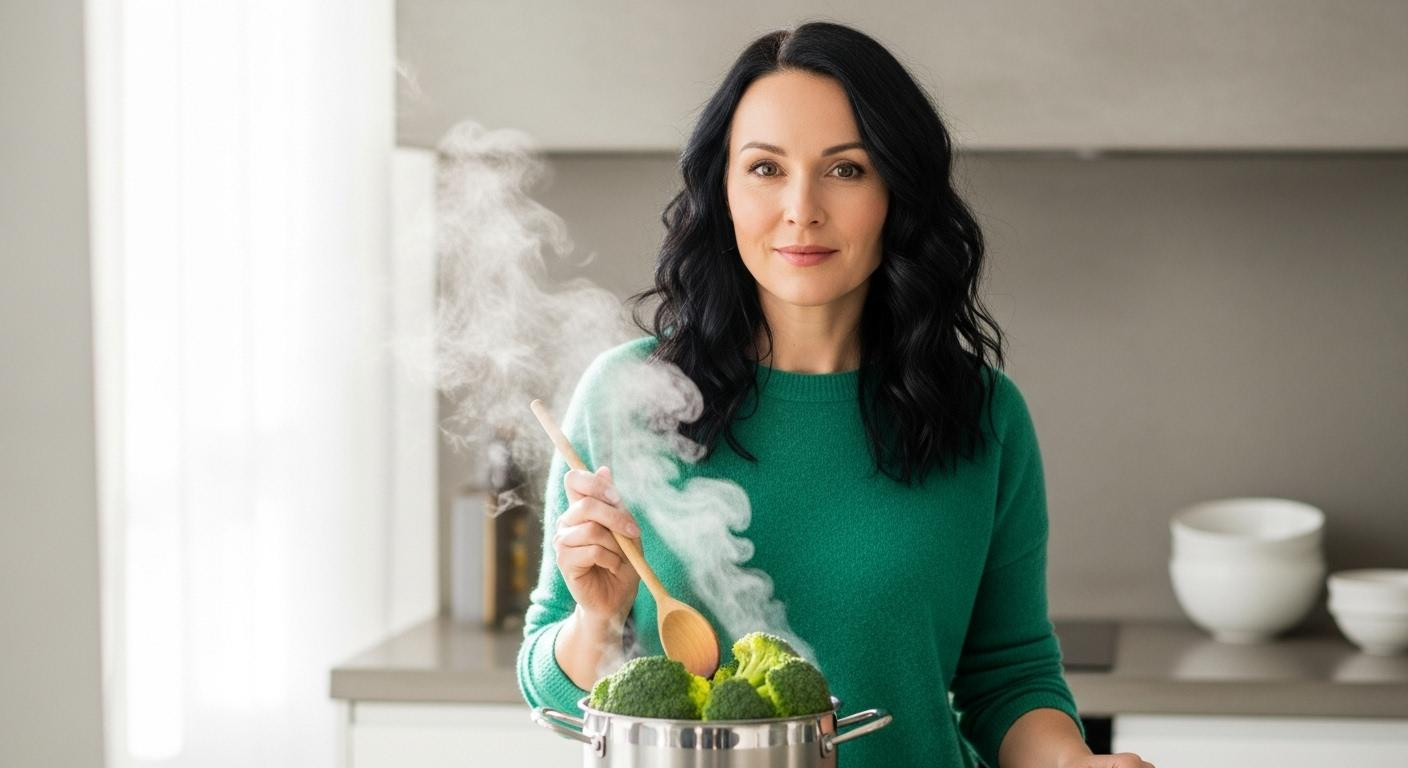
Sarah hesitates at the holiday buffet, eyeing the roasted Brussels sprouts. Her endocrinologist warned her eight years ago about cruciferous vegetables interfering with thyroid function. Her TSH hovers at 5.8 despite medication. Last month, her new functional medicine doctor mentioned recent studies overturning old assumptions. Tonight, she discovers the truth: that “goitrogen” warning was based on outdated animal research in iodine-deficient contexts. Seven winter vegetables she’s been avoiding actually support the thyroid hormone pathways her body struggles with. Science has spoken, and it contradicts everything she believed.
The goitrogen myth originated in mid-20th-century animal studies using isolated compounds at doses no human could consume through whole foods. Rats fed massive amounts of raw cabbage extract in iodine-deficient conditions developed goiters. Medical textbooks repeated the caution for decades without human clinical validation. By the 1990s, thyroid patients routinely received blanket advice to avoid broccoli, kale, and Brussels sprouts entirely.
The concern centered on thiocyanates and glucosinolates. These compounds theoretically compete with iodine uptake in extreme concentrations. What those early studies didn’t account for: cooking’s effect on compound breakdown, iodine-adequate Western diets, and the impossibility of consuming thyroid-damaging amounts through normal vegetable servings. For 50 years, patients avoided nutrient-dense foods based on laboratory conditions that never translated to dinner plates.
2025 science overturns the crucifer-thyroid warning with human evidence
A randomized controlled trial with 267 participants found daily broccoli sprouts for 12 weeks caused no changes in serum TSH, fT4, or thyroglobulin levels. According to recent research published in the Journal of Clinical Nutrition, well-cooked brassica vegetables are not contraindicated in individuals with or without thyroid ailments. However, caution remains with extraordinary amounts of raw brassica consumption.
A 2025 review confirms brassicas do not harm thyroid function if iodine status is adequate, especially when cooked. No exclusion is needed in varied diets. Human data shows overall impact depends on cooking method, amount consumed, and iodine baseline. Properly designed human trials show no adverse effects from normal cruciferous vegetable consumption.
Cooking eliminates theoretical risk through enzyme deactivation
Cooking deactivates myrosinase enzyme, preventing glucosinolate conversion to goitrogenic thiocyanates. Heat disrupts enzyme activity completely. Steaming for 3-5 minutes lowers goitrogens by 70-90 percent while glucosinolates drop 30-50 percent. Roasting at 375-425°F for 15-25 minutes achieves 80-95 percent reduction through prolonged heat exposure.
Sautéing for 5-7 minutes yields 60-85 percent reduction via quick high heat. Raw glucosinolate content runs high in broccoli at 100 micromoles per 100 grams. Cooked preparations drop total content by 50-90 percent depending on method and duration.
Nutrient retention stays strong with proper preparation
Vitamin C retention reaches 70-85 percent with steaming, 50-70 percent with roasting or sautéing. Selenium remains stable at over 90 percent with all cooking methods. Cooking actually boosts bioavailability for fat-soluble vitamins A, E, and K by 20-50 percent. Carotenoids like beta-carotene increase 30-100 percent through cell wall breakdown during heat application.
7 winter vegetables that actively support thyroid hormone production
Crucifers provide selenium for deiodinase enzymes that convert T4 to T3. A 2025 meta-analysis shows selenium reduces anti-TPO antibodies by 20-40 percent in Hashimoto’s patients. Vitamin C supports immune function critical for autoimmune thyroid conditions. Optimal daily intake reaches 500-1000 milligrams for therapeutic benefits.
Brussels sprouts cost $2-3 per pound and deliver 75-100 milligrams vitamin C per cup cooked. Roasting at 400°F for 20 minutes maximizes flavor while reducing goitrogens by 90 percent. Broccoli runs $2 per pound with 2-5 micrograms selenium per serving. Steaming for 4 minutes provides 85 percent goitrogen reduction while preserving maximum sulforaphane content.
Leafy greens enhance hormone receptor sensitivity
Kale costs about $3 per bunch and provides 500-1000 micrograms vitamin A per cup cooked. Vitamin A enhances thyroid hormone receptor sensitivity, improving binding and transcription processes. Sautéing for 6 minutes achieves 80 percent safety reduction while boosting bioavailability significantly. Bok choy delivers calcium and vitamin C at $1.50 per pound.
Steam bok choy for 3 minutes and pair with 150 micrograms iodine from one egg or nori sheet. This combination ensures adequate substrate for hormone synthesis while maintaining crucifer safety protocols.
Root vegetables and iodine partners complete the profile
Beets cost $1.50 per pound and provide 100 micrograms folate plus 0.3 milligrams manganese per cup. Roast at 375°F for 25 minutes to boost circulation pathways that support thyroid function. Sweet potatoes run $1 per pound with 1400 micrograms beta-carotene that converts to 100 micrograms vitamin A at a 12:1 ratio.
Nori seaweed costs $5 per 10-sheet pack and delivers 50-200 micrograms iodine per 1-3 grams dried. Use raw nori sprinkled on any cooked crucifer to ensure optimal iodine-crucifer pairing for maximum thyroid support benefits.
How to prepare these vegetables for maximum thyroid safety
Light cooking provides the perfect balance between safety and nutrition. Steaming 3-5 minutes, roasting at 375-425°F for 15-25 minutes, or sautéing 5-7 minutes all reduce goitrogenic compounds by 30-60 percent. Avoid high-volume raw crucifer juicing since concentration effects can deliver problematic compound levels that exceed safe thresholds.
Pair cruciferous vegetables with iodine sources consistently. Sprinkle nori flakes on roasted Brussels sprouts, add kelp to vegetable broths, or use iodized sea salt in cooking preparations. Adults require 150 micrograms daily iodine through shellfish, eggs, or sea vegetables alongside cruciferous vegetable consumption for optimal safety and efficacy.
Clinical protocols show TSH improvements when combining these strategies properly. One case study documented improvement from 6.0 to 4.2 mIU/L after 12 weeks of implementation using these preparation methods consistently.
Your questions about thyroid-safe cruciferous vegetables answered
Is raw kale really dangerous for my thyroid?
No, raw kale in normal salad portions of 1-2 cups poses no thyroid risk for iodine-adequate individuals. The 2025 review found zero human evidence of hypothyroidism from whole vegetable consumption. Risk exists only with extreme raw crucifer juicing of multiple pounds daily combined with severe iodine deficiency. Light cooking provides extra reassurance by reducing goitrogenic compounds 30-60 percent while preserving nutritional benefits.
How much iodine do I need to safely eat cruciferous vegetables?
Adults require 150 micrograms daily iodine for optimal thyroid function. Three grams dried nori provides 50-150 micrograms effectively. Pair with iodized salt, eggs, or seafood for complete coverage. Shellfish, chicken, and legumes also contribute meaningful amounts. Avoid mega-dose kelp supplements exceeding 500 micrograms daily without medical supervision since excess iodine can worsen autoimmune thyroid disease in susceptible individuals.
Will cooking destroy the beneficial nutrients in these vegetables?
No, brief cooking actually increases bioavailability of fat-soluble vitamins A, E, and K by 20-40 percent while preserving vitamin C and selenium content. Steaming 3-5 minutes or roasting 15-20 minutes enhances nutrient absorption through cell wall breakdown. You gain both safety from goitrogen reduction and enhanced nutrition from improved bioavailability. The combination delivers optimal benefits for thyroid health support.
The Brussels sprouts glisten under butter and sea salt flakes tonight. Sarah spears one with her fork, watching iodine crystals catch the candlelight. Eight years of unnecessary avoidance end with this first bite. Science gave her permission while selenium and vitamin C will handle the rest.