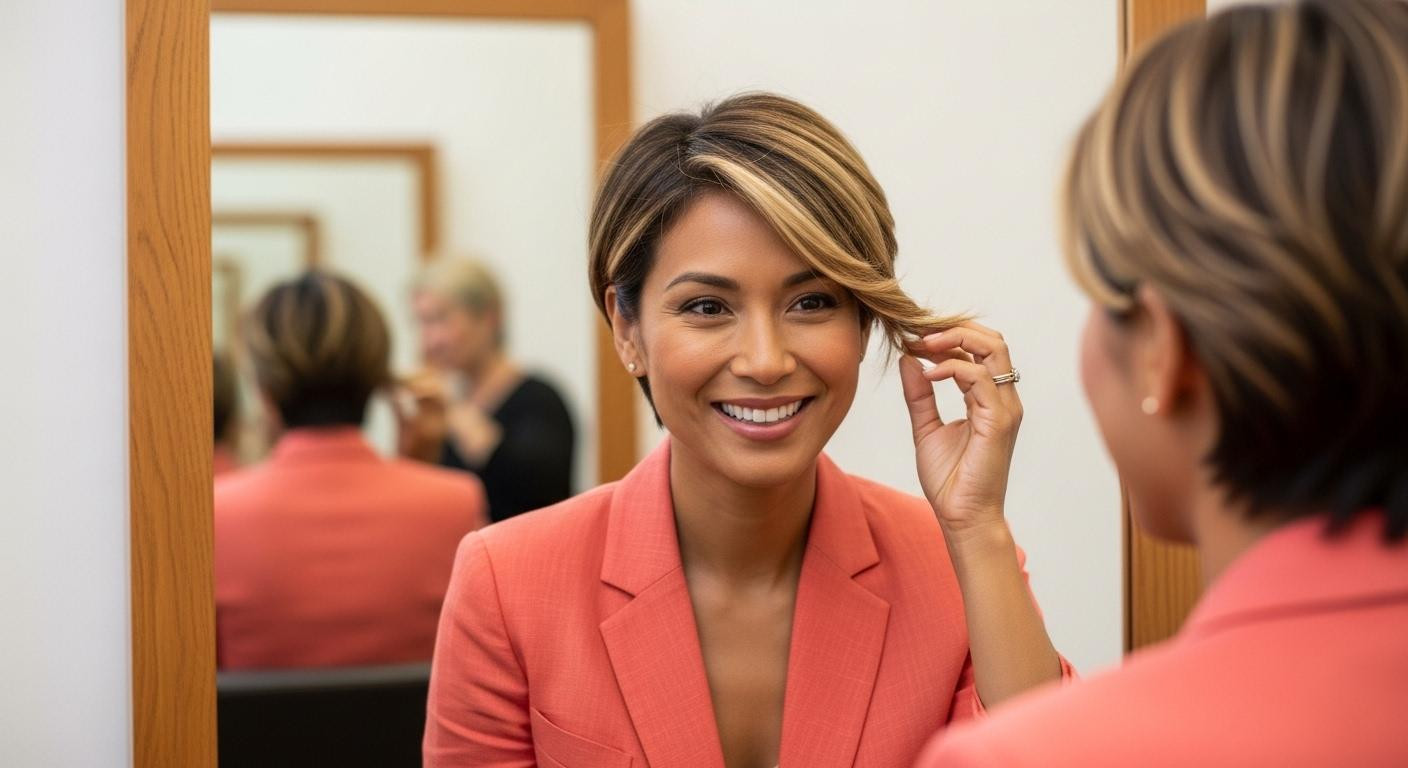
Your colorist quotes $280 for dimensional pixie highlights at 10:47am this January morning. Your phone displays Pinterest saves of brightened faces framing textured crops. The mirror reflects flat, one-tone hair against winter-dulled skin. Hesitation builds between investment and necessity. You came seeking face-brightening transformation, not a $300 commitment. Celebrity colorists and cosmetic scientists reveal strategic placement beats comprehensive coverage in both results and cost.
The $180 markup: why salons push full pixie highlights
Full-head highlights on pixies require 40-60 foils despite short length. Processing takes 90+ minutes at $2-5 per foil pricing structure. Mid-range salons charge $180-$350 for comprehensive coverage versus face-framing approaches at $90-$160 range.
Colorists specializing in dimensional color note that strategic restraint works better on short hair. Controlled contrast principles create more flattering results than saturation. Salons default to full coverage for higher tickets and established protocols.
University of York 2016 research showed controlled contrast correlates with attractiveness ratings more than maximum coverage. Pixie length makes every placement decision visible. Saturation creates flatness rather than dimension around facial features.
The light physics colorists use but rarely explain
Face-framing creates natural spotlight effect
Strategic brightness around the face mimics theatrical lighting principles. Light reflects toward the center of facial features. This makes skin appear more luminous and eyes brighter through reflected illumination.
Cosmetic science shows lighter tones around hairlines create 3D contour effects similar to strobing makeup. On pixies, this happens within 2-3 inches of face – maximum impact zone. Proper pixie structure amplifies this brightening effect.
Contrast theory trumps coverage quantity
Professional colorists recommend 1-2 levels lighter than base for optimal results. Excessive lightness reduces contrast and flattens visual dimension. Color theory demonstrates warm-neutral highlights neutralize sallowness in winter skin.
Dermatological data shows skin appears 10-20% duller in colder months due to reduced moisture and circulation. Champagne and sand blonde tones counteract this natural dulling effect. Strategic placement maintains movement without harsh demarcation lines.
The $150 strategic placement request
What to request at your next appointment
Use this specific language: “I want face-framing highlights around hairline and temples, keeping base color for depth.” Request partial foil service, not full head. Specify dimension over coverage for natural results.
Technical details matter: placement concentrated in front sections, feathering around cheekbones and eye-line. Maintain 1-2 level lift from base for subtle enhancement. Ask for balayage hand-painting on crown for gentle dimension. Expected pricing: $90-$160 for this strategic approach.
Maintenance economics: 4-6 refreshes vs 6-8 annual
Calculate long-term investment differences. Strategic placement needs refreshing every 10-12 weeks versus 8-10 for full highlights. Annual maintenance costs $560-$840 for face-framing versus $720-$1,050+ for comprehensive coverage.
Combined with quarterly trims at $70 average, total annual investment remains manageable. Bond-repair treatments at $28-60 protect against bleach damage between sessions.
Real transformations: 42 to “10 years younger”
Client testimonials document dramatic age-reduction effects. One 42-year-old reported looking “10 years younger” after switching from long dark hair to textured highlighted pixie. Strategic caramel face-framing drew attention to eyes and softened nasolabial folds.
Contrast this with full-highlight examples that photographed “washed out” according to colorist feedback. Professional styling techniques amplify strategic color placement results. Hair specialists note pixie cuts open faces while strategic color enhances this natural lifting effect.
2025 salon survey data shows 75% of women switching to highlighted pixies rated satisfaction 8/10 or higher. Primary reasons cited included “freshness” and “brighter facial appearance” lasting weeks beyond initial service.
Your questions about pixie highlights answered
How often do face-framing highlights need refreshing on pixies?
Every 10-12 weeks versus 8-10 for full coverage. Hair grows 0.5 inches monthly. Strategic placement grows out more naturally than comprehensive saturation. Root lines appear less obvious with concentrated face-framing than all-over lightness.
Do highlights damage pixie-length hair more than longer styles?
Shorter hair represents newer growth and generally healthier condition. Bleach reduces tensile strength, but bond-builders preserve 40% more strength during processing. Partial highlighting exposes less total hair to lightener versus full-head services.
Can this technique work on naturally dark or gray hair?
Warmth neutralizes gray’s natural ash tones effectively. Dark bases need careful level-lifting over 2-3 sessions for significant brightness without damage. Experts recommend starting conservatively with 1 level lift, adding dimension gradually to avoid harsh contrast lines.
Mirror reflection at 7:15am, three months post-appointment. Your fingertips brush textured layers catching morning light perfectly. Bedroom window illuminates strategic brightness around your face. Not all-over blonde, but precisely placed luminosity. The $140 service created what $280 comprehensive coverage couldn’t achieve.