The term “Purple Pocket Coil” leads shoppers to a piece of brand education rather than a single mattress product page, and that distinction shapes the whole buying decision. Purple publishes a guide explaining what a pocket coil mattress is, how wrapped coils differ from traditional innerspring units, and what buyers should expect from the category as a whole. The short version: pocket springs suit sleepers who want contouring without the stuck feeling of memory foam, while shoppers who specifically want Purple’s GelFlex Grid should look at the brand’s grid models instead.
We also weigh this mattress against its rivals in our best innerspring mattresses.
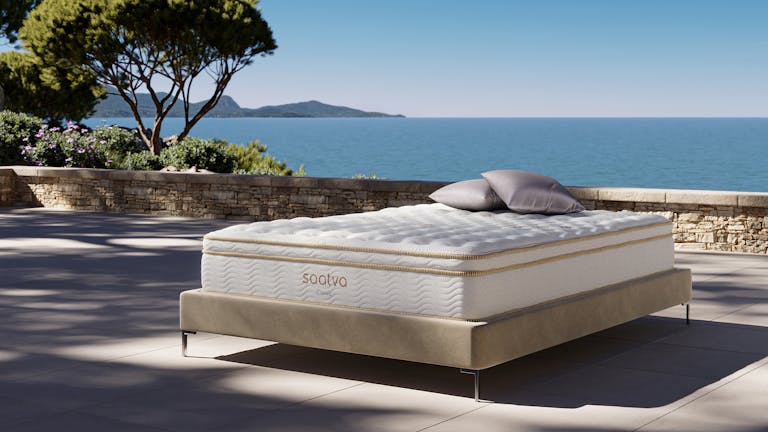
Our pick
Saatva Classicthe traditional coil alternative if you want a coil mattress with three firmness choices
- 365-night home trial
- Free white-glove delivery and old-mattress removal
- Lifetime warranty
- Dual-coil design with over 1,000 recycled carbon steel coils in full size and up
What exactly is a pocket coil mattress?
A pocket coil mattress uses springs that are wrapped individually in a fabric sleeve, so each coil reacts on its own rather than as part of a connected network. Purple’s own guide states that wrapped coils are also called encased springs or Marshall coils, and that the design dates back to 1899, when English engineer James Marshall invented the Marshall Coil. The brand notes that Pocket Coils is a trademark wholly owned by Dreamwell, Ltd., and that wrapped coil mattresses are the most popular type of innerspring mattress available.
The practical consequence is simple. When you press down on a wrapped coil mattress, only the coils being pressed react. On a traditional innerspring mattress, the surrounding coils compress as well, because they are all connected. Purple explains that this independent action lets the mattress contour to your body better and reduces motion transfer compared with a traditional innerspring build.
There is also a shape difference in the springs themselves. Open coil units use an hourglass shape, wider at the top and bottom and thinner in the middle. Pocket springs maintain their width for the entire length of the coil, and they are thin-gauged and knotless rather than wired together. That structural difference is the reason the two categories behave differently under load, and it is the single most useful fact to carry into any mattress comparison you make this year.
Who is the pocket coil category actually for?
Pocket coil mattresses suit sleepers who want body contouring without the sinking sensation some people report with memory foam, and who would rather have airflow through the spring unit than a solid foam block. They are a sensible starting point for couples concerned about motion transfer, and for shoppers who want a traditional innerspring feel with wraps that contour to the body better than connected coils.
Shoppers whose main goal is to sleep on Purple’s GelFlex Grid should confirm on the official product page whether the model they are considering actually contains coils, because the grid and the coil unit are separate design choices. A grid surface and a pocket spring base are two different engineering answers, and a brand can offer both across its range without either one replacing the other.
According to the specifications published in Purple’s guide, the category carries a few tradeoffs worth knowing before you compare models. The brand notes that airflow through wrapped spring mattresses allows these beds to sleep cooler than memory foam, but also that dust may sneak into the mattress, which can upset allergies. If allergies are a concern for you, check the cover materials and cleaning guidance on the official page before ordering.
Good fit: sleepers who want contouring without a stuck feeling, couples who want reduced motion transfer versus a traditional innerspring, and shoppers who prefer airflow through a spring unit over a solid foam core.
Potentially a poor fit: shoppers with dust allergies who want to avoid any build where dust can enter the mattress, and buyers who specifically want a GelFlex Grid surface rather than a coil-based construction.
Check first: whether the specific model you want is a wrapped coil build, what the cover is made of, and what the current price is for your size.
How do pocket coils differ from traditional innerspring and from foam?
The core difference between a pocket coil mattress and a traditional innerspring mattress is connection. In an open coil unit, the network of metal coils are all connected and move together, which Purple says provides less comfort, less spring back, and less contouring around your body. In a wrapped coil unit, the coils are not connected and act on their own. Pocket springs are thin-gauged and knotless; open coils are wired together and shaped like an hourglass.
Versus foam, the comparison is about feel and temperature. Purple’s guide states that memory foam is known for contouring around the body, preventing movement at night, avoiding motion transfer, and absorbing pressure. The same guide notes that memory foam can sleep hot since it absorbs body heat, and may lead to a sinking feeling that some people want to avoid. Pocket sprung mattresses, by the brand’s account, provide many of the same benefits as memory foam, contouring to the body without the stuck feeling some people report, and sleeping cooler because of airflow through the spring unit.
That is the tradeoff in one line: foam gives you deep pressure absorption and a hug, pocket springs give you contouring with more air movement and a more responsive surface. Neither is universally better, and the right answer depends on whether you run hot, whether you dislike sinking into your bed, and how much motion isolation matters to you as a couple.
| Construction | How the coils or foam behave | Best suited to |
|---|---|---|
| Pocket coil (wrapped coil) | Each coil sits in its own fabric sleeve and reacts independently, contouring to the body | Shoppers who want contouring with airflow and a responsive surface |
| Traditional innerspring (open coil) | Connected network of hourglass-shaped coils that move together | Shoppers who want a classic connected-spring feel |
| Memory foam | Contouring, pressure absorption, and a hugging sensation; can sleep hot and can feel sinking | Shoppers who want deep pressure relief and do not mind warmth |
What does a pocket coil mattress cost?
Purple’s published guide gives a broad category range rather than a single product price. The brand states that a twin size pocket spring mattress can start around $100, while the most expensive king mattresses can be over $2,000. That is a wide spread, and it reflects the difference between entry-level pocket spring products and premium builds. It is not a price quote for any specific Purple model.
The same applies to any hybrid or grid model you are comparing against: the Queen price shown on a product page today may not be the price you see tomorrow, and the configuration you select changes the total.
See the Saatva Classic price in your size →
How does motion isolation work in a pocket coil mattress?
Motion isolation in a pocket coil mattress comes from the fact that the coils are not connected to each other. Purple’s guide states that if you apply pressure to a wrapped sprung mattress, only the coils being pressed down will react, whereas on an innerspring mattress all of the surrounding coils will compress. The brand concludes that this approach allows the individual wrapped coil mattress to contour to your body better and doesn’t transfer motion as much as a traditional innerspring mattress.
That is a relative claim, not an absolute one.
Buyers who share a bed and are light sleepers should also consider what happens at the surface, not just in the spring unit. A responsive coil base behaves differently from a slow-response foam top layer, and the combination of surface material and coil unit is what determines how much of a partner’s movement you feel.
Does a pocket coil mattress sleep cooler than foam?
According to Purple’s published guide, pocket sprung mattresses sleep cooler than memory foam because of the airflow through the wrapped spring unit. The brand contrasts this directly with memory foam, which it says can sleep hot since it absorbs body heat.
Airflow through the spring unit is one variable; what you feel at the surface is another, and the two work together.
What the guide documents and what it does not
Purple’s pocket coil guide is a category explainer, and reading it as a product spec sheet leads to disappointment. Here is a clean split of the two.
- Twin pocket spring mattresses can start around $100
- King sizes can exceed $2,000 at the top of the range
- Wrapped coils contour better and transfer less motion than open coils
- Dust may enter the mattress and can upset allergies
What the guide does not carry: a price for any specific Purple model, current sale pricing or promotional discounts, lab motion transfer scores or cooling test results, temperature readings in degrees or a cooling rating, cover materials, trial length, or warranty terms for a specific model. Those details live on individual product pages, and they are the details that decide whether a given mattress is right for your body, your budget, and your bedroom.
Who should buy a pocket coil mattress, and who should look elsewhere?
Who should buy a pocket coil mattress: the ideal buyer is a sleeper who wants the contouring benefits associated with memory foam without the stuck feeling, and who values airflow through the spring unit over a solid foam core. Purple’s guide puts the twin size entry point around $100 and the top of the king range over $2,000, a spread wide enough that the category covers both budget and premium shoppers. Couples who move at night benefit from the fact that wrapped coils are not connected, so only the coils under pressure react, which Purple states reduces motion transfer compared with a traditional innerspring mattress. If you want a traditional innerspring feel with better contouring than connected coils, and you are not specifically chasing a GelFlex Grid surface, this is the category to shop.
Who should look elsewhere: shoppers with dust allergies should weigh Purple’s own note that dust may sneak into a wrapped coil mattress and upset allergies, and should confirm cover materials before ordering. Anyone who wants a measured cooling number, a motion transfer score, or a specific model’s trial and warranty terms will need to read the individual product page, because the category guide does not carry those figures.
How does the Saatva Classic compare as a coil alternative?
The Saatva Classic is an innerspring mattress with a dual-coil design made of triple-tempered recycled carbon steel, and it carries over 1,000 coils in full size and up. It is available in three comfort levels: Plush Soft at 3 out of 10, Luxury Firm at 5 to 7 out of 10, and Firm at 8 out of 10. The Plush Soft is described as contouring and body-hugging and best suited to side sleepers and lighter weight sleepers. The Luxury Firm is the brand’s most popular comfort level, designed to replicate the feel of luxury hotel beds and suited to all sleep positions. The Firm gives a floating on top feel and is aimed at stomach sleepers, back sleepers who prefer a very firm mattress, and heavier weight sleepers in the 250 to 300 pound range.
The Classic uses a 3 inch Euro pillow top for cushioned comfort and pressure relief, patented Lumbar Zone Technology for spinal alignment, and a cover made from a soft breathable blend that includes organic cotton. It is CertiPUR-US certified, GREENGUARD Gold certified, and endorsed by the American Chiropractic Association. Saatva offers a 365 night home trial, free white glove delivery with in room setup and old mattress removal, and a lifetime warranty on the mattress for the original purchaser.
For shoppers comparing the two, the distinction is clear: Purple’s guide explains the pocket coil category as a whole, while the Saatva Classic is a specific innerspring product with published firmness levels, coil counts, certifications, and service terms. If you want a named coil mattress with three firmness choices and a full service delivery experience, the Classic is the more concrete purchase.
Check the Saatva Classic price →
World Sleep Almanac score: 7.4/10
The World Sleep Almanac editorial score for the pocket coil category as explained in Purple’s guide is 7.4 out of 10. The score is editorial and is built from these criteria: category pricing (a twin starting around $100 and a king above $2,000 gives wide budget access but no single model price), materials and construction (independent wrapped coils contour better and transfer less motion than connected open coils, and airflow supports cooler sleep than memory foam), buyer tradeoffs (dust can enter the mattress and upset allergies), and scope of published information (the guide carries no model specific trial, warranty, or cover details, so those must be confirmed per product). The score reflects the category as documented, not any single mattress, and it will be revisited if a criterion changes.
Frequently asked questions
Is a pocket coil mattress the same as an innerspring mattress?
Pocket coils are a type of innerspring mattress, but the two are not identical. Purple’s guide explains that a traditional innerspring mattress, also called an open coil mattress, has a network of metal coils that are all connected and move together. A wrapped coil mattress has springs wrapped individually in a fabric sleeve, and those coils are not connected, so each one acts on its own. The brand notes that wrapped coil mattresses are the most popular type of innerspring mattress available, which makes pocket coils a subset of the broader innerspring category rather than a separate category.
Why does the shape of the coil matter?
Pocket springs are thin-gauged and knotless and maintain their width for the entire length of the coil. Purple presents this shape difference as one of the distinctions between the two spring types, alongside the fact that open coils are connected while pocket springs are not. The hourglass shape and the constant-width shape respond differently under pressure, which is part of why the two builds feel different when you lie on them.
Can a pocket coil mattress help with allergies?
Purple’s guide flags a specific tradeoff on this point. If allergies are a concern, review the cover materials and cleaning guidance on the official product page for the specific model you are considering before you order.
Does Purple sell a specific mattress called Pocket Coil?
The term “Purple Pocket Coil” points to Purple’s educational guide about the pocket coil category, which explains what wrapped coils are, how they differ from traditional innerspring and foam builds, and what the category costs. Shoppers looking for a specific Purple mattress should check the brand’s product pages directly, and should confirm whether the model they want actually contains coils, since Purple’s GelFlex Grid models and its coil models are separate design choices.
Is a pocket coil mattress better than memory foam?
Neither is universally better, and Purple’s guide frames the choice as a tradeoff.
A useful companion to this page: our Beautyrest vs Purple comparison.
Verdict
The pocket coil category, as Purple documents it, is a strong fit for sleepers who want contouring with airflow and a responsive surface, and a weaker fit for shoppers with dust allergies or buyers set on a GelFlex Grid surface. The category pricing runs from around $100 for a twin to over $2,000 for the top of the king range, and the guide carries no model specific trial or warranty terms, so those belong on the individual product page. If you want a named coil mattress with three firmness choices, published coil counts, and a full service delivery experience, the Saatva Classic is the more concrete purchase.
Reviewed by the World Sleep Almanac editorial team. Updated 2026.