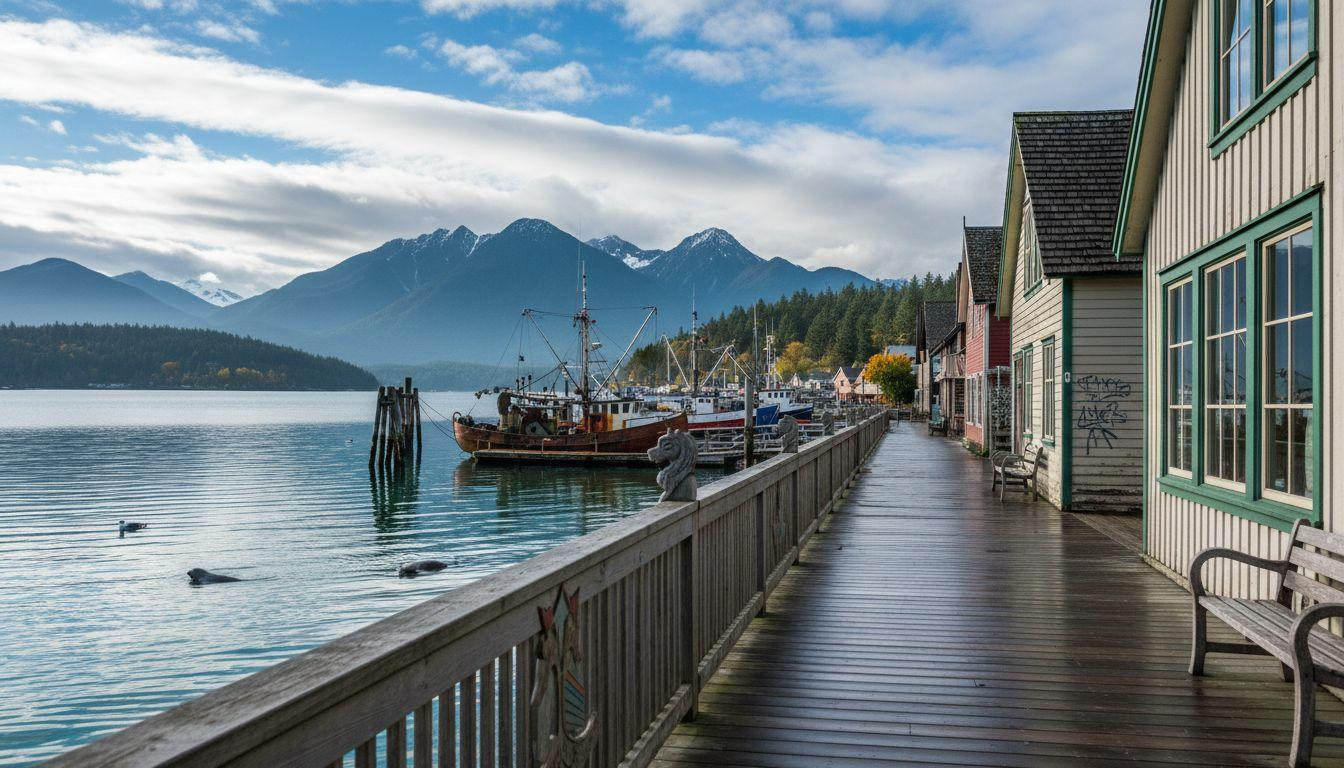
Morning fog drifts across Liberty Bay like a whisper from Norway’s fjords. The mist clings to weathered docks where harbor seals surface between fishing boats. This is Poulsbo, Washington, where 11,000 residents maintain authentic Scandinavian heritage just 20 miles from Seattle’s urban rush.
The town feels transported from another century. Norwegian immigrants settled here in the 1880s because Liberty Bay reminded them of home’s narrow fjords.
Where fjord waters meet Pacific Northwest
Liberty Bay stretches 4 miles northward from Puget Sound. The narrow inlet mirrors Norway’s glacially-carved waterways with wooded shores and gentle currents. Tidal velocities exceed 1 knot, creating the rhythmic flow that early settlers recognized.
The bay originally bore the name Dogfish Bay. Norwegian families changed local usage to Liberty Bay by the 1890s. The Washington State Legislature refused official renaming twice, but residents persisted with their preferred name.
Poulsbo occupies 4.67 square miles at the bay’s northern end. Nearly 4 miles of shoreline curve around protected waters where morning mist reveals working boats at dawn. The Olympic Mountains rise beyond the western horizon on clear days.
Viking boats and rosemaled windows
Scandinavian architecture that’s actually real
Front Street displays authentic Norwegian building techniques. The Martinson Cabin stands as Poulsbo’s oldest structure, built in 1883 and listed on the National Register of Historic Places. Local families constructed it using traditional Scandinavian methods.
Unlike manufactured theme towns, Poulsbo’s heritage stems from genuine settlement patterns. Norwegian craftsmen built homes with steep-pitched roofs and decorative woodwork. These weren’t tourist attractions but functional family dwellings reflecting homeland traditions.
Front Street’s living heritage
Rosemaled window paintings change with seasons across downtown buildings. Local artists maintain this Norwegian folk art tradition where flowers and scrollwork decorate glass surfaces. The paintings aren’t permanent displays but living cultural practices.
Wooden Viking boat emblems mark waterfront benches along the boardwalk. King Olaf’s statue presides over Liberty Bay Waterfront Park, installed to honor the town’s maritime heritage and fog-wrapped mornings. Street names like Fjord Drive preserve Norwegian geographic terminology throughout the city.
Julefest and December in Little Norway
The Lucia Bride arrives by Viking boat
December brings Julefest, Poulsbo’s authentic Norwegian Christmas celebration. The Lucia Bride arrives by Viking boat during a torch-lit parade that recreates Scandinavian winter traditions. Local families have maintained these customs since the 1980s without commercial sponsorship.
Sluys’ Bakery produces Viking donuts and Norwegian pastries throughout December. The family bakery has operated since 1947, serving traditional recipes alongside Pacific Northwest ingredients. Holiday treats cost $8-12, reflecting authentic preparation methods rather than mass production.
What December actually feels like
December temperatures average 45°F highs and 35°F lows. Fog arrives most mornings, lifting by mid-afternoon to reveal Olympic Mountain views. Rain falls frequently but gently, creating the maritime climate that Norwegian settlers recognized.
Tourist crowds drop to winter minimums during December. Summer brings 250,000 annual visitors, but December offers the quiet authenticity that preserves cultural heritage. Local festivals maintain community traditions without overwhelming infrastructure.
Liberty Bay at first light
The waterfront boardwalk extends nearly 1 mile along Liberty Bay’s shoreline. Morning walkers encounter harbor seals, seabirds, and the gentle sounds of small boat traffic. Fog transforms familiar views into mysterious Nordic landscapes.
Kayak rentals operate year-round for $30-50 hourly. December paddling reveals intimate bay experiences without summer crowds. Olympic Mountains emerge through clearing fog like distant Norwegian peaks.
The SEA Discovery Center houses a 7-foot-6, 8,000-pound octopus sculpture. Operating Friday-Saturday 11am-4pm, the center requests $2 suggested donations for marine education programs.
Your questions about Poulsbo answered
How much does a weekend cost?
Local B&Bs charge $120-180 nightly during December. Boutique waterfront hotels range $180-250 per night. Restaurant meals average $15-25, with Norwegian specialties priced $8-12 at family establishments.
Ferry service from Seattle costs approximately $25-35 round-trip per vehicle plus passengers. The Edmonds-Kingston route provides scenic access to Kitsap Peninsula, followed by 20-minute drives to Poulsbo.
Is December actually a good time to visit?
December offers Poulsbo’s most authentic experience. Julefest preserves genuine Norwegian traditions without summer tourist pressures. Morning fog creates atmospheric conditions that early settlers experienced throughout Pacific Northwest winters.
Weather remains mild compared to actual Norwegian winters. Rain gear and warm layers suffice for comfortable exploration. The town maintains full services during winter months.
How does this compare to Leavenworth?
Poulsbo represents authentic ethnic settlement rather than themed recreation. Norwegian families established cultural traditions through practical necessity, not tourism development. The town’s 11,000 residents maintain working community functions beyond visitor attractions.
Leavenworth transformed existing infrastructure into Bavarian themes. Poulsbo preserves original Scandinavian building methods, family businesses, and cultural practices spanning 140 years of continuous Norwegian-American heritage.
First light touches Liberty Bay’s surface as fog begins its slow retreat toward Puget Sound. Harbor seals surface near weathered pilings while Norwegian fishing boat traditions continue their daily rhythm.