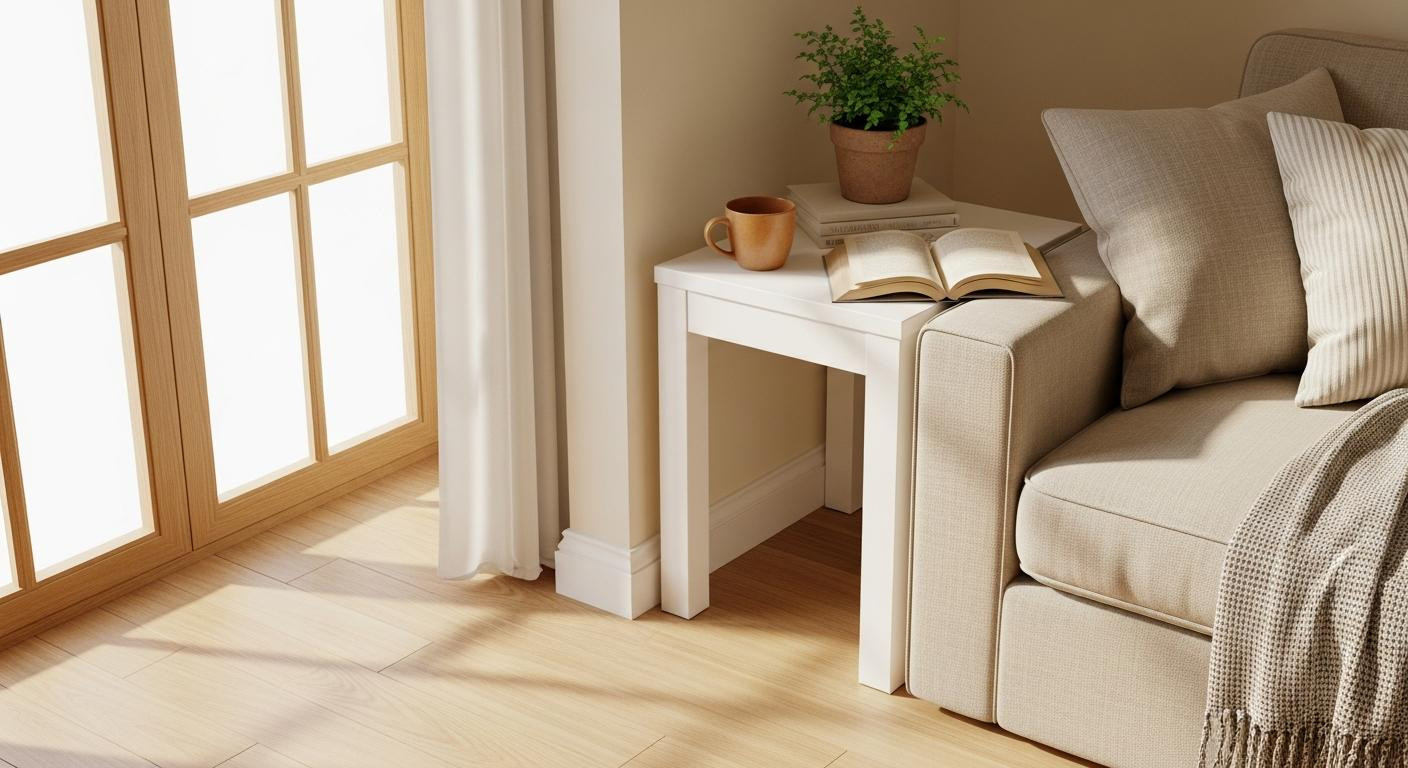
Your living room measures 11 feet by 13 feet. The sofa sits 18 inches from the west wall, creating a gap too narrow for a standard side table but too wide to ignore. By 3pm Tuesday, afternoon light pools in that dead zone while your coffee mug balances on the sofa arm for the third time this week. IKEA’s LACK side table measures 21.5 inches square and costs $29.99. That 18-inch gap becomes functional surface area. The table slides in with 1.5 inches clearance.
Your mug sits stable. The spatial math just solved itself.
The 18-to-23-inch gap every small living room creates
Standard sofas measure 33 to 38 inches deep. Position one in an 11-foot room and you need 30 to 36 inches of walkway clearance behind it, according to interior designers with residential portfolios. That leaves an 18-to-23-inch gap against the wall where nothing quite fits. Traditional side tables span 24 to 28 inches, which means they block the walkway or don’t fit at all.
End tables at 12 to 18 inches look orphaned in the space. The gap becomes dead area where light falls and dust collects. Rental apartments with radiators requiring furniture offset make this worse. Corner placements where wall angles create odd dimensions compound the problem.
But the measurement issue stays invisible until you hold a tape measure at 7am wondering why nothing works.
Why the LACK table’s 21.5-inch footprint is the exact solution
The LACK measures 21.5 inches wide, 21.5 inches deep, and 17.7 inches tall. That footprint fits the 18-to-23-inch gap with clearance while competitors either don’t fit or cost three to eight times more. Target’s smallest side table spans 24 inches square at $79. West Elm’s narrow console runs 22 inches deep but 30 inches wide at $249.
The LACK fits the gap. And it costs a third of what you’d spend elsewhere.
The height that actually works from a seated position
Standard sofa arms sit 24 to 26 inches high. The LACK’s 17.7-inch height means you can reach your coffee mug from a seated position without stretching or blocking sightlines across the room. Professional organizers with certification note that side tables should sit 2 to 6 inches below sofa arm height for comfortable access. The LACK lands in that range without adjustment.
Taller alternatives at 22 to 24 inches create visual barriers in small spaces. The lower profile keeps the room from feeling crowded.
The weight capacity no one mentions until it matters
The LACK holds 44 pounds according to product specifications. That’s a table lamp at 6 to 8 pounds, three hardcover books at 4 pounds, a ceramic mug at 2 pounds filled, and a small speaker at 3 pounds with 25 pounds of margin remaining. Cheaper alternatives sag under laptop weight or wobble when you set down a water glass.
The particleboard construction feels light when you carry it. But the weight distribution across that square footprint keeps it stable under normal use.
Four spatial problems this $30 table solves beyond side table duty
The bedroom nightstand substitute works in 9-by-11-foot rooms where standard nightstands consume 30% of floor space. Queen beds in small bedrooms leave 20-inch margins on each side. Traditional nightstands at 24 to 28 inches wide don’t fit. The LACK provides bedside surface for your phone, water, and book while reclaiming 6 to 12 square feet of floor area.
Apartment bedrooms where you can barely walk around the bed suddenly have clearance. That’s the kind of detail that quietly elevates the whole space.
The entryway drop zone for narrow hallways
Entryways measuring 42 inches wide can’t accommodate console tables without blocking traffic flow. The LACK’s square footprint creates a surface for mail and keys while leaving 20 inches of clearable width. Pair it with wall hooks above for vertical storage. Apartment entries with coat closets opposite the door typically leave 40 to 48 inches of space.
The table claims just enough territory to be useful. Not so much that it becomes an obstacle.
The corner plant stand that captures wasted space
Room corners collect dead space measuring 24 to 30 inches on each wall. Angling the LACK at 45 degrees in a corner creates a display platform for plants or books without sacrificing functional square footage. The white or black laminate reflects light in those shadowed areas. Three small potted plants at different heights add vertical interest.
Design experts featured in Architectural Digest recommend using corners for display rather than letting them sit empty. The LACK makes that possible without custom shelving.
The stability problem and the one placement rule
The LACK’s hollow-core legs create wobble on uneven floors, which describes most pre-1980 apartments and rentals. Felt pads on three legs plus an adjustable furniture leveler on the fourth solves this for $4 at any hardware store. The fix takes two minutes and prevents the table from rocking when you set down a glass.
Never place the LACK where it bears lateral force. Pets jumping onto it or toddlers climbing it will compromise the leg structure. Best placements stay against walls, in corners, or on area rugs that distribute weight. The table works when positioned correctly and fails when treated like solid wood furniture.
That honesty separates functional small-space solutions from Instagram staging that doesn’t survive real life. And it’s easier said than done, but knowing the limits of budget furniture prevents disappointment three months in.
Your questions about the $30 IKEA LACK table answered
Will this table fit between my sofa and the wall if I have 19 inches of space?
Yes, with 2.5 inches clearance assuming standard baseboard depth at 0.75 to 1 inch. Measure floor to floor, not wall to furniture, accounting for baseboards. The LACK’s actual footprint is 21.5 inches, so you need 22 to 23 inches minimum clearance for comfortable positioning. Tile or hardwood floors with flush baseboards give you more room than carpeted spaces with thick trim.
That extra half-inch matters when you’re sliding furniture into tight gaps. Measure twice before you drive to IKEA.
Can I paint or refinish the LACK to match my other furniture?
The laminate surface accepts primer-based paints like Zinsser B-I-N shellac-based primer followed by latex topcoat. Sanding isn’t necessary but scuffing with 220-grit sandpaper improves adhesion. Staining doesn’t work because the finish is photo-laminated paper, not wood veneer. Budget 2 coats primer and 2 coats paint at roughly $30 in supplies from any hardware store.
The process takes a weekend. But it transforms the LACK from obvious budget furniture into something that reads more custom.
How does this compare to the $79 Target Project 62 Loring side table?
Target’s Loring measures 24 inches square, which won’t fit gaps under 25 inches. It costs $79 and uses similar particleboard construction to the LACK. You’re paying $49 extra for 2.5 inches you might not need and a wood-look finish versus the LACK’s white, black, or birch laminate options. Weight capacity runs comparable between both tables.
The LACK wins on dimensions and price. The Target version wins if you need that wood grain aesthetic and have the space to spare.
The tape measure reads 21 inches on a Tuesday afternoon. You slide the white LACK table into the gap, your palm resting on the surface that’s been empty floor since you moved in last September. The mug sits stable. Light still pools there, but now it catches on something useful instead of nothing at all.