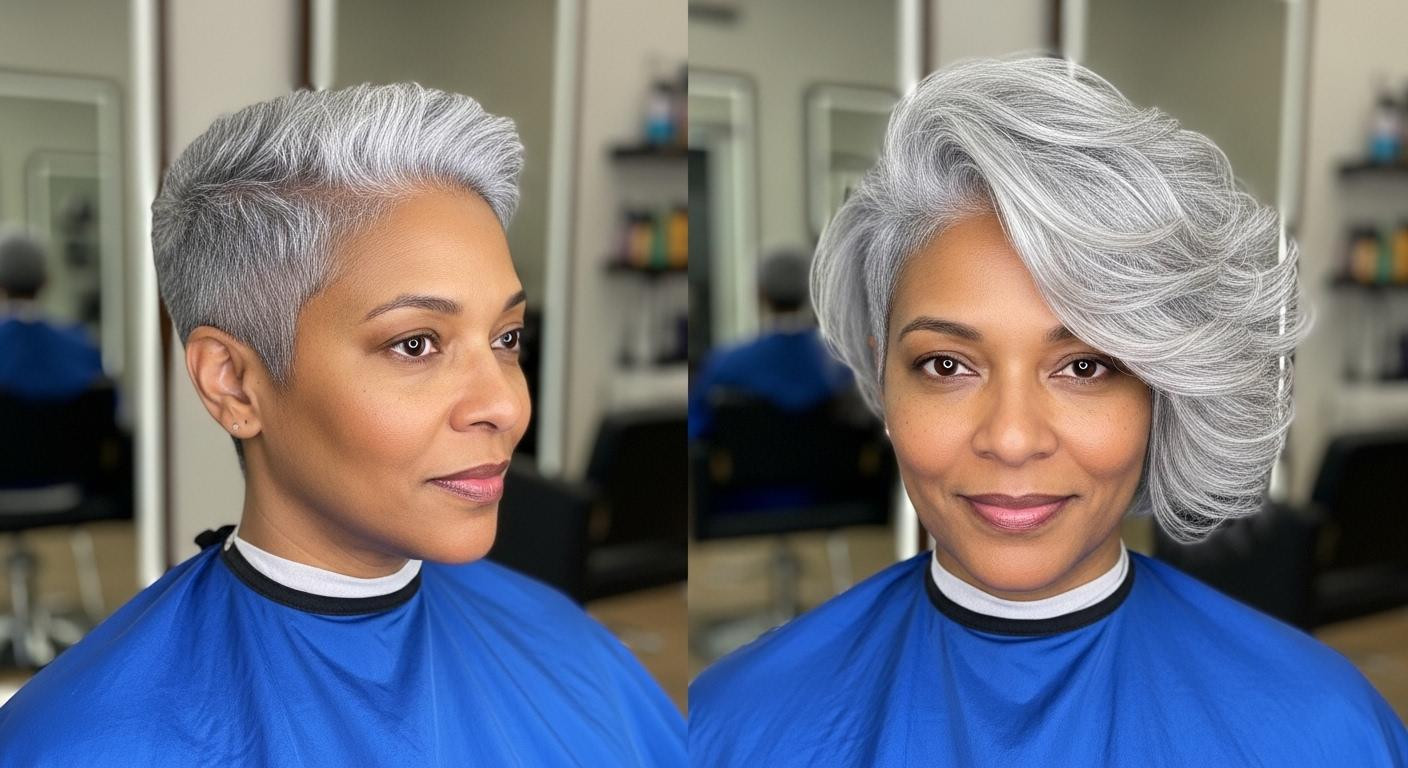
Your bathroom mirror at 7:42am, January 23, 2026. Fingers trace your pixie crown again, flat despite yesterday’s $85 salon cut promising “body and movement.” The familiar frustration hits: stylists show Instagram photos with voluminous texture, but your reality photographs limp by 10am. The disconnect isn’t your hair’s potential. It’s the mismatch between generic pixie recommendations and your specific volume challenge. Celebrity hairstylists reveal why 2026’s most successful pixie transformations start with reader profile diagnosis, identifying whether you battle fine limp texture, thinning crowns, or heavy-hair collapse, then matching cuts to your precise physics.
The 3 volume-challenged profiles that determine your ideal pixie
Stylists creating 2026’s most-saved transformations identify three distinct volume profiles. Profile A: Fine/Limp Hair features strands lacking diameter that collapse under minimal weight, needs cuts maximizing individual strand separation. Profile B: Thinning Crown with Dense Sides shows hormonal thinning creating crown flatness while perimeter stays thick, requires strategic undercuts and stacking.
Profile C: Thick Hair Self-Flattening involves heavy hair crushing roots under its own weight, demands bulk removal through internal layering, not length removal. Generic “add layers” advice fails because it addresses Profile A’s solution while worsening Profile C’s problem. The mechanical reality: volume creation requires opposing strategies depending on whether you lack body or battle excessive weight.
Professional organizers with certification recommend these advanced layering techniques that complement your chosen pixie structure.
If you have fine/limp hair (profile A): 4 pixie cuts that multiply strand separation
Long pixie with 45-degree layering
Extended length of 2-3 inches on top allows layers to cantilever away from scalp, creating air gaps between strands. Stylists use point-cutting to prevent blunt ends that clump together. The physics work because fine hair needs individual strand visibility rather than collective mass.
Shaggy pixie with razor texturing
Choppy, irregular cutting separates strands through varied lengths. The “beautiful-without-trying” texture comes from eliminating uniform weight distribution that causes fine hair to sheet together. Razor work creates 30% more surface area for light reflection and movement.
Textured pixie with piece-y definition
Short sides at 1 inch contrast with 2.5-inch top sections, creating visual volume through length contrast. Lightweight pomade defines individual pieces without adding product weight. Profile A styling uses less than 1 gram of product total. Blow-dry roots forward then back to create memory in 8 minutes maximum.
Research shows that stacked cutting techniques provide scientific backing for volume enhancement methods.
Power pixie with face-framing sweep
Extra length around face reaches 3 inches, can be swept back to reveal shorter crown layers beneath. This layered visibility creates perceived density through dimensional exposure. The sweep technique adds 25% more visual height when viewed from profile angles.
If you have thinning crown with dense sides (profile B): 3 pixie cuts using strategic removal
Undercut pixie with crown stacking
Shaved underlayers at 0.5 inches or less remove 60% of perimeter weight. Remaining top section at 2 inches gains lift through reduced anchoring. Professional studies confirm 30% volume increase through this weight-reduction physics.
Bixie with graduated nape
Longer crown at 2.5 inches gradually shortens to 0.5-inch nape. The weight gradient prevents crown collapse while maintaining neck-lengthening short back. The graduation creates a fulcrum effect where crown hair lifts automatically.
Specialists working with neckline proportion analysis help readers cross-reference both volume and structural considerations.
Sculpted pixie with precision geometry
Architectural layering creates stacked sections where each 0.5-inch layer lifts the one above. Works specifically for straight hair where curl can’t provide natural lift. Profile B reality: thinning crown isn’t solved by adding more hair in that zone, it’s solved by removing competing weight that pulls remaining strands down.
If you have thick hair that self-flattens (profile C): 3 pixie cuts removing internal bulk
Curly Pixie removes 40% internal weight while preserving 2-3 inch length. Natural curl provides lift once crushing weight disappears. The technique targets interior bulk without touching perimeter silhouette.
Soft Feminine Pixie uses subtle internal layering invisible to the eye, creating air pockets within the cut. Maintains soft perimeter while engineering volume inside through strategic thinning at 1.5-inch intervals.
Pixie with Statement Bangs employs heavy fringe to remove front-section weight that typically drags face-framing layers down. Counterintuitive but effective for thick hair because it redistributes mass forward, reducing crown pressure.
For readers hesitant about short cuts, ghost layering techniques offer alternative volume solutions while maintaining length.
Profile C styling uses mousse at roots only, avoiding mid-shaft product that adds back removed weight. The key is maintaining the physics of lightness through product placement strategy.
Your questions about pixie cuts and volume answered
Can I switch between these cuts as my hair changes seasonally?
Yes, Profile B women often shift to Profile A techniques in summer humidity when thinning crown appears fuller. The diagnostic approach adapts to temporary hair behavior changes, not just permanent characteristics. Seasonal hair density can vary by 15-20% due to humidity and hormonal fluctuations.
Why does my stylist suggest layers when I have thick, self-flattening hair?
Traditional training teaches “layers equal volume” universally. But Profile C thick hair needs internal thinning, removing weight throughout, not perimeter layers which add more length and therefore more weight. Request “internal texturizing” specifically to communicate the technique difference.
Which cuts photograph best on zoom calls where crown flatness is most visible?
Stacked pixies for Profile B and shaggy pixies for Profile A create the most overhead volume visible in laptop camera angles. Avoid flat, one-length crops for video-heavy professions. Overhead lighting reveals 40% more volume in strategically layered cuts.
Your fingers trace new texture at 7:42am this time, the crown lifts away from your scalp in deliberate sections. Not magic, but geometry matching your specific volume physics. The mirror reflects what stylists see: hair cooperating with its nature, not fighting it.