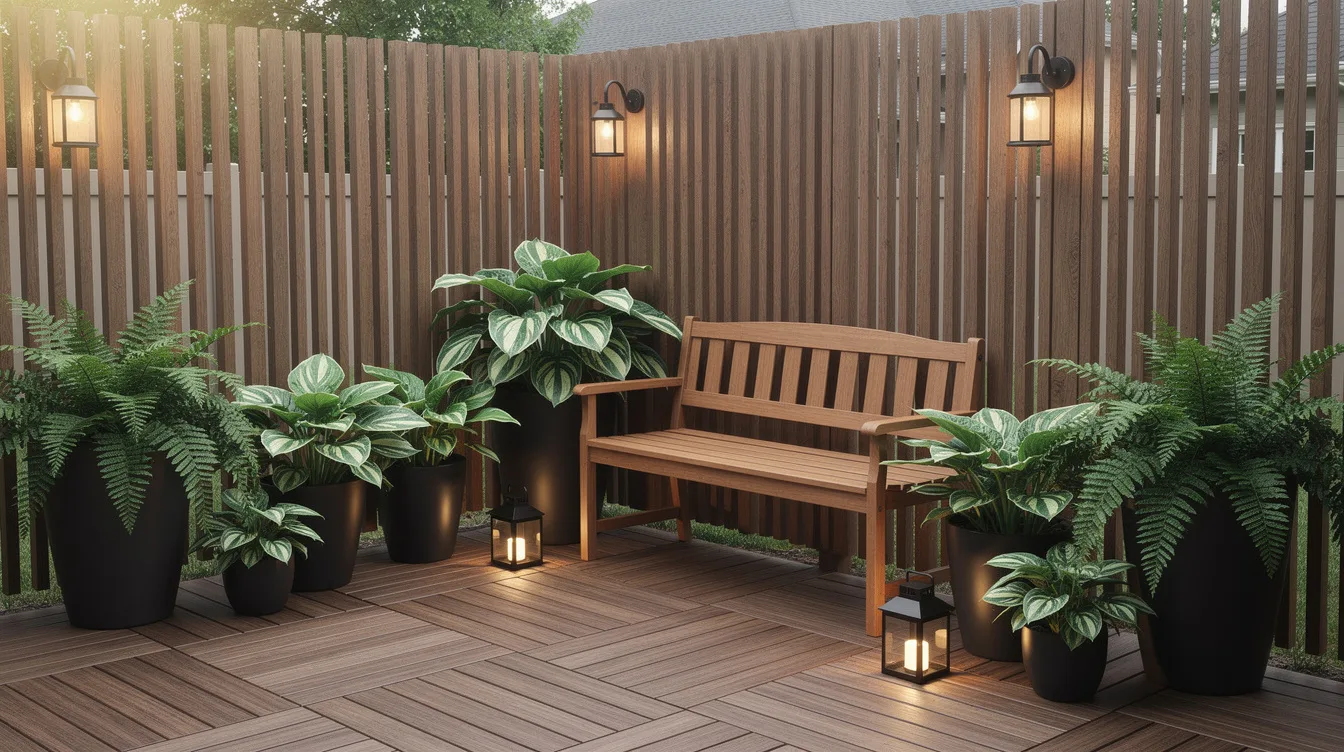
The worst part of my yard was a dim little corner where the fence met the house. It held wet leaves, one crooked pot, and that sour smell you get when soil never quite dries.
I kept assuming it needed a real build to look good, which usually means permits, contractors, and money I did not want to spend. It turned out the fix was much simpler: treat the space like a tiny outdoor room and keep every element movable.
Measure the corner before you buy anything
I stopped treating that spot like a mystery zone and measured it first. The usable area was just under 5 square meters, about 54 square feet, which is enough for seating, plants, and a small landing if you keep the layout tight.
A typical shady corner retreat works best in a 3 to 8 square meter footprint, roughly 32 to 86 square feet. That size matters because once the seating goes past 48 inches wide, the whole thing starts to feel crowded instead of tucked in.
I also kept the plan non-structural on purpose. Movable furniture, loose planters, deck tiles, and lighting usually stay in the no-permit lane because you’re not pouring footings or building a fixed roof.
Float the floor with deck tiles, not a patio
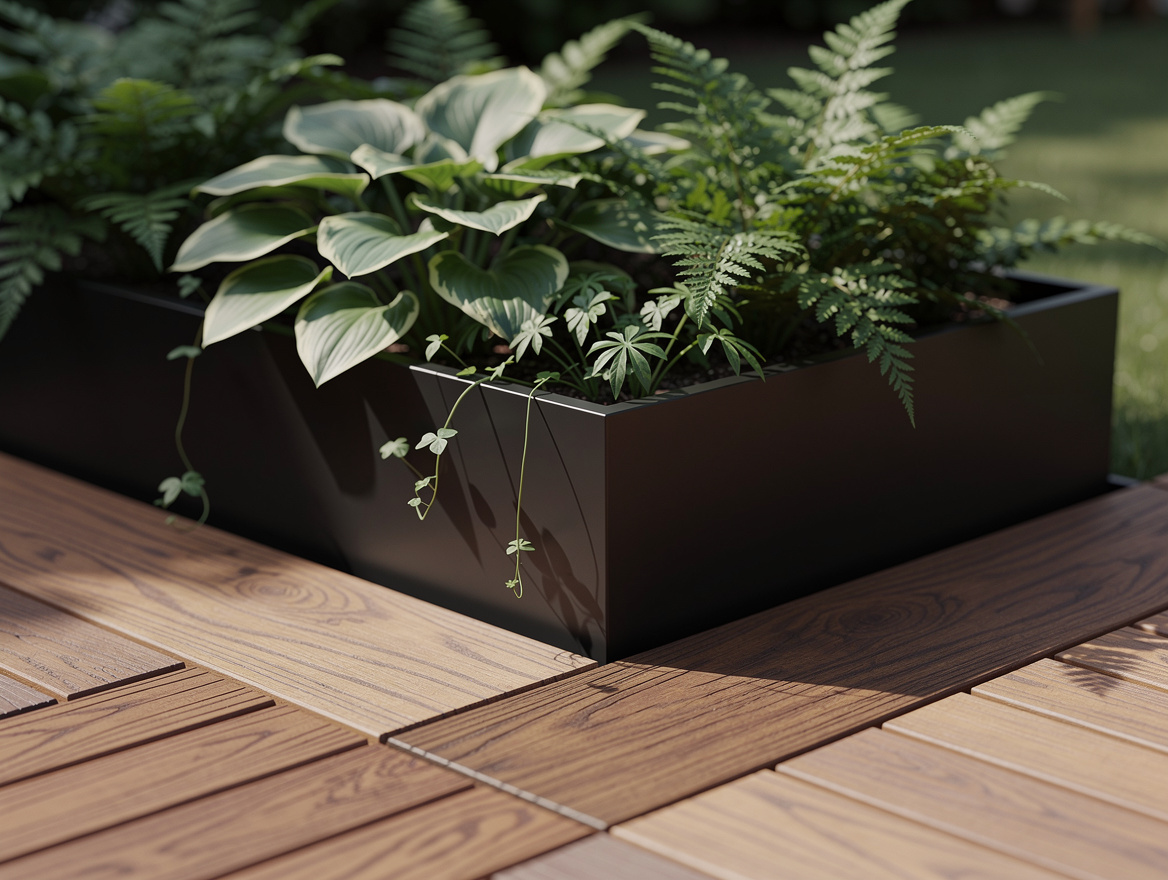
The biggest visual shift came from covering the patchy dirt with IKEA RUNNEN deck tiles. They come in the typical 12 by 12 inch format, and that modular grid instantly made the corner read like a destination instead of leftover yard.
For a 3 square meter area, you need about 34 tiles, and a 5 square meter area takes about 56. Typical online pricing for acacia-style interlocking tiles lands around $25 to $45 per square meter, so this is still far cheaper than a poured surface.
I like deck tiles more than gravel in a tight nook because the floor stays cleaner under chairs and feels better under bare feet. Amazon also has generic interlocking options, but I think the cleaner wood look is worth paying a little more for in a corner this small.
If your base is uneven or you want the cheapest route, gravel still works. Lowe’s and Home Depot both sell bagged gravel and simple stepping stones, and a typical gravel surface costs far less per square foot than tile, but it reads more casual and collects leaves faster.
Use one compact seat that actually fits the scale
I skipped the sectional fantasy and used one bench-sized piece. A IKEA ÄPPLARÖ bench, typically around 47 inches wide, is about right for a 2-person setup without swallowing the whole corner.
Most benches that work here fall in the 40 to 48 inch width range and about 20 to 24 inches deep. That is the sweet spot in a 2 to 2.5 meter corner because you still have room for knees, a side table, and a planter.
If you want the look to feel softer, add one slim cushion and stop there. Wayfair has plenty of outdoor loveseats, but in a shady corner I prefer a bench with visible legs because heavier seating makes small spaces feel boxed in.
A tiny side table matters more than a second chair. I used a simple metal option from Target, and that one surface made the area feel finished because I had a place for coffee, a book, and a lantern.
Build the shade with plants instead of a roof
I did not try to force sun-loving plants into a dark corner. Shade plants are the whole reason this kind of retreat works, especially when the hard surfaces are simple.
Two large pots with hostas made the space look planted on purpose within a weekend. Their broad leaves fill visual gaps fast, and in deep shade they do more than flowers that struggle and then look tired by July.
I mixed in one fern and one darker evergreen for contrast. Home Depot and Lowe’s usually stock shade basics in spring and early summer, and the average cost for medium nursery pots is low enough that this is where I would spend before I bought extra decor.
Big containers help more than a crowd of tiny ones. A pair of matte black planters in the 14 to 18 inch range gives the corner real weight, while little pots just turn into clutter around chair legs.
Create privacy with screens and tall pots
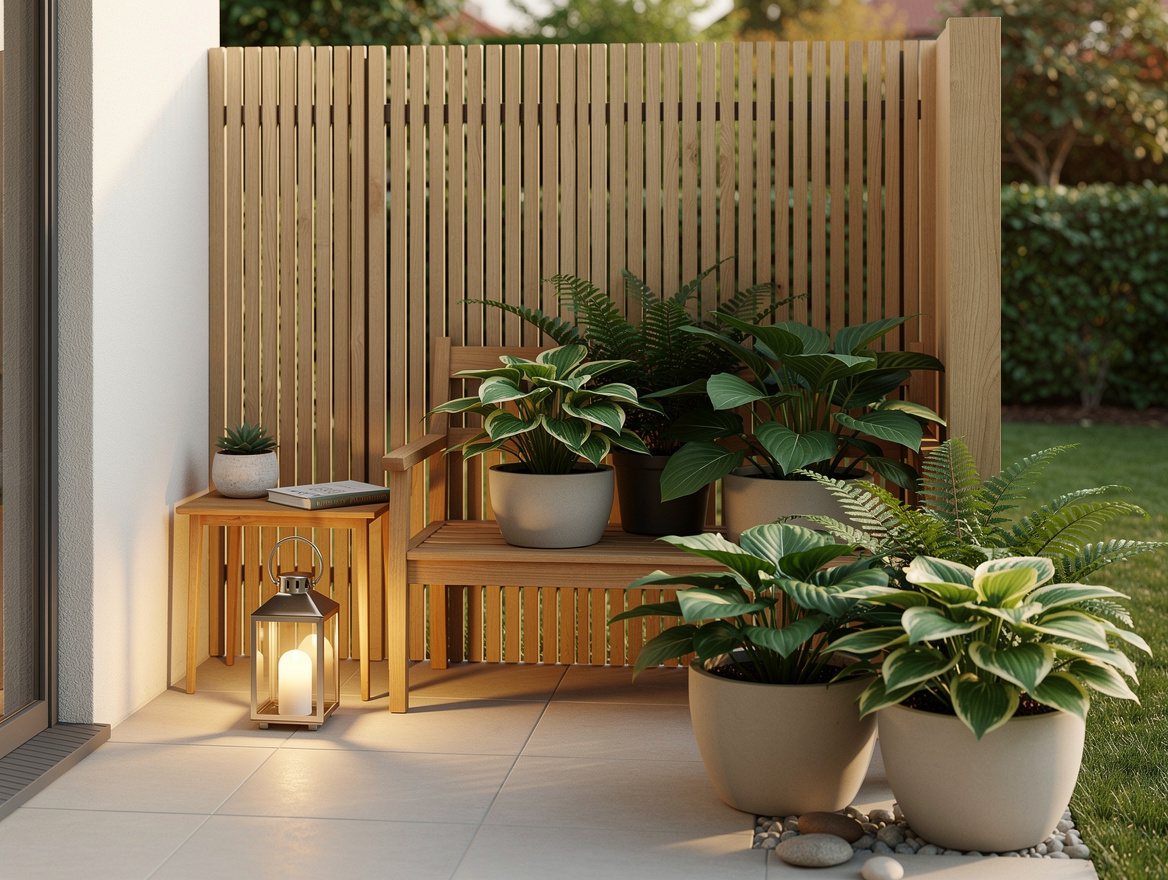
My corner only started feeling like a retreat when I blocked the side view from the driveway. I used a movable wood screen rather than anything fixed, because the whole point was staying out of permit territory.
You can get foldable privacy screens and trellis-style panels from Amazon, Wayfair, or Costco, and they work best when they are paired with planters so they do not feel flimsy. I would rather see one screen and two tall pots than a whole row of cheap panels.
This is also where a vertical layer earns its keep. A narrow screen behind the bench pulls the eye upward, and suddenly that dead corner has shape, background, and a clear edge.
I kept the palette restrained: natural wood, black planters, green foliage. In a shady spot, too many colors can make the area feel damp and busy instead of calm.
Light it low so the corner works after dinner
I wanted the corner to stay useful after sunset, but I did not want visible cords stretched across the yard. A few solar lanterns solved that faster than any wired setup.
Low light is better than bright light here. I used one lantern on the side table, one near the planter cluster, and a short string of warm outdoor lights from Walmart along the fence line, and that was enough to make the area feel intentional.
Harsh white bulbs kill the mood in a small shaded nook. Warm light works better with wood, gravel, and leafy plants, and it hides the awkward fence lines you notice all day.
An outdoor rug can be the last layer if the base is already flat. A typical polypropylene rug in a 5 by 7 foot size from Target or Amazon usually runs well under the cost of more flooring, and it softens the corner without making it feel precious.
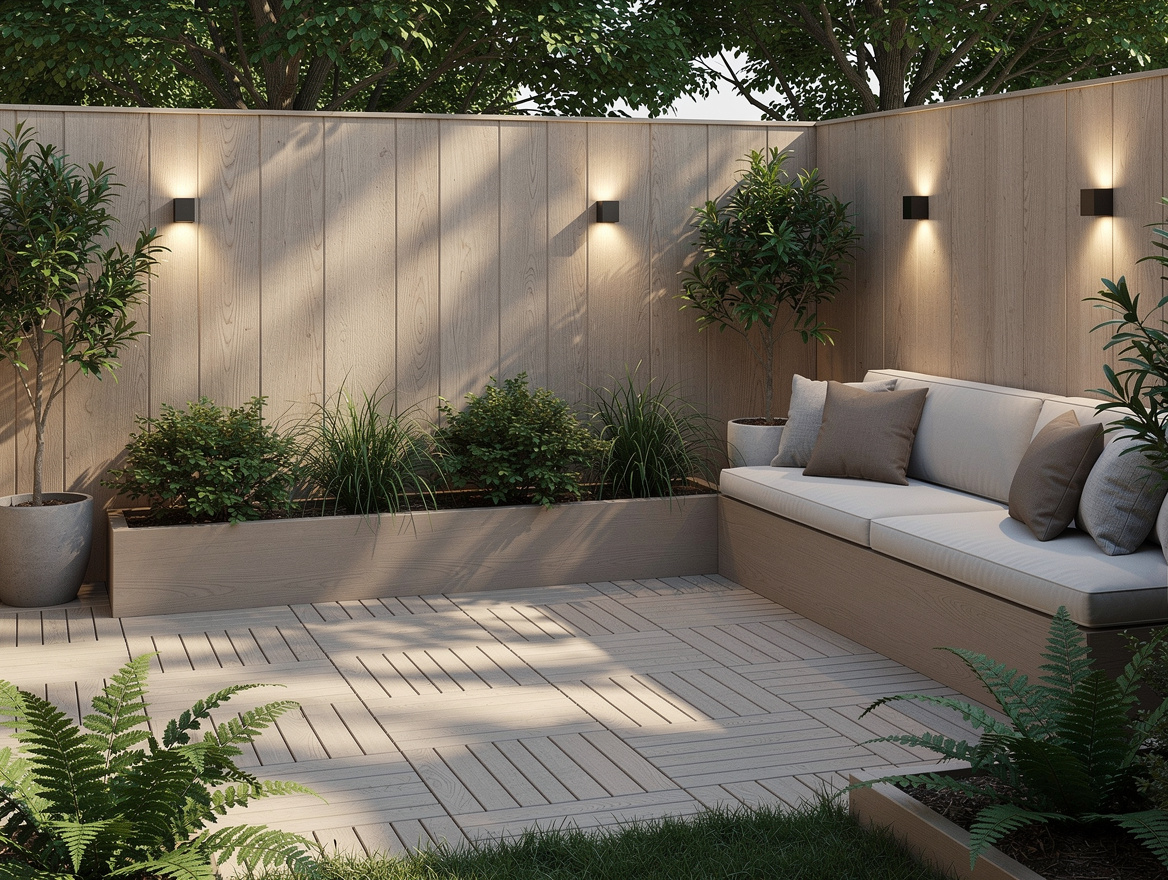
The first thing I would buy again is the floor, because once the ground looks deliberate, every other choice gets easier. Start with the footprint, add one seat that fits, then spend the rest on plants and light instead of overbuilding a corner that only needs 54 square feet to feel complete.
Mia Carter writes about small-space living and budget home makeovers. She has restyled three rentals and tests most ideas in her own 45 sqm flat.