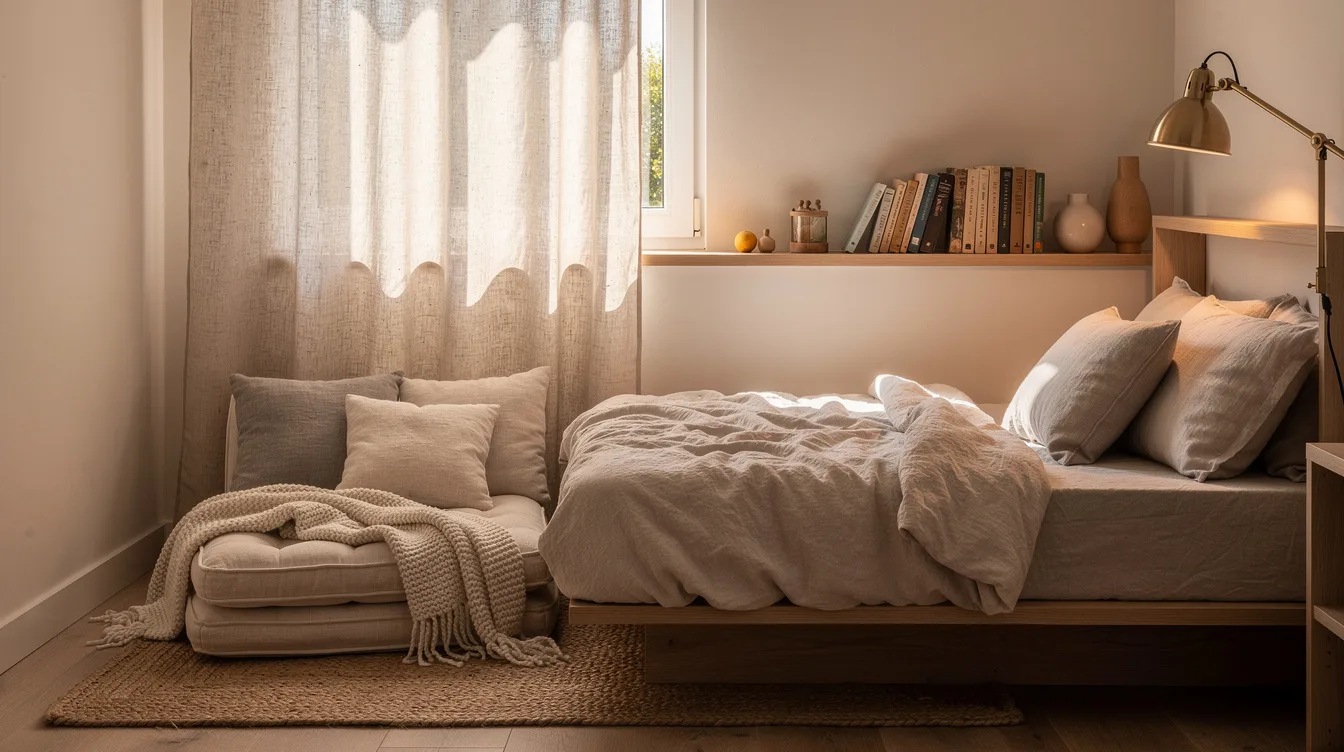
I got tired of reading in the same spot where I also answered emails, ate lunch, and dropped unfolded laundry. The corner by my window was 55 inches wide, full of glare by noon, and somehow still too awkward to use.
So I gave myself one Saturday, basic tools, and a strict rule: no fancy carpentry. If you stay with cushions, shelves, and one low platform, this is absolutely doable in a day.
Claim a corner with a rug and floor cushions
I started with the easiest win, a soft reading zone that needed about 47 to 59 inches of width and roughly 31 to 39 inches of depth. That footprint is small enough for a bedroom corner, an office edge, or the dead space beside a bookcase.
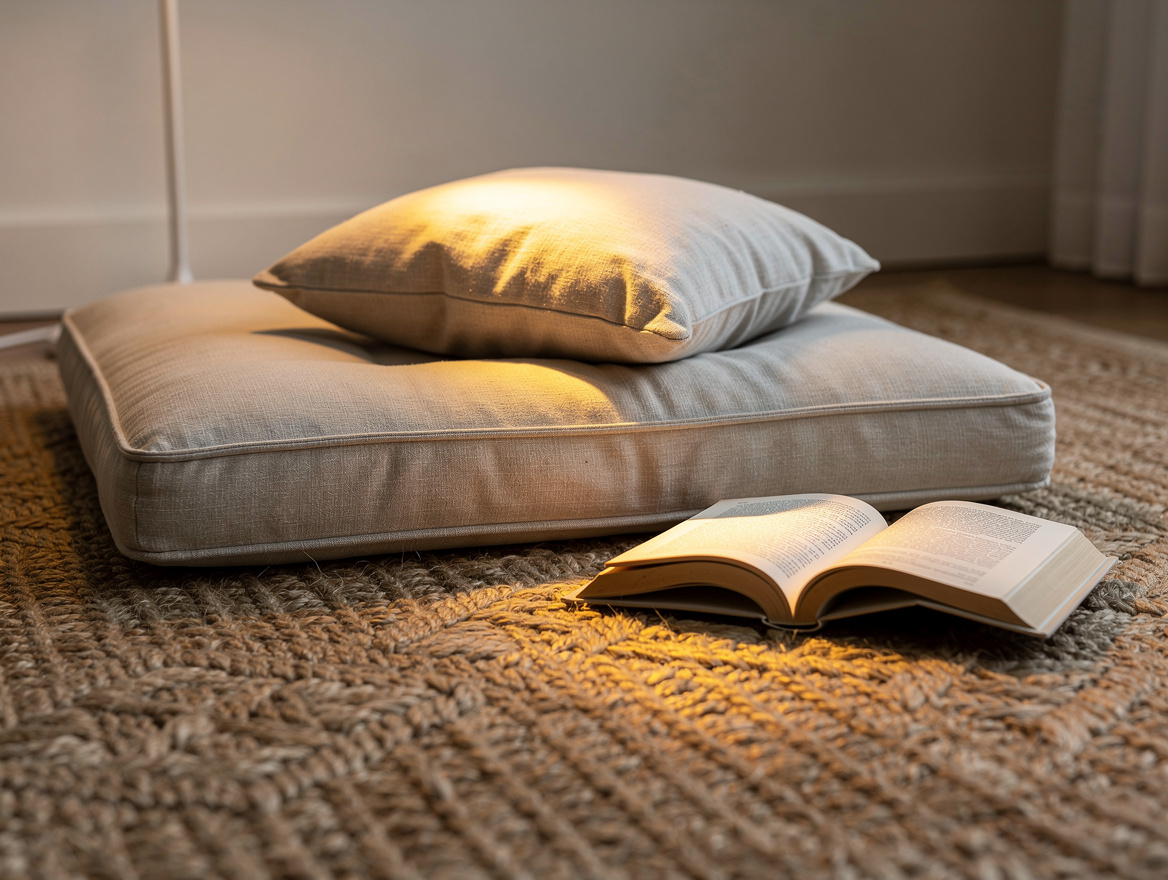
The base was a IKEA floor cushion in a 27 by 27 inch size, which is a very typical reading-seat dimension for adults who actually want to stay there longer than ten minutes. Expect an average price around $35 to $70, depending on the fill and cover.
Behind it, I stacked three Target throw pillows in 20 by 20 inch covers and one oversized pillow for my shoulder. I’m opinionated about this part: two pillows look styled, three pillows feel usable.
To define the nook, I rolled out a jute rug close to 4 by 6 feet. A typical version from IKEA, Walmart, or Amazon lands around $45 to $80, and it fixes that floating, unfinished look fast.
Use a windowsill like a built-in seat
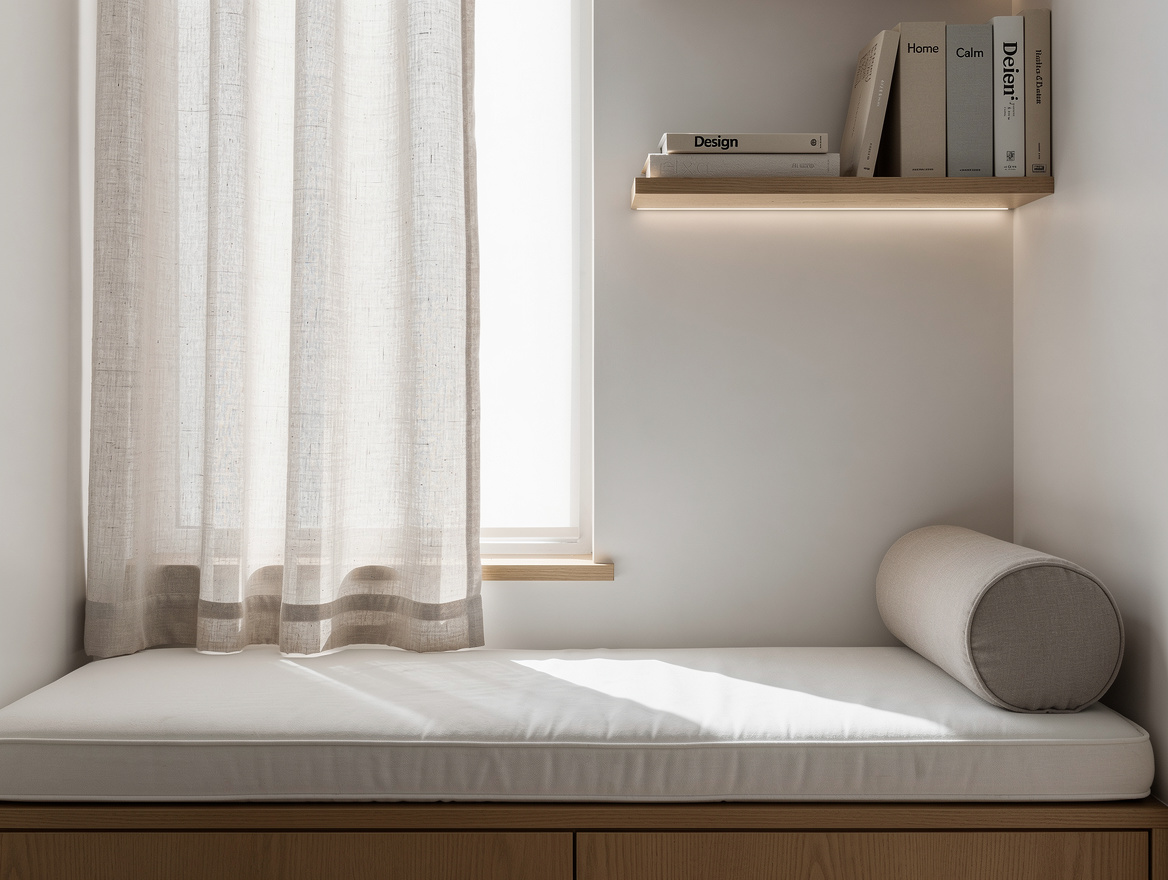
If you already have a deep sill, radiator cover, or low ledge, don’t build a bench from scratch. Mine was just under 16 inches deep and about 48 inches wide, which is enough for a one-person perch if the cushion is firm.
I added an Amazon bench cushion in a size close to 16 by 47 inches with an average 3-inch thickness. Typical pricing for a basic foam version is about $45 to $85, and that’s far cheaper than chasing a custom upholstered seat.
Under the cushion, I slid a thin non-slip mat so it wouldn’t drift every time I shifted my weight. This tiny step matters more than people think, because a sliding cushion makes the whole nook feel temporary.
On the side wall, I mounted a narrow IKEA MOSSLANDA picture ledge for paperbacks and a small timer candle. It usually sits in the $15 to $25 range, and I like it better than a deep shelf because books stay visible instead of turning into clutter.
Build one low platform for real naps
The nap corner only worked when I stopped pretending a chair-and-ottoman combo was enough. A low platform with a mattress gives you the one thing most reading spots miss, a surface long enough for your knees and shoulders to relax at the same time.
I used a simple base sized for an 80 by 200 cm foam mattress, which is about 31.5 by 78.7 inches, essentially a narrow twin-style setup. That size is realistic in smaller rooms, and a typical basic foam mattress from IKEA or Amazon costs about $140 to $280.
For the platform, the fastest route is two heat-treated wood pallets or one sheet-based low frame assembled with a drill, screws, and sandpaper. Average pallet pricing is often around $12 to $30 each, but only buy clean indoor-grade ones and skip anything that smells off or looks damp.
I’ll say this plainly: sand every edge you can reach. Raw wood catches blankets, scratches ankles, and ruins the whole cozy idea in about five seconds.
Light the nook like a place you want to stay
Bad lighting is why a lot of reading corners look good in photos and feel useless at 7 p.m. I wanted warm, focused light near the page and softer light near the nap side, because one overhead bulb makes everything feel flat and exposed.
For the reading side, I clamped on a IKEA HEKTAR lamp style task light with a warm bulb. A typical clamp or floor lamp from IKEA, Target, or Amazon runs about $30 to $70, and I strongly prefer a shade that points light down instead of straight at my face.
For the nap corner, I added a linen curtain panel to cut glare and make the corner feel enclosed in the afternoon. A basic panel from Target or Walmart usually falls around $25 to $60, and it does more for comfort than another decorative pillow ever will.
Then I brought in one small side basket for a book, reading glasses, and a throw. I don’t like open piles near a nap setup, because the second it turns messy, you stop using it.
Layer soft pieces that can survive daily use
This is the part that decides whether the nook feels precious or lived in. I went with washable covers, a medium-weight throw, and one topper on the nap side so I didn’t have to baby anything after the first weekend.
Over the mattress, I used a quilted mattress protector and a light topper for extra give. Typical protectors from Amazon, Walmart, or Costco start around $20 to $45, and they make a basic foam mattress feel less stiff right away.
For texture, I added a cotton throw blanket and one bolster pillow instead of piling on six accent cushions. My honest take: too many soft pieces make a small nook look expensive for about a day, then annoying for the next six months.
The finishing touch was a small wood tray big enough for tea and a paperback. That was the detail that made the corner feel intentional, not like spare bedding happened to land by the window.
If you want the fastest version, start with the rug, one floor cushion, and a clamp lamp. If you have extra energy after lunch, add the low mattress platform, because that’s the piece that turns a reading spot into a corner you’ll actually disappear into.
Mia Carter writes about small-space living and budget home makeovers. She has restyled three rentals and tests most ideas in her own 45 sqm flat.