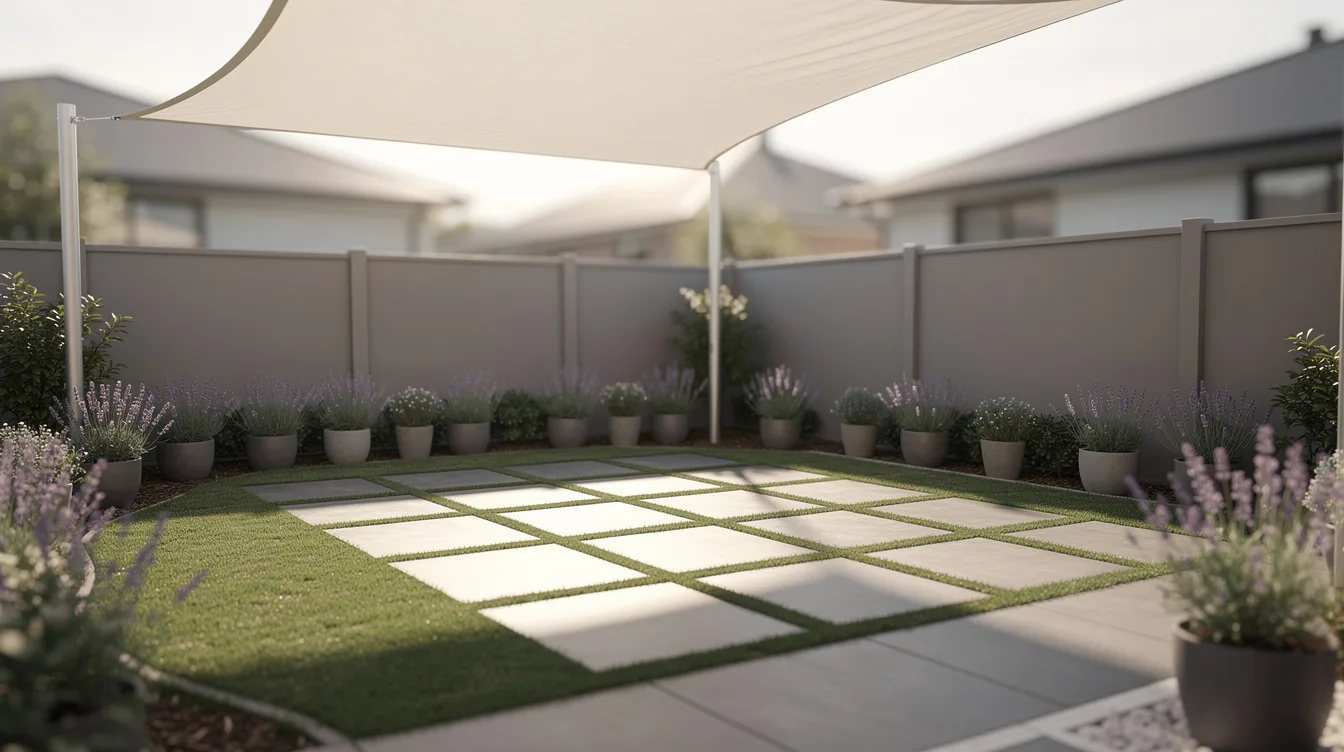
Every July, my neighbor mows his lawn twice a week and still has brown patches by the back fence. I started looking at artificial turf because I wanted the green look without the hose, the mower, or the weekend guilt.
The good news: 2026 turf is miles past the plastic-looking stuff from a decade ago. The trick is mixing full-turf zones, turf-and-paver patterns, and one or two small features so the yard feels designed, not just carpeted. Installed costs land between 80 and 200 € per m² depending on base work and quality.
Pick Turf That Looks Like Real Grass, Not a Putting Green
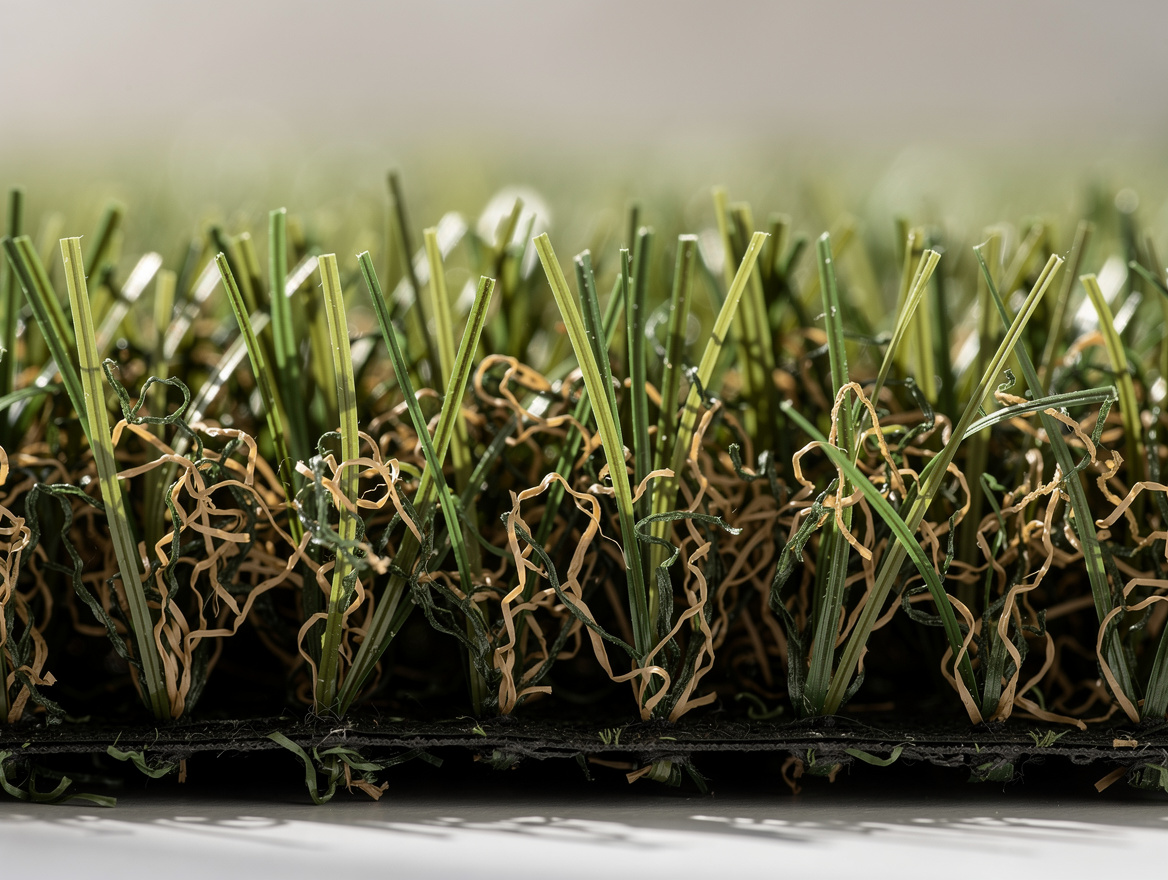
Skip the shiny, flat stuff. The best 2026 turf has multi-tone green fibers with a brown thatch layer, so it reads as a real lawn from 10 feet away.
I like EverGrass Viridian Green Turf for most yards. It has a soft, varied color and holds up under kids and dogs. For a drier, coastal feel, EverGrass Summer Gold Turf mixes green and straw tones that look great around a pool or gravel border.
Quality turf runs about 20 to 40 € per m² for materials. With base prep and pro install, plan on 80 to 150 € per m² all-in for a clean, residential look.
Use a Single Turf Field With Curved, Planted Edges
The easiest low-maintenance layout is one continuous turf area, no seams, no patterns. Then you hide the edges with plants and pots so nothing feels synthetic.
Curve the border with a hose before you commit. Soft, sweeping edges look more natural than straight lines and they save you on awkward turf cuts. In a 50 to 80 m² yard, a 4 m by 6 m main lawn with a low pergola in one corner feels generous without being a chore to install.
Line the edge with potted lavender, rosemary, or a clump of ornamental grass from Home Depot or Lowe’s. The living plants do the work of making the turf feel like part of a garden, not a putting mat.
Mix Porcelain Pavers With Turf Strips for a Modern Grid
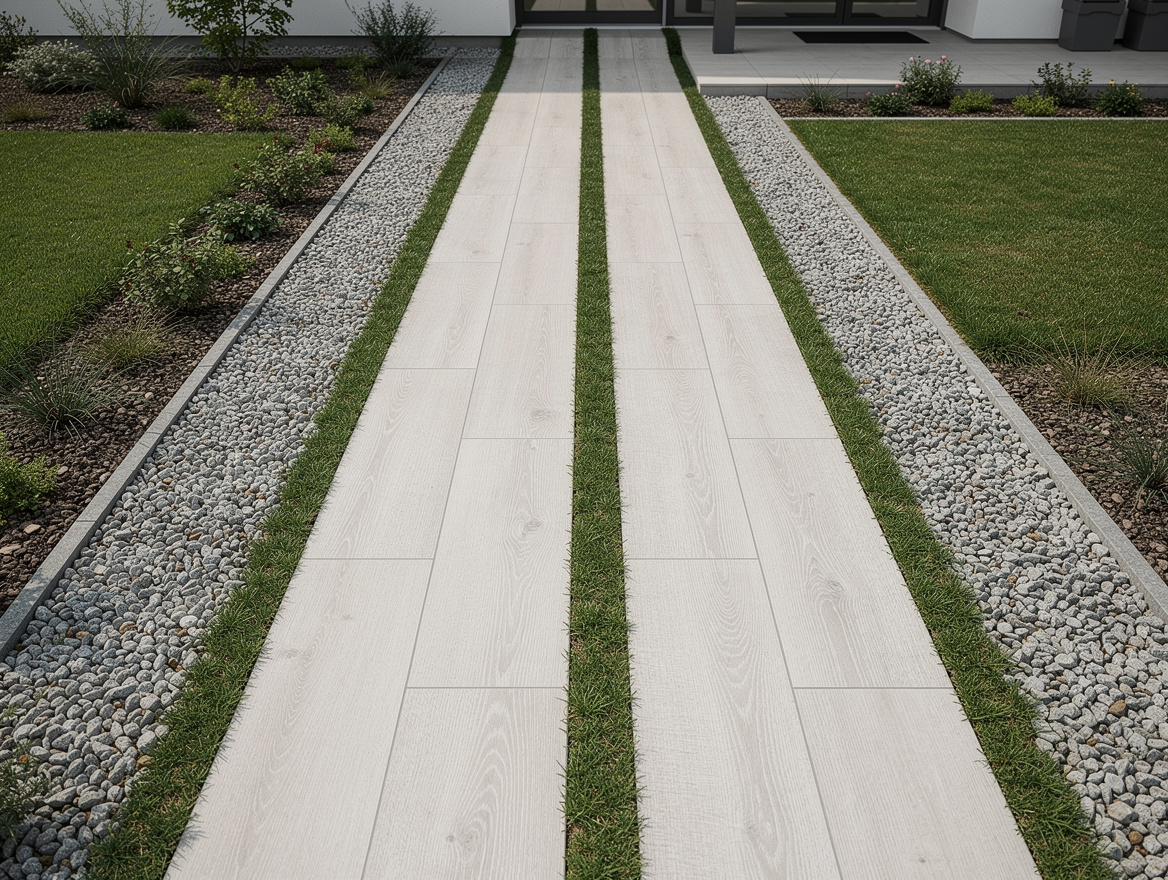
This is the design I keep coming back to in 2026. Big porcelain pavers laid in a grid, with 5 to 10 cm turf bands running between the slabs. It looks sharp, drains well, and you can replace a single paver if one chips.
Terrazo Gris 60 by 60 cm pavers give a soft stone look that doesn’t fight the green. If you want more contrast, Beton Anthracite in the same size reads almost black next to bright turf. Both are 2 cm thick outdoor porcelain, slip-resistant, and easy to source.
For a side yard, try a 1.2 m wide walkway of 30 by 120 cm wood-look planks like Lucas Betula, with 40 to 50 cm turf bands between each one. Budget 120 to 220 € per m² when turf and pavers are installed together, since the base work is shared.
Build a Small Putting Green for a Specific Use
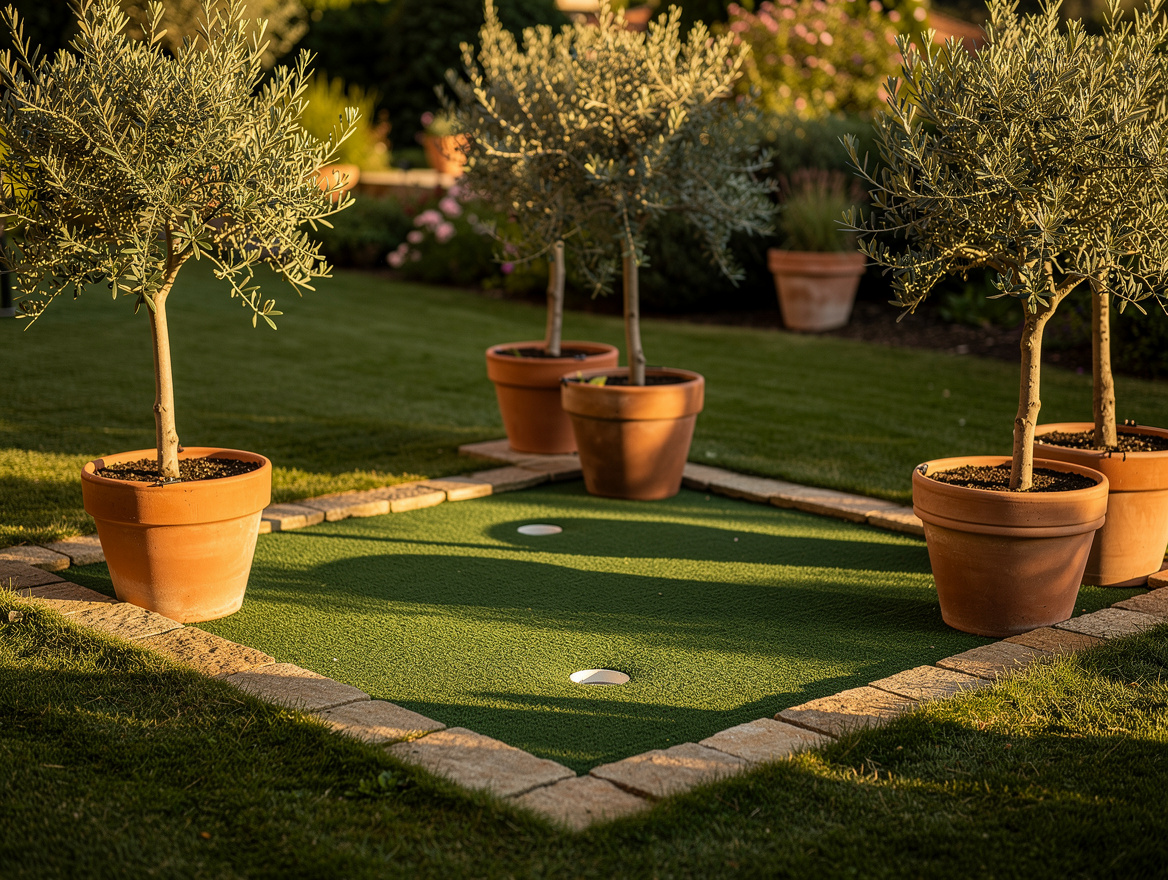
A full putting green is overkill for most homes. A small 10 to 15 m² practice green in a back corner is plenty, and it gives the yard a real reason to feel different from a normal lawn.
Use a tighter, shorter turf than your main yard. Premium putting turf runs 135 to 165 INR per ft² for materials in factory-direct markets, which translates to about 15 to 20 € per m² just for the roll, and 150 to 220 € per m² once you add the cup, the fringe, and a proper base.
Frame it with a low planter box or a row of dwarf olive trees in terracotta pots. Keep it 3 to 4 m away from the main turf so the two surfaces don’t visually fight each other.
Add One Shaded Lounge Zone, Not Five
Turf gets hot in direct summer sun, so you need at least one cool spot. Pick one zone, not several, and commit to it.
A 3 m by 4 m shaded rectangle off the back of the house works for most suburban yards. Lay it with the same porcelain pavers you used in the grid, drop a chunky outdoor rug from Target or Wayfair on top, and add a deep sofa and one side table. That’s it.
Shade it with a simple sail shade in off-white or a low aluminum pergola from IKEA. Avoid dark rugs on top of pavers in full sun, they hold heat and fade fast.
Choose Infill and Edging That Don’t Fight You Later
Infill matters more than people think. Cheap rubber infill gets sticky in summer heat and can smell. A silica sand or acrylic-coated sand infill keeps the blades upright, drains well, and stays cool underfoot.
For edges, use bender board or a low aluminum strip from Home Depot, not plastic lawn edging that warps after one season. The edge is what you’ll see every day, and it’s also what keeps the turf from creeping.
Brush the turf against the grain once a season with a stiff push broom, blow leaves instead of raking, and rinse pet spots with a hose. That’s the whole summer maintenance list.
Start with the main turf field and one paver patio, not all five ideas at once. A 50 m² yard done well beats a 200 m² yard done in a rush, and you can always add a putting green or a shade zone next summer once the base is settled.
Mia Carter writes about small-space living and budget home makeovers. She has restyled three rentals and tests most ideas in her own 45 sqm flat.