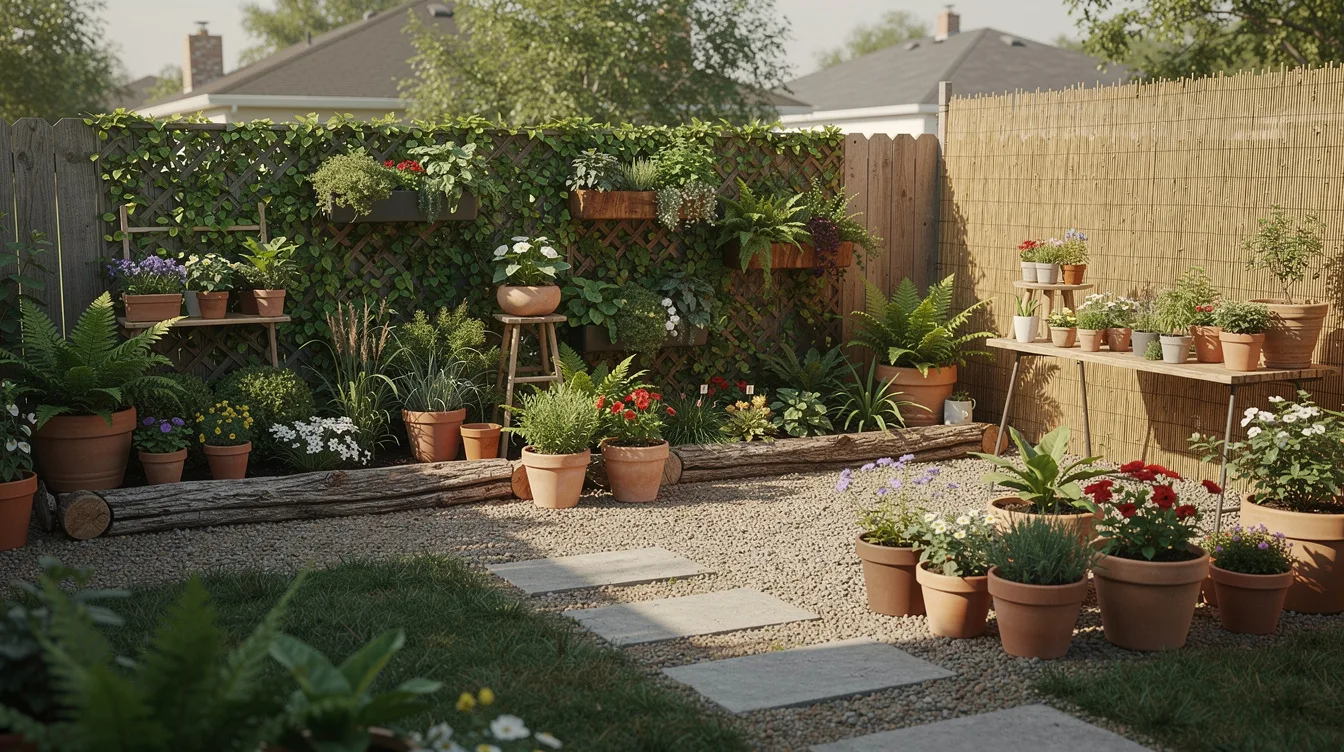
I wanted more separation in our yard, but I did not want to stare at a hard fence line from the patio. The problem was one awkward stretch between the grill area and the kids’ play zone, where every chair, hose, and ball stayed in full view.
So I built a few quick nature craft stations instead. They read like garden projects, not property lines, and most of the work was done before dinner.
Map the break points before you buy anything
Start by marking the spots where your yard already wants a pause: beside a seating area, near a shed path, or along the edge of a play space. A divider works better when it guides movement, not when it lands in the middle of open grass for no reason.
I like to measure in modules, not in one long run. Three stations at about 32 to 40 inches wide each can cover a typical 9- to 10-foot span and still keep the yard airy.
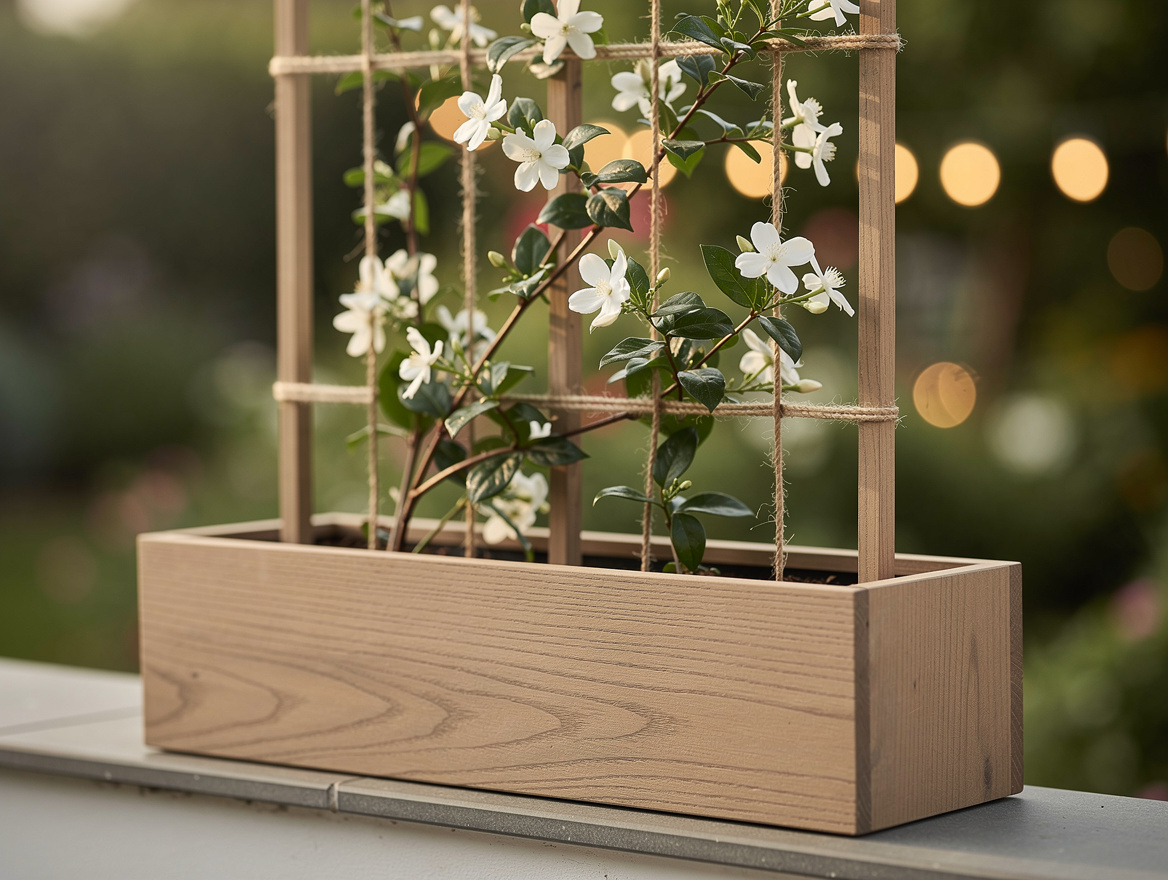
Build a planter trellis wall for instant height
The fastest visual screen is a row of Lowe’s or Home Depot planters with a trellis screwed into the back. Typical 2026 pricing is about $35 to $90 for a large 32- to 40-inch planter, and about $25 to $45 for a 72-inch trellis panel.
I prefer a 40-inch-long planter with a 6-foot trellis because it feels tall enough to divide space without looking defensive. Exterior brackets and screws usually add another typical $8 to $15, and that is money well spent because a wobbly trellis looks cheap immediately.
For plants, a jasmine vine or clematis in a 1- to 2-gallon pot usually runs about $15 to $30 at Home Depot. While the plant fills in, I weave in bare branches and garden twine so the screen has shape on day one.
Lash a bamboo roll to planters or stakes
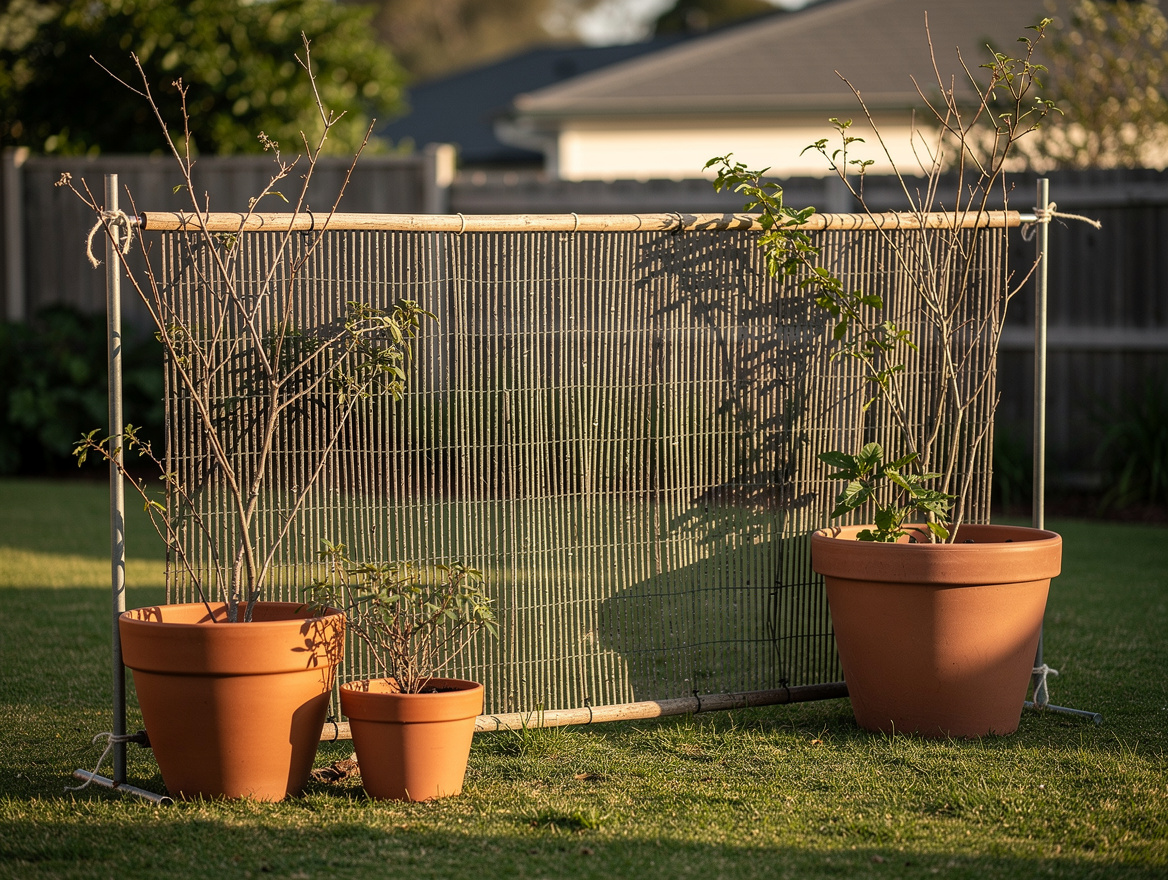
A bamboo screen is the quickest option when you need a softer backdrop in one afternoon. Typical rolls sold through Amazon, Wayfair, or Home Depot run about $35 to $70 for roughly 6 feet high and 8 to 12 feet long.
I would not overbuild this with poured posts unless you want a permanent structure. Two or three 6- to 8-foot T-posts from Ace Hardware or Home Depot, usually about $6 to $12 each, are enough when the screen is tied tight and backed by planters.
The trick is to keep the bamboo slightly off the ground so it stays cleaner after rain. Add natural rope, a few hanging jars, or one birdhouse, and it starts reading as a craft station instead of budget fencing.
Stack logs low and let branches do the tall work
If you already have cut limbs or chunky yard logs, use them for the base instead of buying more hardscape. A low line of logs gives the area weight, and upright branches behind it create the visual break without making the yard feel boxed in.
I keep this border around 16 to 24 inches high at the base, then let the branch layer reach 4 to 5 feet in selective spots. That uneven height looks more natural than a perfect wall, and it hides toys and utility clutter better than people expect.
If you need extra material, landscape timbers at Home Depot or Lowe’s typically cost about $7 to $10 for an 8-foot piece. They are not romantic, but cut into shorter lengths and mixed with real branches, they work.
Add simple craft details that make each station look intentional
This is the part that saves the whole project from looking like leftover yard debris. I use one consistent accent on every station, usually jute twine, one lantern style, or matching terracotta pots, so the divider feels planned.
A small pack of solar string lights from Target, Walmart, or Amazon is usually about $10 to $20. I only wrap the upper third of a trellis or branch cluster, because too much lighting makes a backyard divider look like a party prop.
One extra layer helps too: dried grasses, willow stems, or even a clipped bundle of river birch twigs tied at the center. It is cheap, it adds movement, and it makes the station feel handmade in a good way.
Use plants and texture to soften the screen fast
Fresh wood and bamboo can look bare for the first few weeks, so I always add a second layer at ground level. A few ferns, ivy, or trailing annuals in the front of each module make the divider look settled much faster.
This is where a simple resin planter from Walmart or Target earns its keep. Typical prices hover around $20 to $45 for medium sizes, and the lighter weight makes it easier to shift the layout if the first placement feels off.
I am opinionated about color here: stick to wood, black, clay, or soft green. Bright plastic blue or red breaks the natural look immediately, even if the structure itself is solid.
Set the stations in a loose line instead of a hard wall
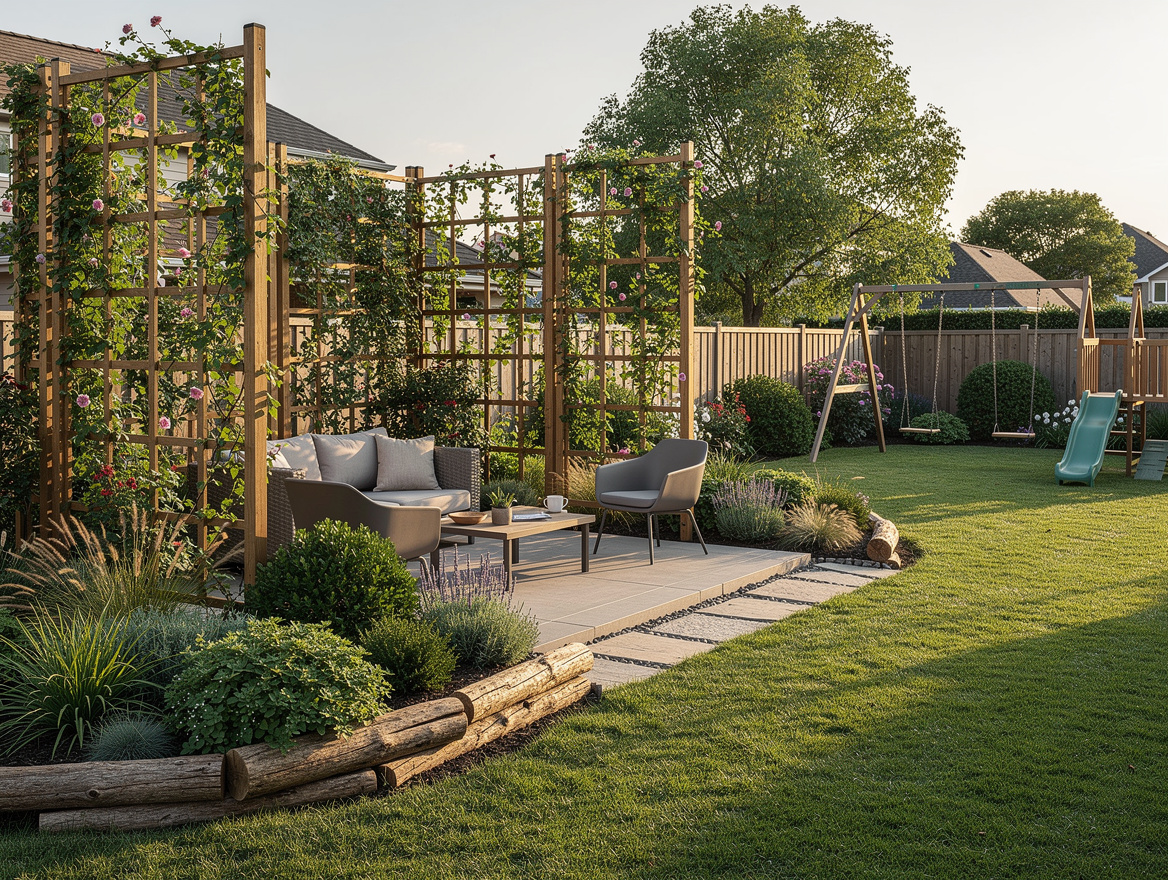
The best backyard divider leaves a little mystery. I stagger the stations by a few inches or angle one trellis planter near a chair corner so you glimpse the next zone instead of blocking it completely.
A 3- to 6-foot-deep separation is usually enough to make one side feel like dining and the other feel like play or gardening. You do not need full privacy, you need visual relief, and that is a cheaper target.
Before you call it done, sit down in the main viewing spot and check the sightlines. If the hose reel, trash cans, or toy pile disappear from the chair you use most, the layout is doing its job.
Start with two modules, not six: one planter trellis and one bamboo panel will tell you quickly what your yard actually needs. Once that first sightline improves, the rest of the divider becomes much easier to place.
Mia Carter writes about small-space living and budget home makeovers. She has restyled three rentals and tests most ideas in her own 45 sqm flat.