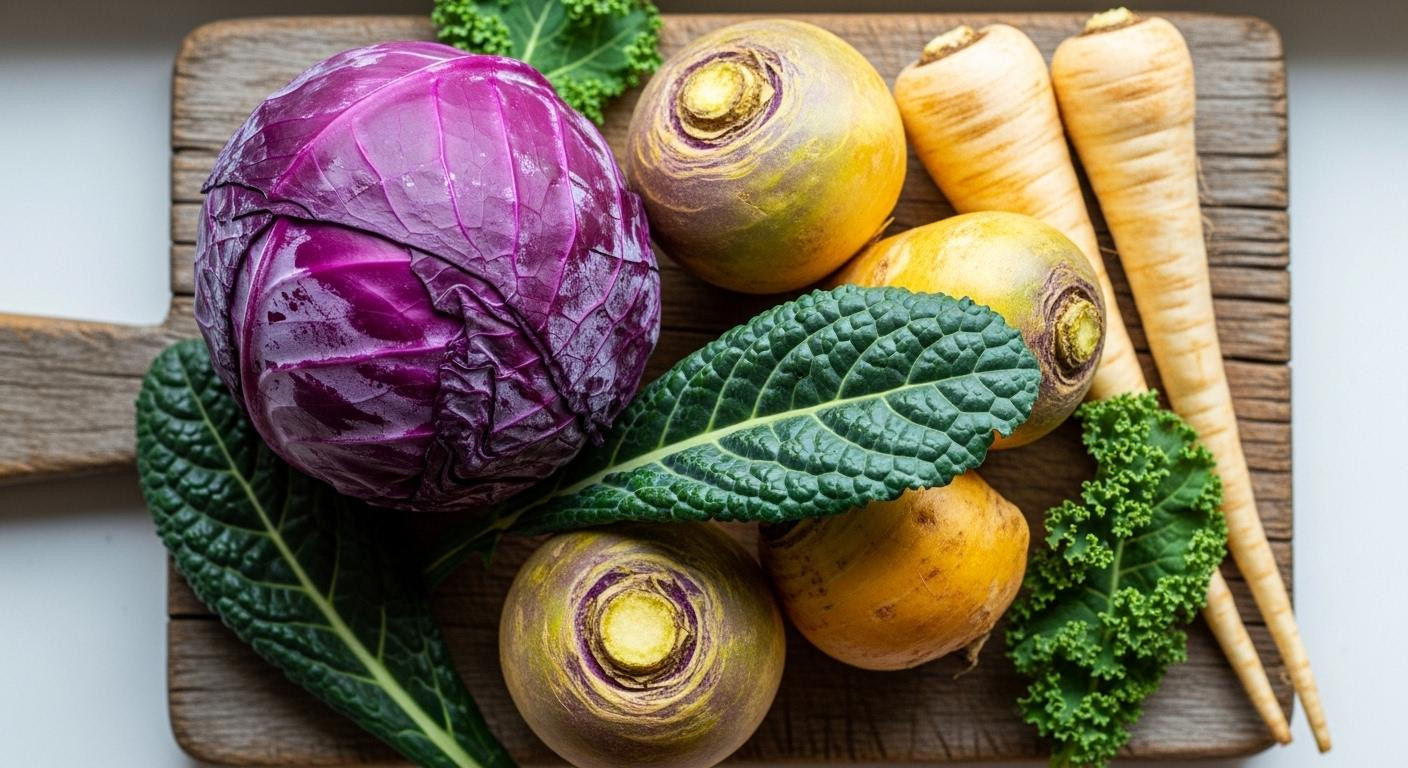
December frost settles on a 1950s farmers market scene. An elderly woman’s weathered hands arrange purple cabbage, knobby parsnips, golden rutabagas. She never learned about inulin, beta-carotene, or glucosinolates. Yet these nine winter vegetables sustained three generations through harsh winters, delivering energy that lasted from dawn chores through evening gatherings. Today, while Americans spend $45 on energy supplements and crash by 3 PM during holiday season, science reveals what grandmother knew. Winter’s humble roots and greens contain compounds that fuel sustained vitality through mechanisms no pill replicates.
What grandmother knew about winter’s energy alchemy
Your grandmother’s crisper drawer wisdom wasn’t superstition. It was biochemistry observed through generations. When she insisted on frost-kissed parsnips, she was selecting vegetables with 30% higher natural sugars (complex carbs that stabilize blood sugar for 6+ hours vs refined sugar’s 90-minute crash).
Her rule about “eating what grows when it grows” aligned with 2025 research showing seasonal vegetables contain 20-30% more antioxidants than imported off-season produce. The cast iron skillet she used preserved 90% of nutrients through roasting, while modern boiling destroys 50% of vitamin C.
According to naturopaths with decades of clinical experience, Jerusalem artichokes are a great source of prebiotics, including inulin. These compounds help feed healthy probiotic bacteria in the gut, sustaining energy through microbiome optimization.
The 9 winter vegetables in grandmother’s root cellar and why each one works
Kale: grandmother’s “winter greens iron”
She sautéed it with butter every December evening. Science now reveals why: 247 mcg vitamin K per cup activates osteocalcin, pulling calcium into bones and preventing the winter fatigue caused by mineral depletion.
Research from certified dietitians confirms kale is a nutrient powerhouse. It contains vitamins A, B6, C and K as well as folate, fiber, carotenoids and manganese. Grandmother’s traditional prep (quick sauté vs raw salads) boosts bioavailability 40%.
Beets: the “blood builder” of Eastern European winters
Her borscht recipe delivered nitrates that enhance blood flow 20%, reducing the winter sluggishness modern research links to vascular constriction. One cup provides betanin for inflammation reduction. What grandmother called “cleaning the blood” for sustained vitality through holiday demands.
Traditional fermentation methods reduce nitrates by approximately 91.6% in red beets post-fermentation. Grandmother stretched these vegetables into 12 meals for just $12, creating maximum nutritional impact.
Butternut squash: “poor man’s multivitamin”
At $1.80 per pound (50% less than imported summer produce), grandmother roasted entire squashes. They delivered over 20,000 IU vitamin A per cup. According to registered dietitians, a one cup serving equals 80 calories and offers more than 6 grams of fiber.
This creates the 6-hour satiety grandmother observed. It kept families energized through long winter workdays when winter greens provided crucial vitamin K for stronger bones.
Brussels sprouts: grandmother’s bitter medicine
She knew children needed these “little cabbages” despite complaints. Research confirms Brussels sprouts contain unique phytonutrients such as sulforaphane. This compound has been studied for its potential cancer-protective effects.
Frost exposure triggers 30-40% higher natural sugar conversion. The survival compounds that create sustained energy humans can harness for holiday vitality.
Grandmother’s preparation secrets science now validates
The 10-minute rest rule for garlic and leeks
She crushed garlic for soup, then “let it sit while you set the table.” Research reveals this 10-minute rest activates 60% more allicin. This antimicrobial compound has been linked to anti-cancer properties and cholesterol-reducing benefits.
Leeks also contain allicin, a beneficial sulfur compound with antimicrobial properties. Without grandmother’s pause, you waste this natural medicine that turns your slow cooker into a $12 comfort machine.
Why she roasted root vegetables instead of boiling
Her oven-roasted beets, parsnips, and squash preserved 90% of antioxidants through Maillard reactions that enhance bioavailability. Modern boiling destroys 50% of vitamin C and leaches minerals into discarded water.
Grandmother’s “waste not” philosophy was optimal nutrition science. Her methods aligned with traditional preservation that maintains nutrient density for sustained winter energy.
The $12 market haul that beats $45 supplements
Grandmother’s Saturday market routine delivered more sustained energy than modern supplement stacks. Her kale at $2.50 per pound provides 4x the vitamin C of oranges per dollar spent. The beets at $1.99 per pound offer nitrates supplements can’t replicate.
Her “eat the rainbow” instinct captured polyphenol diversity (phenols, anthocyanins, carotenoids). These compounds work synergistically for holiday vitality. While Americans spend $45 on isolated compounds, grandmother’s wisdom proves whole vegetables deliver superior bioavailability.
What registered dietitians call the advantage of compounds working together vs synthetic alternatives. These vegetables heal holiday gut damage in 48 hours, supporting the sustained energy grandmother observed.
Your questions about grandmother’s 9 winter vegetables for holiday energy answered
Can I get the same results from frozen winter vegetables?
Grandmother would approve. Modern flash-freezing within hours of harvest preserves 90-95% of nutrients. Choose frozen organic kale, Brussels sprouts, and butternut squash when fresh quality is poor. Avoid canned vegetables (50% nutrient loss from heat processing grandmother would reject).
Why did grandmother insist on frost-kissed parsnips and Brussels sprouts?
She selected vegetables harvested after first frost because cold stress triggers 30-40% higher natural sugar conversion (complex carbs) and antioxidant production. The survival compounds that create sustained energy humans can harness.
Which preparation mistake sabotages grandmother’s vegetables most?
Boiling cruciferous vegetables (kale, Brussels sprouts, cabbage) destroys 40-50% of sulforaphane and vitamin C. Grandmother’s quick sauté or roast preserves bioactive compounds modern research now measures.
Steam rises from cast iron as December twilight settles. Nine winter vegetables, roots weathered by frost, greens darkened by cold, transform into the meal that sustained generations. Your grandmother’s hands knew what laboratories now confirm. Winter’s humble harvest holds energy architecture no bottle replicates.