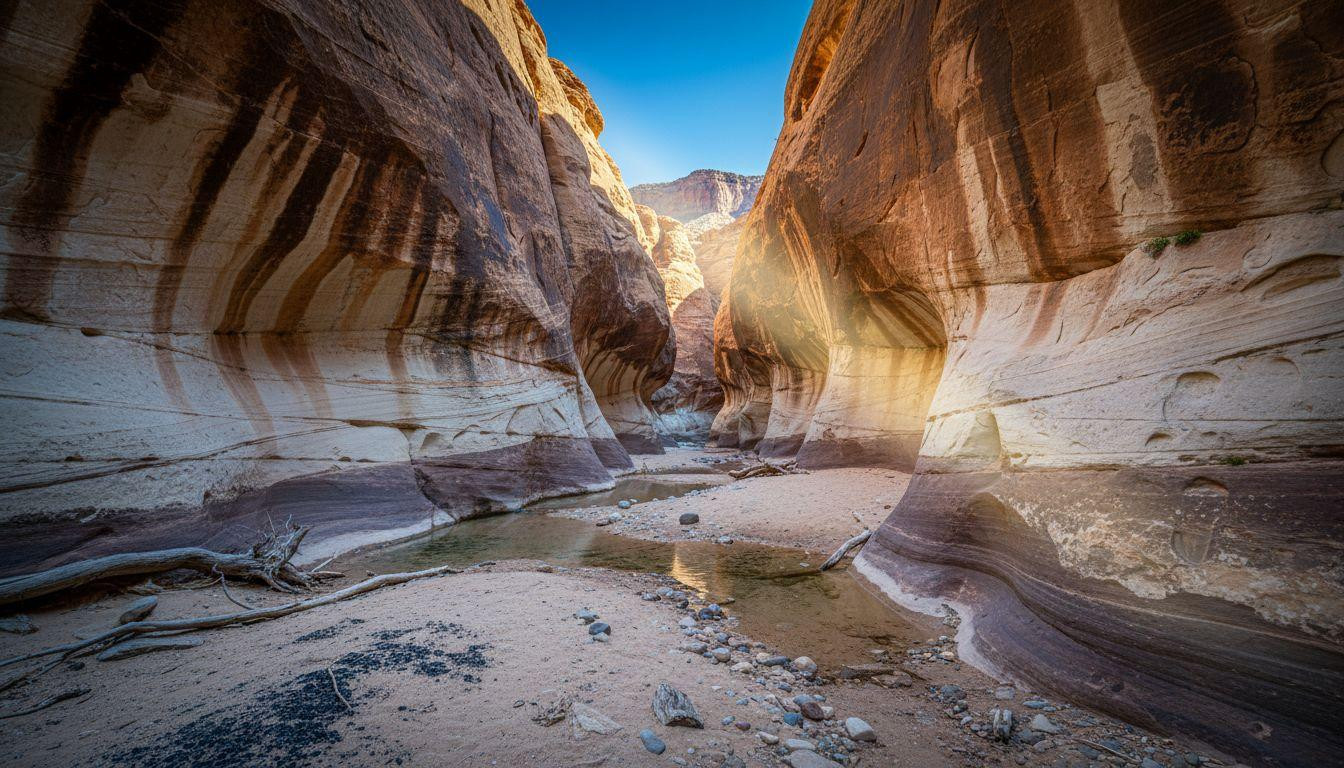
Zion Narrows draws 300,000 hikers annually who wade through 35-degree water wearing rented wetsuits. Permits sell out weeks ahead. Shuttle waits stretch to 30 minutes even in winter. Little Wild Horse Canyon sits 160 miles northeast where the same Navajo sandstone twists into slots 20 inches wide. No fees. No reservations. No crowds. The trailhead parking lot holds 50 cars and stays half-empty on February weekdays.
Why Zion became unsustainable
Zion National Park logged 5 million visitors in 2024. The Narrows alone requires advance lottery permits for top-down hikes with success rates below 30 percent. Bottom-up access stays permit-free but demands $35 park entry plus $100 non-resident surcharge starting January 2026. Mandatory shuttles cost $5 daily. Springdale outfitters rent wetsuits for $60, boots for $20, trekking poles for $10. Total cost per person reaches $130 before lodging.
The Virgin River runs year-round at 35-45 degrees Fahrenheit. Hypothermia risk stays high. Winter wading requires neoprene drysuits. Photography queues form at iconic narrows where walls glow orange. Even off-season brings steady foot traffic. The experience became managed rather than wild.
Meet Little Wild Horse Canyon
Desert slot geography
Little Wild Horse cuts through the San Rafael Swell where Entrada sandstone eroded into passages 16-24 inches wide. The 8-mile loop links with Bell Canyon through cross-country plateau sections offering views of the reef’s back wall. Five dry falls range from 6 to 15 feet requiring hand-over-hand scrambles but no technical gear. Water appears only as shallow pools in spring, ankle-deep and passable. Winter keeps slots bone-dry.
Light beams pierce through slot openings at midday creating the same ethereal glow as Zion’s famous chambers. Smooth sandstone walls show cross-bedding patterns in cream, buff, and rust tones. Wild horse tracks mark sandy washes near the plateau junction. The geology matches Zion’s iconic formations but stays undeveloped and unmarked beyond basic BLM trail signs installed in 2009.
The cost reality
Bureau of Land Management access costs zero dollars. No entrance gates. No permit lotteries. No advance reservations. Gas from Salt Lake City runs $28 round-trip at $3.50 per gallon for the 160-mile drive. Hanksville motels charge $80-120 nightly versus Springdale’s $150-250. Goblin Valley State Park campground sits 8 miles away at $20-40 per site with winter facilities open. Total two-person day trip costs $120-200 including lodging and meals compared to Zion’s $250-450 minimum.
The slot canyon experience
What the scramble feels like
The trail starts wide across desert scrubland then drops into narrows within half a mile. Walls close in gradually until shoulders brush sandstone on both sides. The first dry fall appears at mile 2 where a 6-foot ledge requires careful footing on slanted rock. Hikers boost each other or use natural handholds worn smooth by decades of passage. No ropes needed. Balance and patience matter more than strength.
Midday sun angles create light beams that last maybe 20 minutes before shifting. The plateau section at mile 4 opens to 360-degree views of the Swell’s layered geology. Bell Canyon junction offers an optional 5-mile extension but most hikers loop back through Little Wild Horse’s return narrows. Total time runs 3-5 hours depending on photography stops and scramble pace. Recent AllTrails reviews from January 2026 report solitary weekday hikes with zero other parties encountered.
Winter’s advantage
January through March brings daytime highs of 40-50 degrees Fahrenheit with clear skies 20-25 days per month. No monsoon flash flood risk. No summer heat exceeding 100 degrees. Occasional icy patches on shaded sections require microspikes but most terrain stays dry and grippy. Hypothermia risk drops to near-zero compared to Zion’s river wading. Layers and traction devices replace wetsuits and water shoes. Gear costs fall by half.
Flash flood probability stays below 5 percent in winter months according to BLM weather data. The canyon drains quickly when water does flow. Check forecasts before entering but winter windows stay reliable. Parking lot occupancy runs 20 percent on weekdays, 40-60 percent on weekends. Arrive by 9am for guaranteed spots and optimal light angles in the slots.
Practical access
Take Interstate 70 exit 131 to Highway 24 toward Goblin Valley. Turn at the signed junction 15 miles before the state park onto a graded dirt road maintained by BLM. The 11-mile approach stays passable for sedans in dry conditions. Four-wheel drive helps after rain but winter typically keeps surfaces firm. Cell service drops after Green River. Last gas and food available in Hanksville 12 miles from the trailhead.
Trailhead coordinates are 38.888 degrees north, 110.483 degrees west. Pit toilets and basic signage mark the parking area. No water sources. No fees. No rangers. Pack everything in and out. The nearest alternative slot canyons include Capitol Reef’s free formations 45 miles west and Ogden Valley’s uncrowded terrain in northern Utah.
Your questions about Little Wild Horse Canyon answered
When should I visit to avoid any crowds
Winter weekdays from January through March offer near-guaranteed solitude. Parking lots stay 80 percent empty. Spring brings muddy conditions and occasional flash flood watches. Summer heat exceeds 100 degrees inside slots. Fall weekends see moderate use but still far below Zion levels. Arrive before 9am any season for best light and parking availability.
How does this compare to famous Arizona slot canyons
Antelope Canyon requires $50-100 guided tours with no solo access allowed. Little Wild Horse permits self-guided exploration at your own pace for free. The visual experience matches Antelope’s light beams and smooth walls but without commercial restrictions. For similar solitude in mountain terrain, Colorado’s alpine lakes offer winter isolation.
What gear do I actually need for winter hiking here
Hiking boots with ankle support handle the scrambles. Microspikes help on icy sections but stay optional most days. Layers for 40-degree temperature swings between sun and shade. No wetsuits. No water shoes. No trekking poles unless you prefer them for balance. Pack 2 liters of water per person and high-energy snacks. The simplicity contrasts sharply with Zion’s gear-intensive requirements. For more winter hiking options, frozen alpine lakes provide similar seasonal advantages.
The plateau section at mile 4 opens to silence broken only by wind through juniper. Wild horse tracks cross the wash in fresh sand. Light shifts from warm gold to cool blue as clouds pass overhead. No shuttle horns. No permit deadlines. No crowds queuing for the same photo angle. Just sandstone and sky and the sound of your own footsteps echoing through slots that stayed empty all morning.