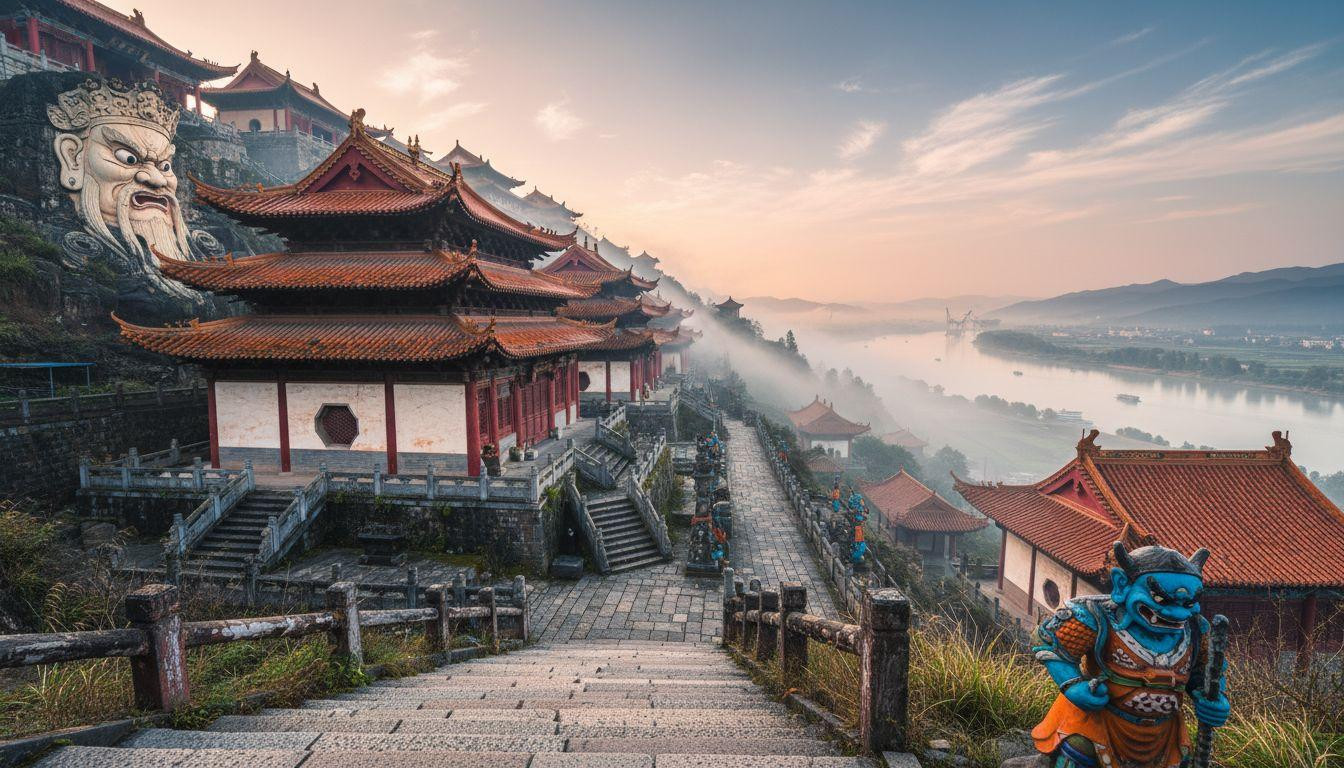
Zhangjiajie’s Avatar mountains queue cable cars for 90 minutes. Timed entry slots sell out by 9am. Entry costs ¥248 plus ¥72 for mandatory shuttles. Two hours northeast, Fengdu’s foggy hillside shows 200 painted demons judging souls along empty stone paths. No timed entry. No crowds. Same Yangtze River drama for ¥100.
The difference hits you at the ticket gate. Zhangjiajie processes 4 million visitors annually. Environmental stress closed sections in 2024. Fengdu runs under 50% capacity most winters.
Why Zhangjiajie became unsustainable
The 2009 Avatar film turned Wulingyuan into a theme park. Glass bridges replaced hiking trails. Cable car queues stretch 90 minutes during peak season. Park management introduced timed entry in 2023 to control erosion on popular paths.
Ticket prices climbed from ¥165 in 2015 to ¥248 today. Add mandatory shuttle buses at ¥72. Most visitors spend ¥320 minimum before eating. Hotels in Wulingyuan village charge ¥600-900 per night during summer months.
The crowds erased village life. Locals moved out. Souvenir shops replaced family restaurants. What remains feels manufactured for tour groups rushing between viewpoints.
Meet Fengdu Ghost City
Landscape and atmosphere
Morning fog rolls over Mingshan Mountain around 7am. Vermillion temple roofs emerge through mist like theater sets. The Yangtze flows 300 feet below. Chongqing sits 106 miles southwest.
Stone paths climb through 27 temples built during the Eastern Han Dynasty. No glass walkways. No Instagram platforms. Just weathered steps and demon statues painted in blues, oranges, and fiery reds.
Price and crowd comparison
Entry costs ¥100. Cable car adds ¥30-50 if you skip the 40-minute climb. Total visit takes 2-4 hours. Most cruise passengers arrive between 11am-1pm and leave the early morning empty.
Winter months see under 50% capacity. Spring and fall bring mild weather without Zhangjiajie’s seasonal crush. No advance booking required. No timed slots. You walk in.
The underworld experience that teaches, not scares
200 demon statues as moral theater
The Eighteen Levels of Hell dioramas line the main path. Each level shows a different punishment for earthly sins. Vivid sculptures depict demons judging souls. The colors shock: electric blues, acid greens, flame oranges against gray stone.
Ghost Torturing Pass tests visitors with a one-footed balance on a stone platform. Legend says good souls stand steady for three minutes. Tourists wobble and laugh. The massive rock-carved Yama face holds a Guinness World Record. His stone eyes follow you up the mountain.
Black and White Impermanence actors roam evening paths during night shows. They represent death’s messengers in Taoist belief. Locals use ghost lore as moral metaphor, not literal fear.
Cultural depth Zhangjiajie lacks
Fengdu blends Confucian, Taoist, and Buddhist traditions into one complex. Tianzi Palace serves as Yama’s administrative office in the underworld. The architecture teaches afterlife philosophy through physical space.
During Spirit Festival each April, families gather for ancestor memorial meals. Braised pork shoulder and Yangtze river fish honor the dead. This Mexican forest turns orange when 1.8 million butterflies wake at dawn with similar seasonal cultural gatherings that tourists rarely witness.
Zhangjiajie offers scenic viewpoints. Fengdu offers cultural immersion into Chinese underworld beliefs spanning 2,000 years. The difference matters if you want substance beyond selfies.
Practical details
High-speed trains leave Chongqing North Station every four hours. Journey takes 1 hour 2 minutes. Tickets cost ¥60-110. From Fengdu Station, taxis run ¥40 for the 10-minute ride to the mountain base.
A 5-minute ferry crosses from the new city wharf to the entrance. Cable cars operate 7am-5:20pm. This Wyoming valley costs half what Jackson Hole charges with similar underdog appeal against famous neighbors.
Best months run March-May and September-November. Temperatures stay 59-77°F. Fog frequency peaks in spring mornings. Winter drops to 41-50°F but delivers extreme emptiness and dramatic mist. Summer brings 77-95°F heat and humidity.
Total day trip from Chongqing costs around ¥500 per person including transport, entry, and meals. Zhangjiajie averages ¥800-plus for the same timeframe. Better than Tallinn where crowds cost $180 and Visby keeps medieval walls for $119, Fengdu offers heritage without the tourist infrastructure tax.
Your questions about Fengdu Ghost City answered
When should I visit to avoid cruise crowds?
Arrive before 10am or after 2pm. Most Yangtze cruise shore excursions dock between 11am-1pm. Early morning fog creates the best atmosphere. Winter months see minimal cruise traffic. Spring and fall bring moderate crowds but better weather than summer’s heat.
What makes the ghost theme different from Western horror?
Chinese underworld mythology focuses on moral judgment, not fear. The demons represent consequences for earthly actions. Families use ghost stories to teach ethics to children. Spirit Festival honors ancestors with meals, not Halloween scares. The statues look fierce but serve educational purposes about virtue and vice.
How does this compare to other Yangtze River stops?
Three Gorges Dam draws larger crowds with less cultural depth. Shibaozhai Pagoda offers architecture but no thematic complexity. Forget Maldives where overwater villas cost $1,500 and Fiji keeps turquoise for $550 shows similar value gaps. Fengdu provides the most distinctive cultural experience along the cruise route for the lowest entry cost.
Dawn climbs to the Thirty-Three Heavens viewpoint show golden light spreading over layered temple roofs. The Yangtze reflects orange and pink. Fog lifts slowly. By 8am, the whole mountain turns visible. Then the first shuttle buses arrive.