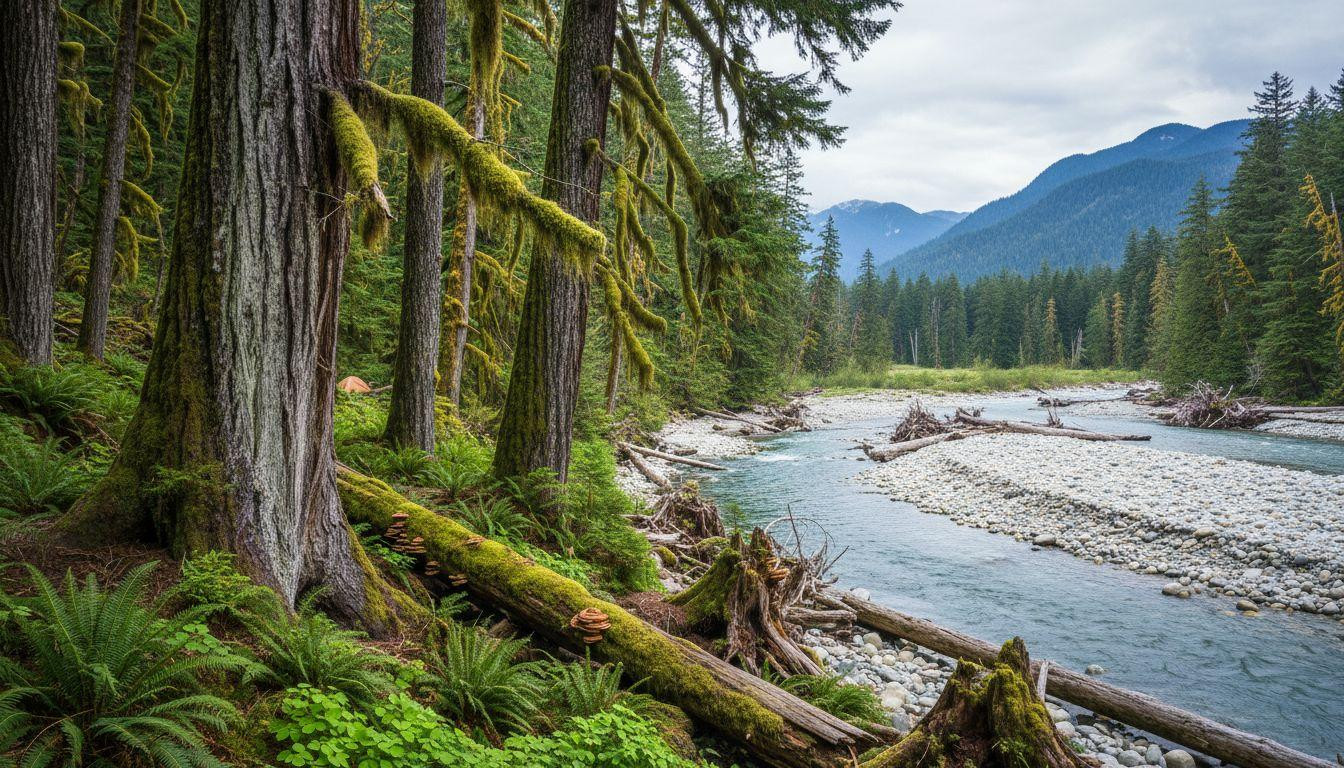
Forget the Hoh Rain Forest Visitor Center where crowds wait 2 hours for parking and South Fork Hoh delivers the same moss-draped cathedral forest with zero visitors on glacier-fed gravel bars. The Olympic Peninsula’s most famous temperate rainforest experience has become a victim of its own success. While 2.9 million annual park visitors create bottlenecks at the main entrance, a primitive trail 30 minutes away offers identical old-growth drama without the chaos.
Why the main Hoh Rain Forest became unmanageable
Olympic National Park’s Hoh Visitor Center now requires metered entry when parking reaches capacity. Wait times stretch up to 2 hours during peak season. The parking lot fills by 10am on summer days, forcing overflow into distant campground areas.
Regional travel advisories recommend arriving before 9am to avoid entrance delays. TripAdvisor reviews from October 2025 describe weekday waits and full lots by 1pm. The boardwalk trails (Hall of Mosses, Spruce Nature Trail) accommodate thousands daily but infrastructure strains under pressure.
The numbers behind the crowds
Olympic Peninsula tourism boards confirm 2.9 million park visits in 2023 with continued increases through 2025. The Hoh area represents one of the park’s busiest summer destinations. No gas or food services exist at the visitor center, creating additional logistical challenges for day visitors.
Meet the South Fork Hoh – same forest, zero wait
The South Fork Hoh River Trail penetrates wilderness just as dramatic as the main corridor. Towering Sitka spruce and Douglas fir form cathedral-like halls draped in emerald moss curtains. The 3.5-mile maintained trail to Big Flat crosses multiple river braids through identical temperate rainforest.
Glacier-fed gravel bars interrupt dense forest with pale cobble beaches. The river murmurs constantly through braided channels. Green-filtered light illuminates nurse logs where new trees sprout from fallen giants. This Nevada saloon preserves authentic heritage with similar dedication to untouched preservation.
What makes this corridor different
Annual precipitation exceeds 140-170 inches, creating moss carpets uncommon elsewhere in the continental United States. Oxalis and fern understories glow luminous green on overcast days. The trail ends where river erosion removes historic tread, requiring gravel bar walking to continue exploring.
December reality check
Winter conditions mean saturated trails, possible washouts, and higher storm frequency. This 6-mile ski trail requires similar winter preparedness for backcountry access. National Park Service alerts show seasonal closures affecting Hoh area access during December 2025 flooding events.
The South Fork experience
Primitive trail surfaces replace boardwalks. River crossings vary by season – winter storms create fast, dangerous flows requiring caution. Big Flat opens into meadow clearings surrounded by immense rainforest ridges. The maintained trail covers roughly 500 feet elevation gain over rolling terrain.
Trip reports from December 2025 describe solitude with zero other hikers encountered on specific dates. Washington Trails Association confirms the route “penetrates wild and remote wilderness” compared to crowded main facilities. Carmel Valley offers similar escape from overcrowded famous destinations.
Activities worth the drive
Gravel bar exploration reveals glacial cobble deposits and braided channel patterns. Old-growth photography captures massive buttressed trunks and hanging moss details. Wilderness camping requires permits via Recreation.gov with bear-resistant container protocols.
Local context
Forks (population 3,500-3,700) serves as gateway town 23-28 miles from trailheads. The Twilight franchise increased regional tourism beginning in the 2000s. Dahlonega preserves concentrated heritage experiences with similar small-town authenticity. Hoh Tribe cultural connections to the valley span generations through traditional subsistence practices.
Practical details
Olympic National Park entrance fees apply ($35 seven-day vehicle pass for 2025). No separate parking charges exist at either location but South Fork offers primitive trailhead parking versus developed visitor center facilities. Forks lodging ranges $80-220 nightly depending on season and property type.
Guided services operate throughout the Olympic Peninsula with rates $100-250 daily for small groups. Cell coverage remains limited throughout Hoh corridors – satellite communication devices recommended for emergencies. Nearest ranger stations coordinate through Port Angeles headquarters with extended response times for remote areas.
Your questions about South Fork Hoh winter answered
How do trail conditions compare to the main Hoh visitor center?
Main Hoh features ADA-accessible boardwalks and interpretive signage while South Fork requires river crossings and primitive surfaces. Both access identical temperate rainforest ecosystems with Sitka spruce, western hemlock, and abundant moss coverage.
What’s the cultural significance of the Hoh River valley?
The valley lies within traditional Hoh Tribe lands with ongoing cultural and subsistence connections. Olympic National Park established protection in 1938 for temperate rainforest, glacier-capped peaks, and coastal ecosystems. Early 20th century logging affected portions before recovery into current old-growth stands.
Why choose South Fork over Quinault Rainforest alternatives?
Quinault offers developed lodge accommodations and easier lake access while South Fork emphasizes riverine backcountry experience. Both feature moss-draped trees and high rainfall but South Fork delivers greater solitude and glacier-fed gravel bar exploration unique to this watershed.
Morning mist rises from the South Fork’s braided channels while towering spruce columns frame pale gravel beaches. The river’s constant murmur replaces human voices in a forest cathedral few visitors ever discover.