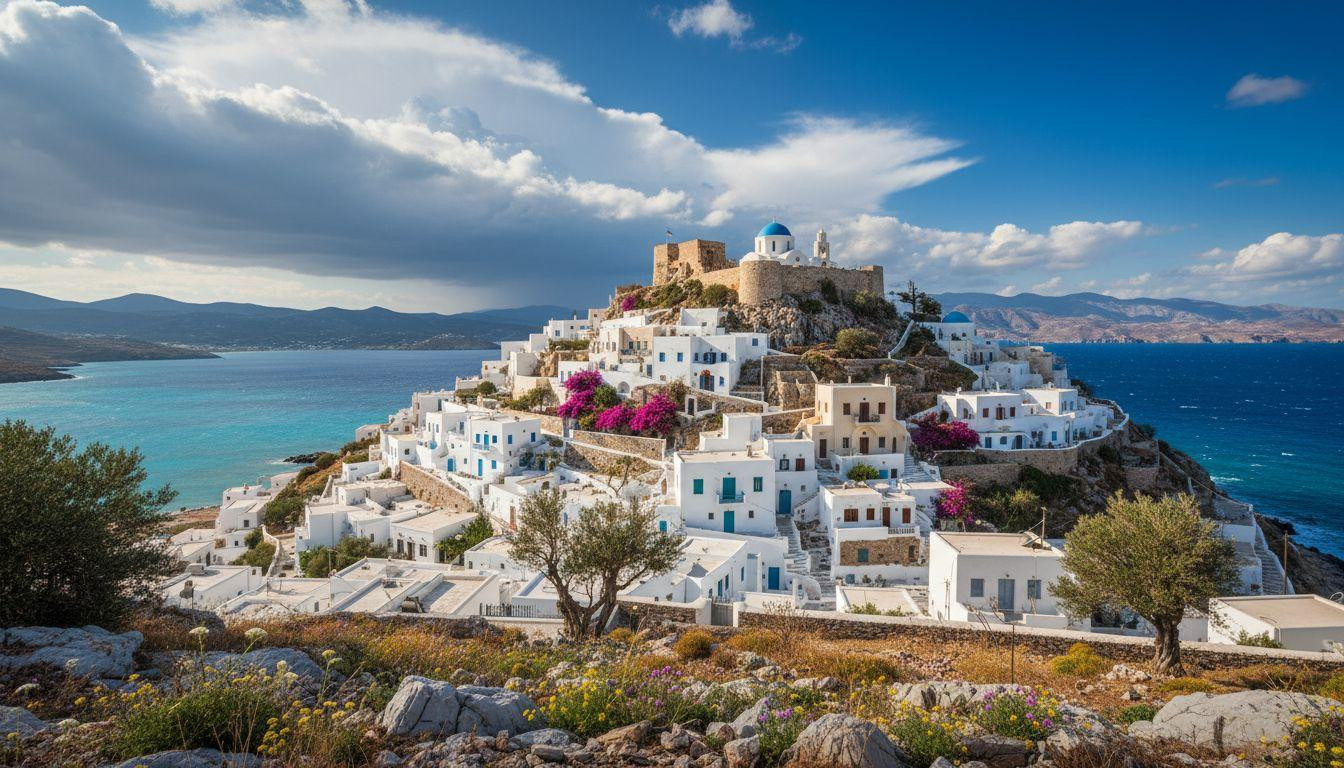
Santorini’s cable car queues stretch 2 hours while sunset crowds at Oia require 90-minute positioning for a glimpse of overpriced magic. Ferry schedules from Athens’ Piraeus port pass right by this chaos to reach something better. Just 2 hours beyond Santorini’s tourist traps sits Serifos, where the same white cube houses cascade down hilltops for $70-120 nightly instead of $365.
The Cycladic architecture remains identical. The sunset panoramas mirror Santorini’s famous views. The difference: 1,400 residents still call this home instead of fleeing commercialization.
Why Santorini feels like a theme park in 2025
Cruise ships disgorge 10,000 daily visitors between April and October. Oia’s sunset platforms fill 90 minutes before the show begins. Hotel rates climb $220-550 nightly for caldera views that Instagram made famous.
Cable car waits stretch endlessly during peak season. Restaurants charge $38 for mediocre moussaka while tour groups shuffle through narrow streets. Local life vanished years ago when residents sold to developers and moved inland.
The island’s black sand beaches offer little relief from rocky, organized chaos. Sunbed grids cover every accessible shore. Even quiet corners require advance reservations and premium pricing.
Meet Serifos: the Cyclades before Instagram
Chora’s amphitheater architecture
White cube houses tier amphitheatrically up Chora’s 755-foot hilltop, identical to Santorini’s famous Oia design. Medieval Venetian castle ruins from 1434 crown the acropolis. Narrow cobblestone alleys called lotzies create pirate-proof mazes between bougainvillea walls.
Pano Chora square buzzes with locals sharing coffee and traditional revithada chickpea stew each evening. Blue-domed Agios Konstantinos church perches atop the kastro with panoramic views across neighboring islands. No selfie crowds block the sunset here.
The price reality check
Traditional houses cost $70-165 nightly versus Santorini’s $365 caldera rooms. Fresh fish tavernas charge $17-28 per meal instead of $38 tourist traps. Ferry tickets run $22-55 one-way for the 2-3 hour journey from Piraeus port.
Overall costs stay 20-30% below Cyclades averages due to minimal tourist infrastructure. Car rentals average $44 daily for exploring 70+ beaches. Most restaurants serve locals year-round rather than seasonal visitors.
What you actually do here
Beaches that stay empty
Agios Sostis beach requires a 40-minute walk to reach its sandy spit with craggy golden rocks and tiny chapel. Sykamia demands a steep trail descent to access its turquoise cove in complete solitude. Over 70 beaches dot the coastline with most accessible only by foot or boat.
No beach clubs exist anywhere on the island. No sunbed grids cover the sand. No reservations required for prime swimming spots. The preservation feels intentional rather than accidental.
Mining heritage Santorini lacks
Megalo Livadi showcases 19th-century iron ore mining ruins with rusty rails and abandoned docks beside azure water. The 1916 miners’ strike here sparked Greece’s labor movement. White Tower (Aspros Pyrgos) ruins off Livadi road connect to ancient Cyclops mythology.
Folklore museum in Kato Chora displays rural island life before tourism arrived. Archaeological collections in Livadi cover Classical and Roman periods. This industrial heritage creates unique photo opportunities against Aegean backdrops.
Hiking without crowds
The 2.8-mile trail from Chora to Taxiarches Monastery offers panoramic views of Sifnos and Kythnos islands. January temperatures of 50-59°F create perfect hiking conditions with zero tourist traffic. Spring wildflowers bloom March through May along upgraded eco-trails from 2025.
Sunrise from Agios Konstantinos church provides solitary moments impossible on crowded Santorini. Morning Chora market days feature fresh local cheeses and spinach pies without tourist markups.
Practical details
Athens flights from New York average $660-1,320 round-trip with 10-hour direct service. Piraeus ferry terminal connects to Serifos in 2-3 hours depending on route and stops. Book Chora guesthouses 1-2 months ahead for peak season or same-week for winter visits.
Population stays around 1,400 between Livadi port and Chora village. Annual visitors total 50,000-70,000 compared to Santorini’s millions. Car or scooter rental proves essential since buses skip remote beaches and mountain trails.
English works in hotels and restaurants though locals appreciate basic Greek greetings. Cash remains preferred for small tavernas though ATMs serve Livadi and Chora centers. Self-catering works well with Livadi’s morning market for fresh ingredients.
Your questions about Serifos answered
When should I visit to avoid any crowds?
January through March offers the quietest experience with 50-59°F temperatures perfect for hiking and village exploration. May and September-October provide shoulder season weather with minimal tourists. Even July-August peak season sees manageable visitor numbers compared to other Cyclades islands.
How does the island maintain authenticity?
No major hotel chains operate on Serifos. Family-run guesthouses and traditional tavernas serve residents year-round rather than seasonal tourists. The mining heritage creates unique character distinct from typical Greek island commercialization. Strict development limits preserve the landscape.
What makes this different from other quiet Greek islands?
Serifos combines Santorini’s dramatic Cycladic architecture with industrial mining history found nowhere else in the region. The hilltop Chora rivals any famous village for visual impact while maintaining actual residential life. Ferry connections to Athens remain frequent enough for accessibility without enabling overtourism.
Dawn light catches white cube houses cascading toward Livadi’s turquoise bay. Goat bells echo through empty alleys where bougainvillea frames doorways untouched by selfie sticks. This feels like Santorini’s soul before tourism claimed its body.