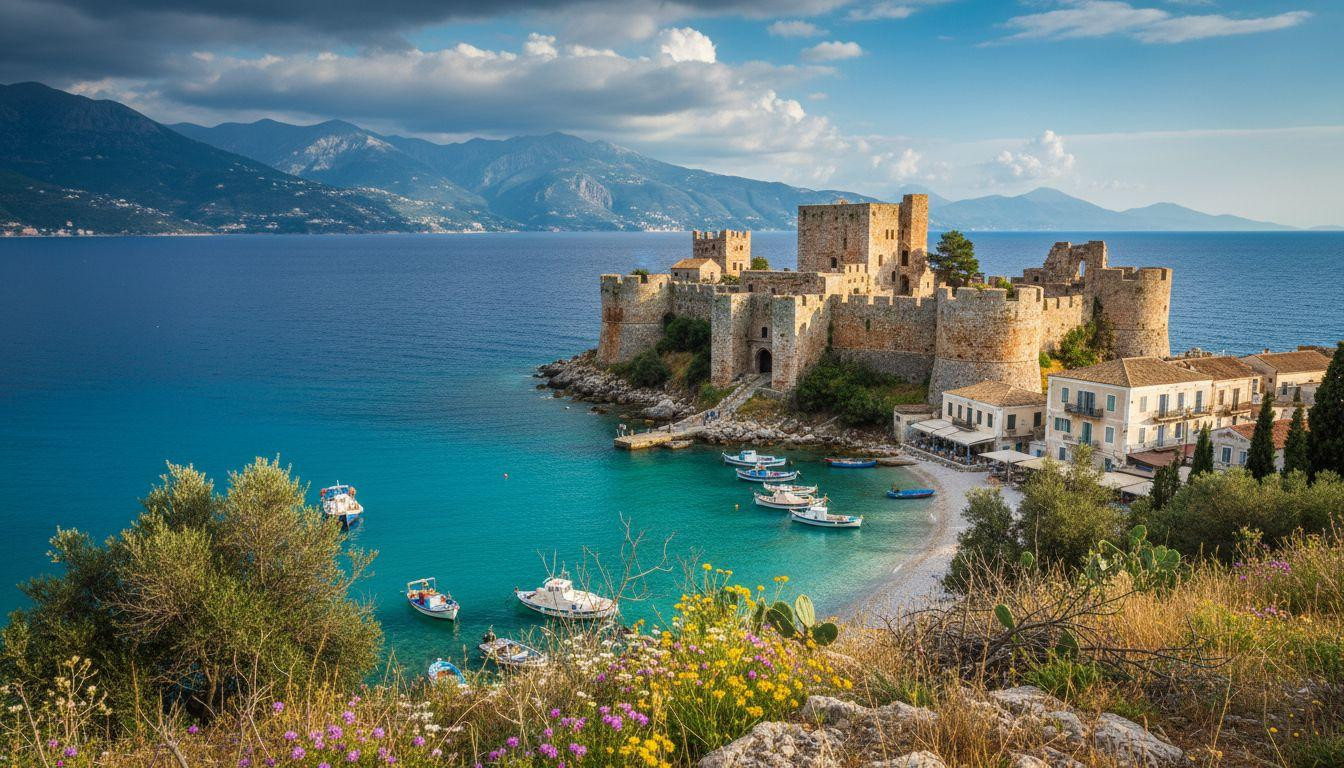
Santorini’s caldera viewpoints pack 300 people by 6pm. Hotels start at $275. The donkey path to Fira collects cruise passengers in waves of 50. Twenty-two miles northeast of Corfu Town, Kassiopi’s Byzantine castle sits empty at dawn while fishing boats unload in the bay below. Population 950. Water so clear you count pebbles 10 feet down.
Why Santorini stopped feeling Greek
Three million visitors arrived in 2025. Restaurants seat tourists in two-hour shifts. Greek salads cost $28. Sunset cruises run $65 per person. The famous blue domes appear on 10,000 Instagram posts daily.
Imported food stocks most kitchens. Menus print in English only. Street vendors sell the same mass-produced ceramics. The island that once defined Greek island beauty now defines overtourism. February offers lower rates (3-star hotels $43-87, 4-star $70-180), but the infrastructure built for crowds remains.
Kassiopi delivers what Santorini lost
The landscape Santorini used to have
Turquoise Ionian water laps white pebble coves. An 11th-century Byzantine castle crowns 100-foot cliffs above the harbor. Fishing boats return by 9am with the day’s catch. Four beaches stretch along the northeast coast, each reachable by footpath. Albania rises across the 6-mile strait on clear mornings.
The castle opens free to visitors. Stone walls frame views across the bay where olive groves meet the sea. No queues. No entrance fees. No crowds positioning for photos. Just weathered Byzantine stones and Ionian blue.
The price difference that changes everything
Harbor guesthouses rent for $43-65 per night. Boutique hotels with sea views cost $87-130. A full day runs $110 including lodging, meals, and activities. Santorini’s equivalent: $275 minimum for mid-range hotels alone, before food or transport.
Tavernas serve pastitsada (rooster pasta in spiced tomato sauce) for $18. Sofrito (garlic veal) costs $20. Bourdeto (fish stew with local catch) runs $22. Fresh seafood comes from boats you watched unload. Kumquat liqueur from village orchards appears as a complimentary digestif. The math favors Kassiopi by 60%.
What you actually do in Kassiopi
Morning castle walks and pebble cove swimming
The Byzantine fortress sits 200 meters from the harbor. Climb before 10am and you’ll have the ramparts alone. Sunrise at 7:30am in February lights the Albanian coast gold. The stone stays cool underfoot even in summer.
Voutoumi Bay requires a 1.2-mile walk along headland paths. White pebbles slope into water that stays calm most mornings. Bataria Beach sits closer to town, popular for lazy afternoons. Kerasia Cove hides south, accessible by car or boat tours that explore hidden bays for $40-140 per person. Water temperature holds at 59°F in February, warming to 75°F by June.
Harbor tavernas and fishing village rhythms
Fishermen tie up by 9am. Cafés along the waterfront serve Greek coffee in small cups, strong and unsweetened. Conversations happen in Greek first, English second. The pace follows island time, not cruise ship schedules.
Evening tavernas fill with locals before tourists. Order the day’s catch, grilled with lemon and olive oil. Pastitsada arrives in clay pots, the sauce rich with cinnamon and cloves. Kumquat trees grow in village orchards, their fruit distilled into sweet liqueur. Meals stretch past sunset. No one rushes the check.
The Greece that exists beyond Instagram
Kassiopi operates without performance. The castle doesn’t charge admission because it’s simply there, part of village geography. Beaches stay quiet because they’re pebbles, not sand, and that filters casual visitors. Tavernas serve locals first because locals keep them open year-round.
February brings 55°F days and occasional rain. The village empties further. Guesthouses drop rates another 20%. The Byzantine walls frame the same views without summer’s heat. This is Greece as it functions, not as it poses. Similar Adriatic villages offer the same authenticity, but Kassiopi stays warmer through winter.
Your questions about Kassiopi answered
How do you reach Kassiopi from the US?
Fly into Corfu International Airport (CFU), 22 miles southwest. Direct routes from New York take 10-12 hours with one stop through Athens, averaging $900-1,400 round-trip in February 2026. Taxis to Kassiopi cost $55. Buses run $11 but schedules thin in winter. Rental cars start at $33 daily. The drive takes 50 minutes along the northeast coast road.
When should you visit Kassiopi?
May through June or September through October deliver 68-82°F days, calm seas, and fewer visitors. February suits travelers who prioritize quiet over swimming, with mild 55°F averages and open tavernas. July and August bring crowds (still a fraction of Santorini’s) and 86°F heat. Winter rain falls mostly overnight. The Ionian stays calmer than the Aegean year-round.
How does Kassiopi compare to other Greek islands?
Kassiopi costs 40-60% less than Santorini or Mykonos while delivering similar clifftop views and turquoise water. It feels more authentic than resort islands because fishing still drives the local economy. Medieval villages in Tuscany offer comparable castle ruins, but Kassiopi adds Ionian swimming and Albanian views. Population 950 means you’ll recognize faces by day three.
The morning ferry to Albania leaves at 9am from Corfu Town, 22 miles south. Most visitors skip it. They stay in Kassiopi, where the castle holds the same awe Santorini once delivered before the crowds arrived. The pebbles click underfoot. The water stays clear. The tavernas serve locals first. Book before travel blogs discover the view across the strait.