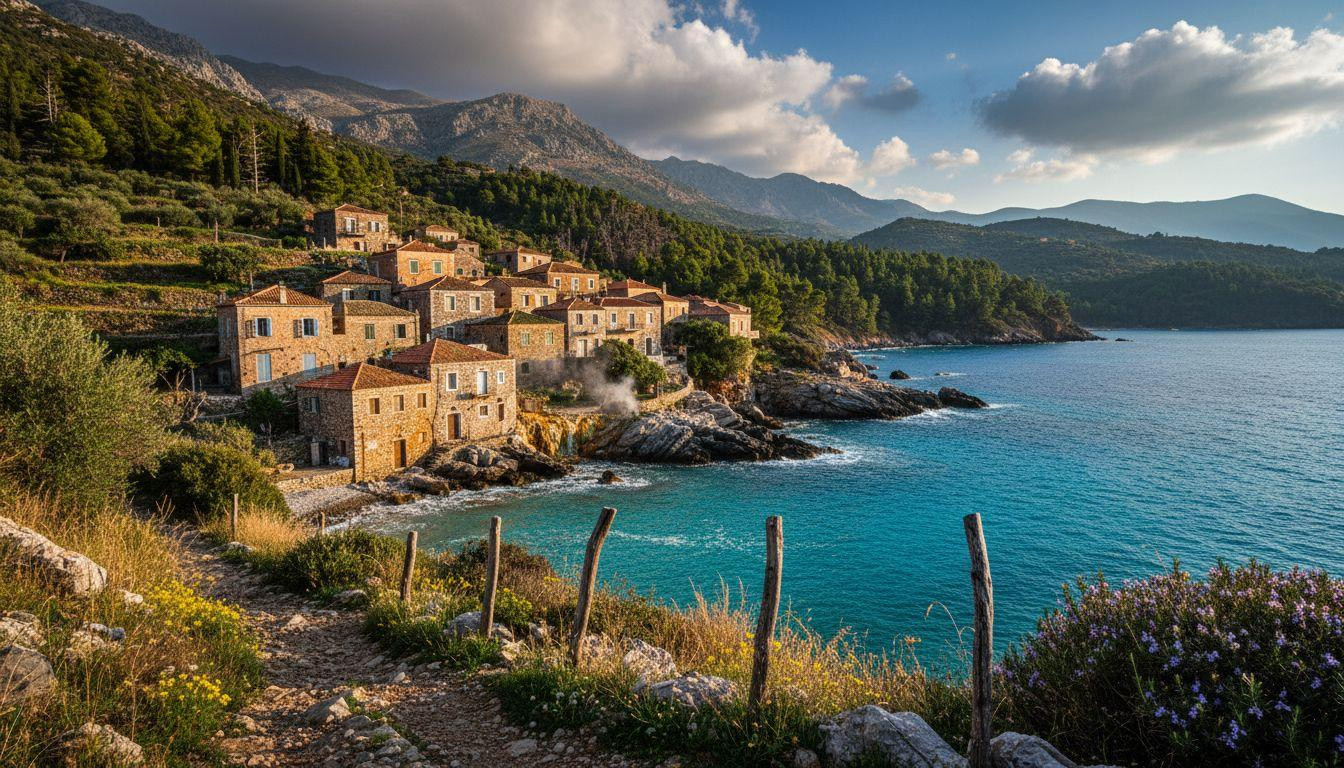
Santorini’s 2.3 million annual visitors wait 20 minutes for sunset photos in Oia while paying $350 nightly for cave hotels. Meanwhile, 3,100 miles southeast, Ikaria preserves what Greece was before Instagram discovered it. This Aegean island hosts one of the world’s five Blue Zones, where centenarians tend mountain goats and thermal springs bubble freely from coastal rocks.
The numbers tell Santorini’s story: 800 cruise ships dock annually, dumping 8,000 daily passengers onto volcanic cliffs designed for fishing villages. Hotel rates average $300-$400 nightly during December 2025, when Oia’s narrow streets still require reservations for sunset viewing spots.
Why Santorini lost its soul to mass tourism
Santorini’s accommodation sector collapsed 22.1% in 2025’s second quarter compared to 2024. Restaurant revenues dropped 21% as visitors fled earthquake concerns and overcrowding. International arrivals fell 16.2% through October 2025, with UK visitors declining from 79,500 to 61,300 in July alone.
The island’s infrastructure buckles under pressure. Traditional Greek islands nearby watch Santorini transform into a theme park where “Greek goddess” photo sessions cost $290-$400 per hour.
Meet Ikaria’s time-forgotten Greece
Ikaria receives fewer than 25,000 annual visitors across 98.5 square miles of pine-covered mountains and hidden coves. The island’s 8,423 residents practice “siga siga” (slowly, slowly), a philosophy that extends life expectancy beyond global averages.
The landscape Santorini commercialized
Rugged peaks rise 3,280 feet above turquoise waters that maintain 61-64°F temperatures through December. Golden stone houses cascade down forested slopes where goat bells replace car horns. Thermal springs at Therma bubble 100-104°F mineral water directly into the sea.
Blue Zone living versus wellness tourism
Scientific research identifies Ikaria as one of five global Blue Zones where residents live significantly longer than world averages. Local guesthouses charge $60-$85 nightly while preserving authentic architecture. Longevity secrets emerge from daily rhythms, not manufactured spa experiences.
What daily life actually feels like in December
December temperatures hover 48-57°F with occasional mountain snow creating dramatic contrasts against coastal warmth. Rainfall averages 4.7 inches monthly in brief bursts followed by crystalline sunshine. Tourist numbers drop below 5% of summer levels.
Morning in Therma village
Steam rises from coastal hot springs as fishing boats return with daily catches. Pine and oak forests covering 65% of the island release earthy scents that mix with salt air. Taverna meals cost $13-$20 including local wine from family vineyards.
The Panigiria experience
Village festivals during Christmas week feature traditional “kalanda” carols and slow-cooked goat stew. Locals share homemade wine while dancing until dawn in community celebrations unchanged for generations. Authentic Greek traditions survive here without tourist performance.
Practical advantages over Santorini’s chaos
Athens to Ikaria flights cost $95-$135 roundtrip with 45-55 minute flight times. Ferry service from Piraeus runs $39-$55 one-way with 2-3 weekly December departures. Car rentals average $38-$49 daily for exploring mountain villages connected by well-maintained coastal roads.
Agios Kirykos to Armenistis spans 6.2 miles through pine forests where December visibility reaches 12-15 miles on clear days. Peaceful Greek islands like Ikaria prove authentic experiences cost less than commercialized alternatives.
Your questions about Ikaria’s quiet side of Greece answered
How does December weather compare to summer crowds?
December brings mild 48-57°F temperatures perfect for hiking without summer’s intense heat or tourist masses. Sea temperatures around 61-64°F make thermal spring bathing especially appealing. Most family tavernas remain open year-round in Agios Kirykos and Armenistis villages.
What makes Ikaria’s Blue Zone status scientifically significant?
Research identifies Ikaria as one of five global locations where residents live significantly longer than world averages. Local diet emphasizes wild greens, goat meat, honey, and homemade wine. Daily rhythms follow natural light cycles rather than artificial schedules.
How accessible is Ikaria compared to mainstream Greek destinations?
Ikaria requires intentional planning with limited December ferry connections and car rental necessity for full exploration. This accessibility barrier preserves authentic character while welcoming visitors who respect local pace and traditions over rapid tourism consumption.
December sunset at Nas Beach paints the sky pink-orange without crowds or photo queues. Thermal spring steam mingles with pine-scented mountain air as goat bells fade into evening silence. This is Greece before it became a destination.